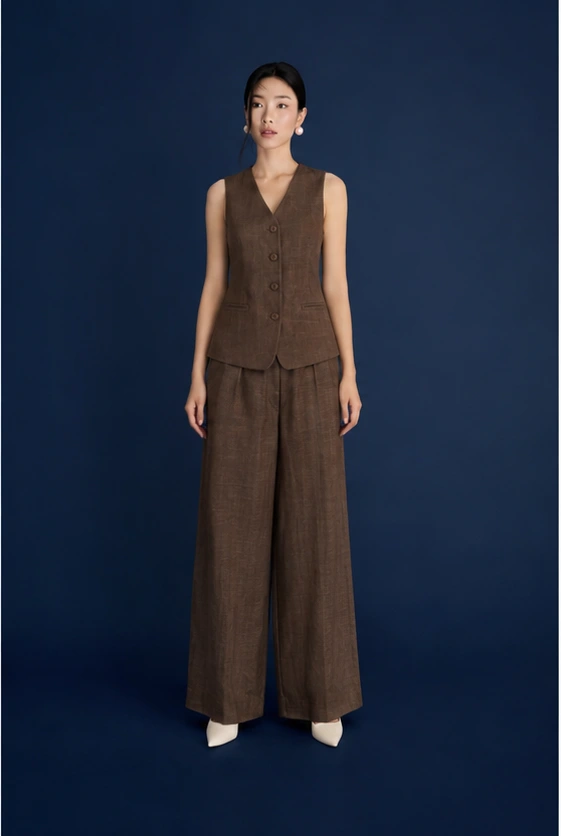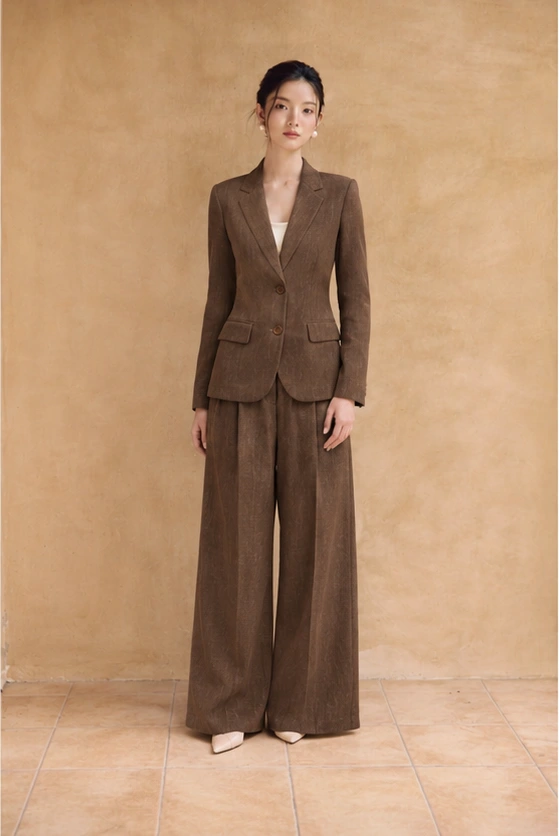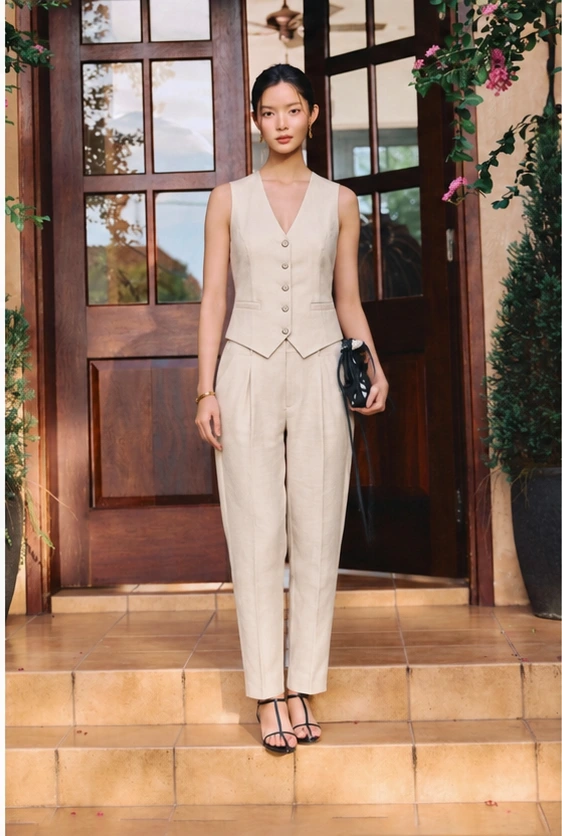
A two-piece linen set is coordinated clothing, but the person wearing it does not have to match one size row from shoulders to hips. The top and trousers have different fit questions. A clear custom brief records those requirements separately, then checks how the two pieces work together at the waist and in the outfit.
Make the top–bottom relationship explicit
An illustrative set brief might read: “My upper-body measurements align with a different standard row from my waist and hips. Please consider the top and bottom separately. I want the top hem to meet the waistband while standing, with comfortable coverage when sitting.” Follow it with the actual requested body figures and separately named reference lengths.
Label both garments in the same brief: Top: shoulder/upper-body and length priorities; Bottom: waistband level, hip/seat comfort and hem. Check the product’s custom charge unit rather than assuming two pieces always mean two surcharges. Matching colour should be agreed for the whole set, while each garment retains its own fit notes.
Treat the set as two connected garments
For the top, identify the neckline, shoulder, bust and body-length preferences relevant to the design. For the trousers, identify the waistband position, waist, hip/seat, leg shape and important lengths. Ask the studio which measurements are required rather than assuming one chest or waist figure defines the complete set.
The relationship between the pieces matters too. A cropped top may be chosen to meet a particular waistband height, while another customer may prefer more overlap. A trouser adjustment can therefore affect how the top appears in the outfit without changing the top’s measurements.
State body measurements in one list
Keep the measurements factual and use one unit. If your bust, waist and hip fall into different chart rows, send the actual figures rather than combining size labels from different brands. Add height as context where proportions are a recurring concern, but confirm the lengths needed for each part.
Use a separate list for favourite-garment dimensions. A top width measured flat and a body bust circumference should not be sent as interchangeable entries. Explain which aspects of each reference you want to retain.
Make the waist relationship visible
Try to describe the outfit at the point where top and bottom meet. If you want overlap, say so. If you prefer the pictured gap or a particular cropped effect, explain that preference and ask what dimensions the studio needs to discuss it.
Do not assume that simply lengthening the top preserves every detail of the original design. Side seams, fastening, body shape and the intended silhouette can limit an alteration. The studio should confirm which change is feasible and whether it requires work beyond the offered custom option.
| Part of the brief | What to supply | What to confirm |
|---|---|---|
| Top | Relevant body figures, neckline and length preference | Measuring points and feasible adjustments |
| Trousers | Waistband position, waist/hip and requested lengths | Rise, leg line and hem |
| Outfit relationship | Desired overlap or separation | How both approved lengths work together |
| Colour | Selected shade and matching priority | Availability and any batch concern |
| Price | Product quantity and selected custom option | Charge unit: set or piece |
Check the custom price unit
Read the custom surcharge on the particular set. LINENELLAR can display charges per piece or per set according to the product, and the amount is not necessarily the same across designs. Confirm whether you are ordering a complete listed set or separate products with separate options.
Additional design requests also need confirmation. A different neckline, pocket or fastening cannot be assumed to be included simply because both garments are being made together. Keep the agreed changes and the price in the same final brief.
Pieces to explore