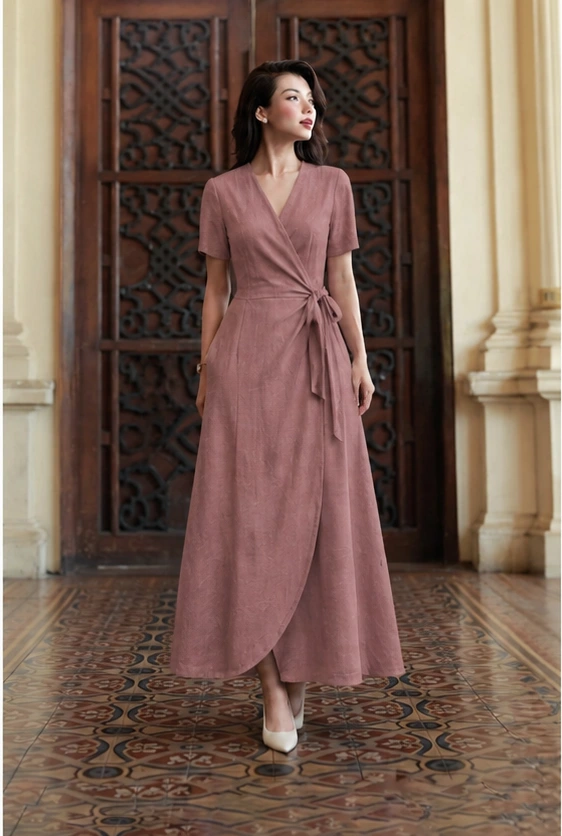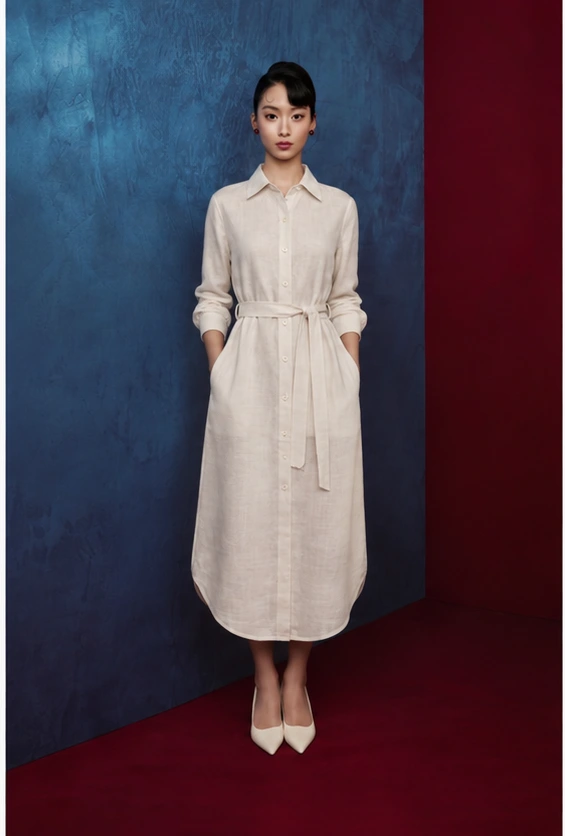
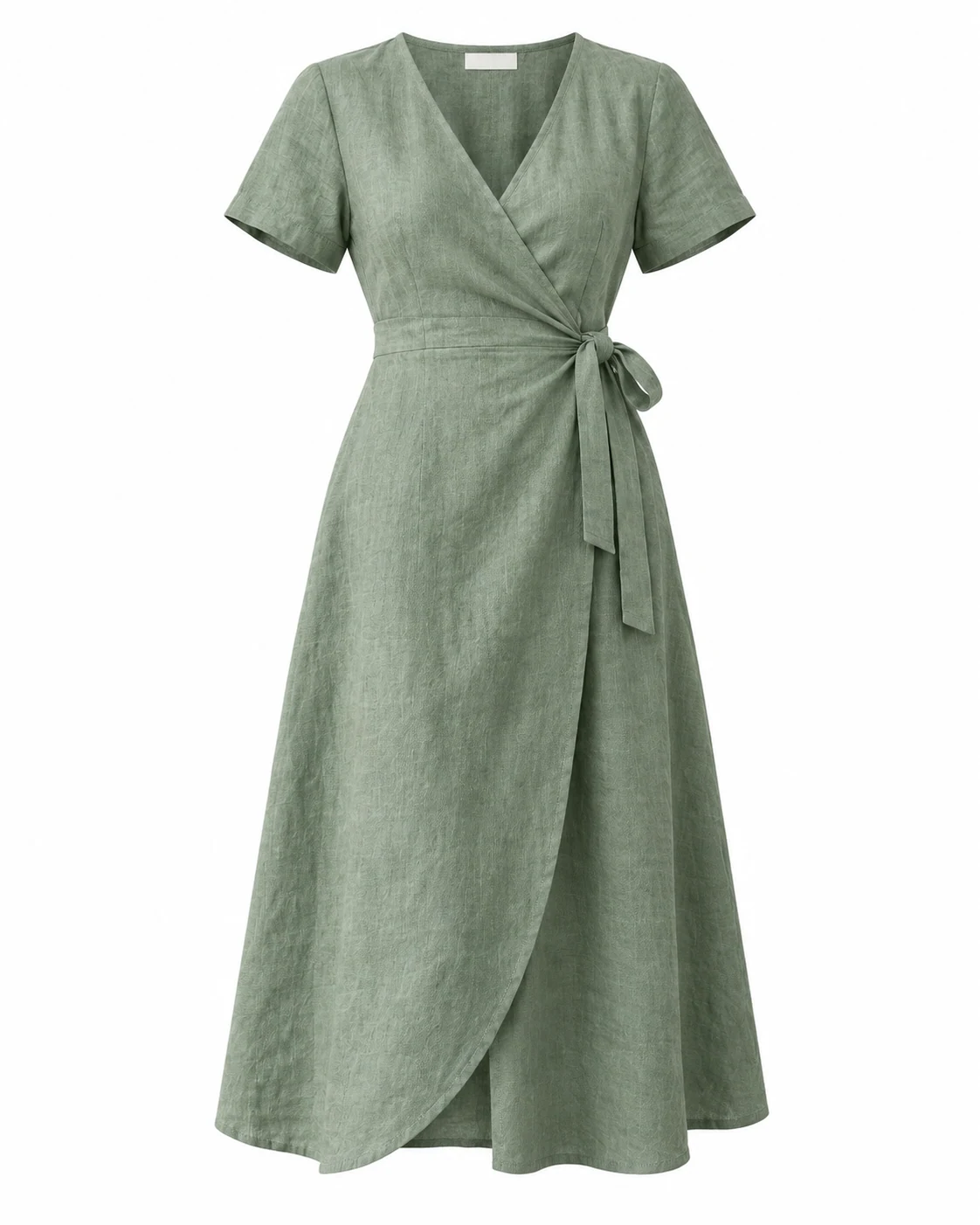
A wrap dress and a shift dress organise fit in different ways. The first draws attention to an overlapping or wrapping structure; the second offers a different relationship between the upper body and the line of the skirt. When choosing a linen dress, consider the actual construction, how you move and the coverage you prefer rather than assuming one style is universally more forgiving.
A standing-to-sitting comparison
Compare the selected wrap and shift designs with the same intended underlayer. On a wrap, check the neckline and skirt overlap both standing and seated, including a normal step. On a shift, observe chest/hip movement and how much the hem rises when sitting. These checks explain coverage priorities; they do not establish the fastening construction from a product name.
If using Bloom and Still as starting designs, ask about the actual closure and layers on those listings before assuming adjustability or lining. A belt or overlap is not a substitute for agreeing the underlying proportions. Choose the form you enjoy, then make the coverage and movement request specific to that model.
Begin with how the dress is held on the body
Look at the product’s fastening and shaping details. A waist emphasis, overlap, tie or particular seam arrangement affects the way the garment is worn. Verify those details on the listing or with the studio rather than inferring all of them from the word wrap.
For a shift-style design, examine the shoulder, neckline and line through the body. A straighter shape can still require the right room at the bust, armhole and hips. Loose-looking imagery is not proof that every body proportion will fit without discussion.
Make coverage a specific question
An overlap can behave differently while standing, walking and sitting. If neckline or skirt coverage matters to you, say which movement or setting concerns you. The length and placement of an overlap, the wearer’s proportions and the actual design all need consideration.
A shift dress has its own coverage questions: neckline position, armhole opening, hem length and any slit or opening present on that model. Do not replace them with a broad assumption that a simple shape needs fewer measurements.
Compare waist emphasis with a freer line
Consider whether you want the waist to be a visible organising point or prefer the dress to fall more freely. That choice is personal. It can also depend on the outfit, underlayers, climate and activity rather than a fixed body-shape category.
If a waist detail usually sits too low or too high on you, tell the studio. A desired position is a different instruction from a waist circumference. Keeping both pieces of information clear is especially helpful when a standard dress is comfortable in width but wrong in torso proportion.
| Decision | Wrap-format questions | Shift-format questions |
|---|---|---|
| Upper coverage | Neckline and overlap in use | Neckline and armhole position |
| Waist relationship | Placement and effect of the actual waist detail | Whether the intended freer line is retained |
| Movement | Behaviour of overlap/openings while sitting | Room through hip and any openings |
| Length | Hem and coverage together | Hem position with intended silhouette |
Use the selected model for measurements
Both types may need bust, waist and hip context, but the studio can request additional information for the particular design. Keep body figures separate from finished garment dimensions. A reference dress can help explain a preferred hem or body proportion, provided its measuring method is identified.
Do not add extra allowance to every circumference because you want a loose effect. Explain the effect instead. Likewise, a request to change a neckline or fastening should be confirmed as design work, not assumed to be covered by a general made-to-measure selection.
Pieces to explore