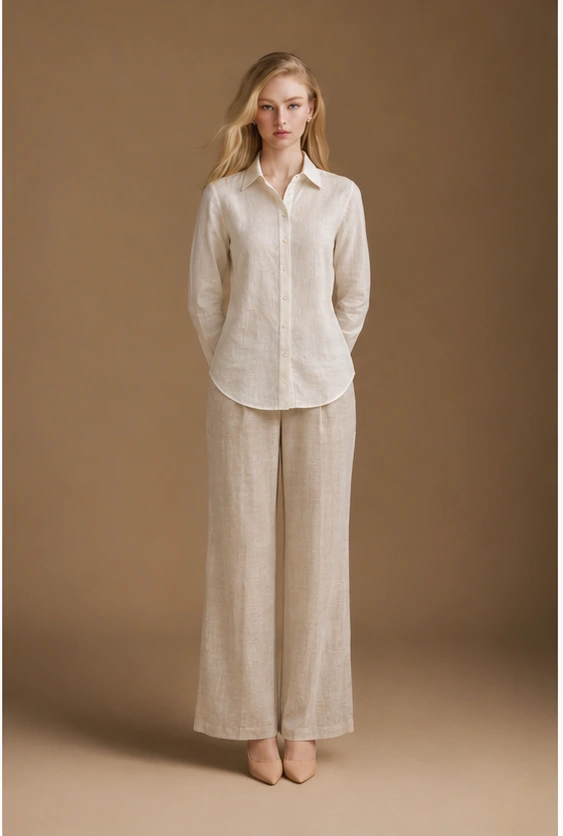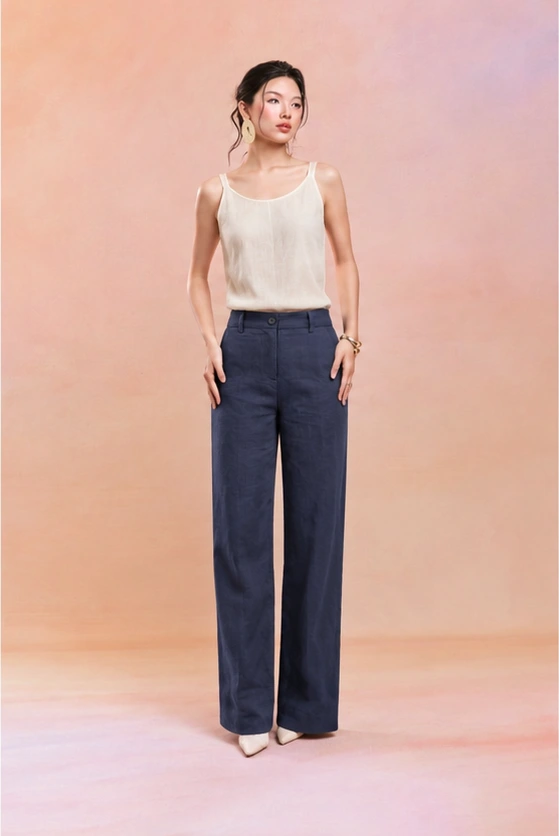
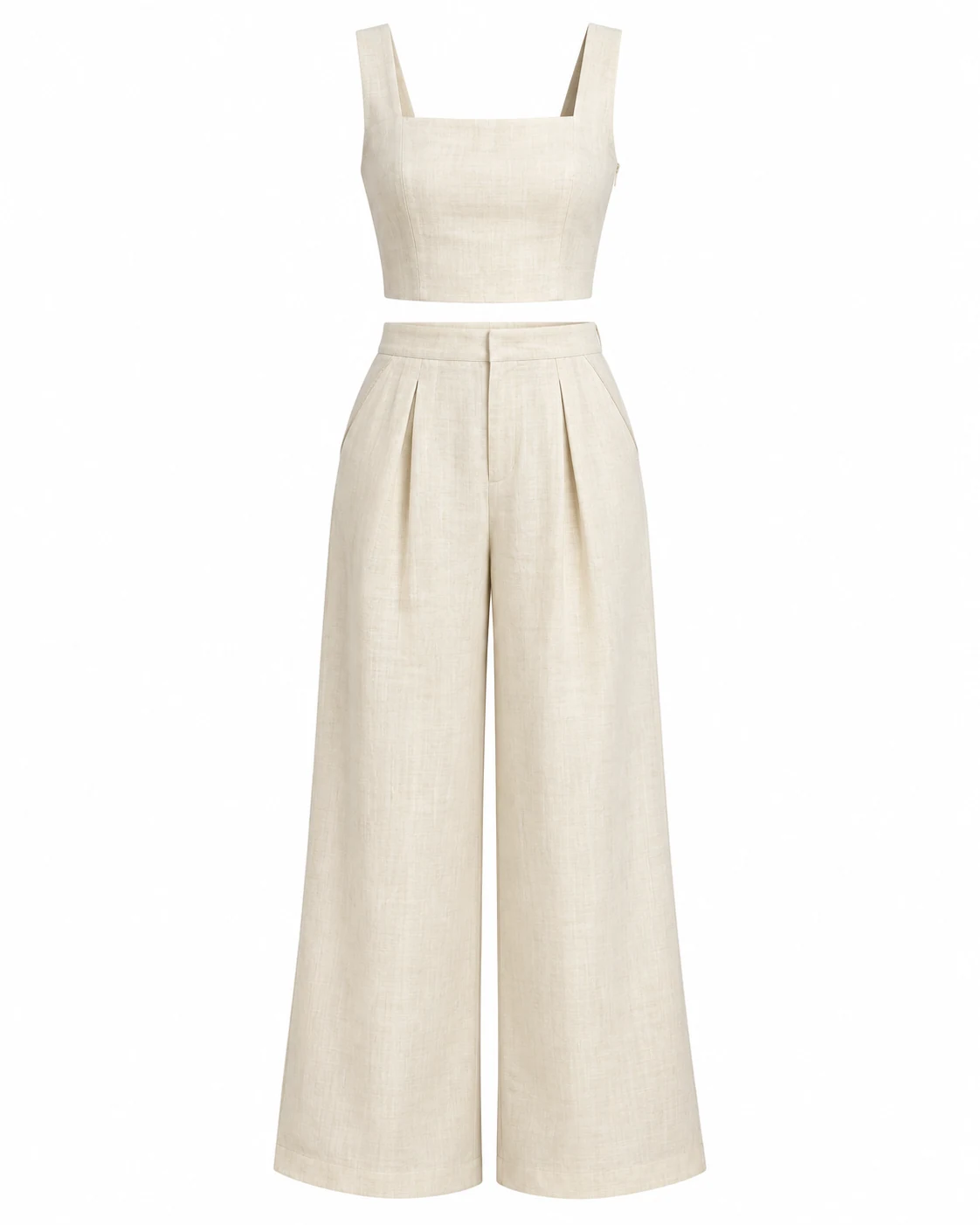
White linen can be translucent, especially where the cloth is stretched over the body or strongly lit from behind. A white garment photographed against a pale wall may therefore look different on a person outdoors. The useful question is not whether all white linen is see-through, but whether the selected piece provides the coverage you need in the setting where you will wear it.
Separate three things you may be seeing
Colour contrast is the difference between the cloth and what lies underneath. An outline is the edge of a seam, pocket or underlayer showing through. Light transmission is light passing through the cloth itself. A similar-coloured underlayer may reduce contrast without removing its outline or changing the fabric’s light transmission.
| Observation | What to investigate | Possible next decision |
|---|---|---|
| A dark underlayer stands out | Contrast with the actual cloth and your skin | Try another underlayer in the intended outfit |
| An edge shows while the area otherwise looks covered | Seams, elastic or the cut of the underlayer | Try a smoother construction |
| Coverage changes near a window | Direction and strength of light | Evaluate the same outfit in that setting |
| Fabric looks more transparent across the seat or bust | Tension, fabric and construction together | Discuss both fit and coverage before ordering |
Use a consistent viewing check
If you have the garment or an appropriate physical reference, compare it in ordinary front light, beside a window and with the light behind it. Wear the underlayer you intend to use. Stand normally, then sit or move as you would during the day. Check the areas important to you rather than judging only a loose sleeve or an unsupported piece of cloth.
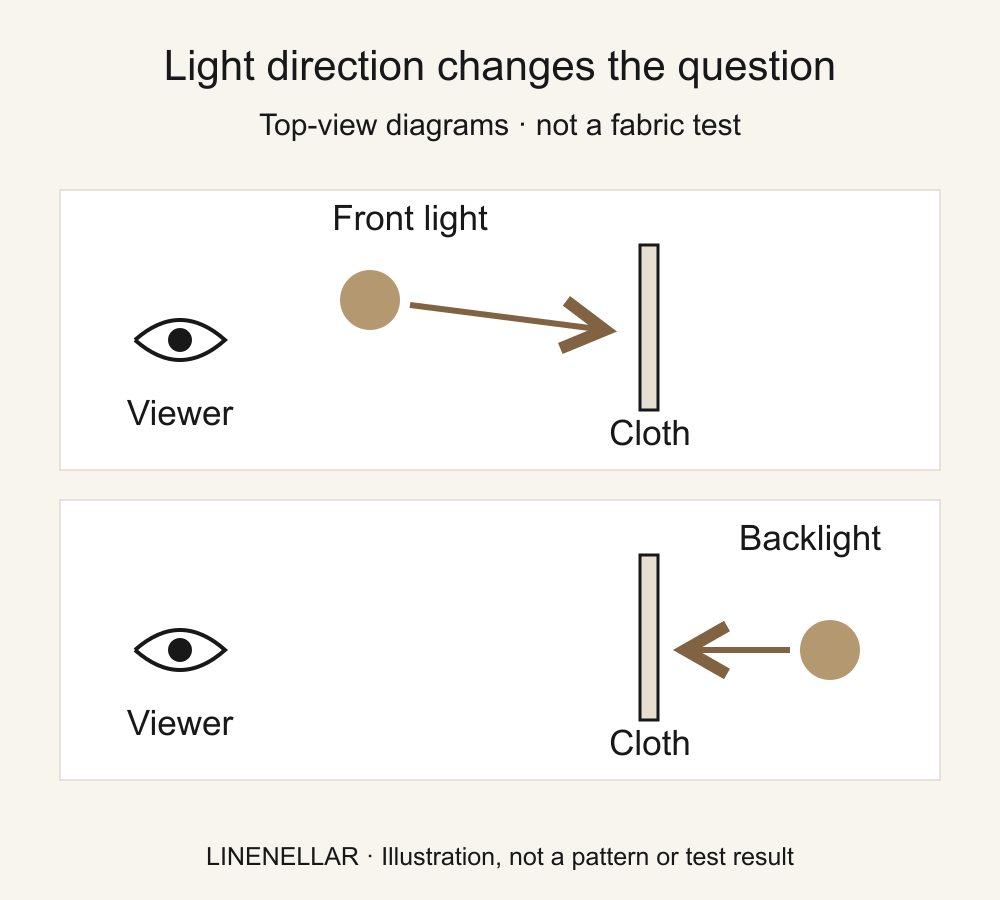
For an online enquiry, ask whether images of the same shade, material and construction are available in a relevant setting. A picture of a different design or heavier fabric cannot resolve the question for your chosen item. Phone exposure can also brighten a white area and hide detail, so ask what the photograph actually demonstrates.
Why 150 GSM does not settle opacity
GSM measures mass per square metre. It does not describe every gap between yarns, the shade, the number of layers or the way the garment fits. LINENELLAR’s signature 150 GSM linen is a weight reference, not a guarantee of complete coverage in all light. Read the material on the particular product and use the 150 GSM guide for the distinction between weight and finished appearance.
Consider the solution before the cloth is cut
A different underlayer, shade or design may suit your needs. If a lining or other construction change is important, ask whether it is offered on that design and request a separate confirmation of the effect on price, feel and fit. Custom sizing does not automatically include a lining. Extra width alone is not a reliable remedy for translucent cloth.
Use a specific enquiry:
Product: [link], selected white/light shade: [name]. I plan to wear it outdoors in daylight with [underlayer]. My priority is coverage at [area], including when sitting. Please confirm the listed construction and what supporting views or alternatives are available before I approve the order.
Explore our linen and the colour library. A coverage requirement belongs in the approved brief alongside the fit and length, especially when it is essential to your buying decision.
Pieces to explore