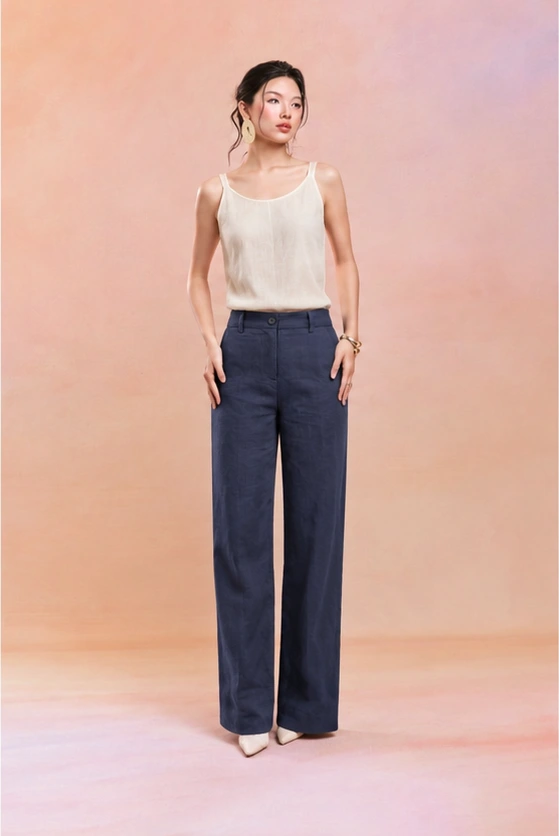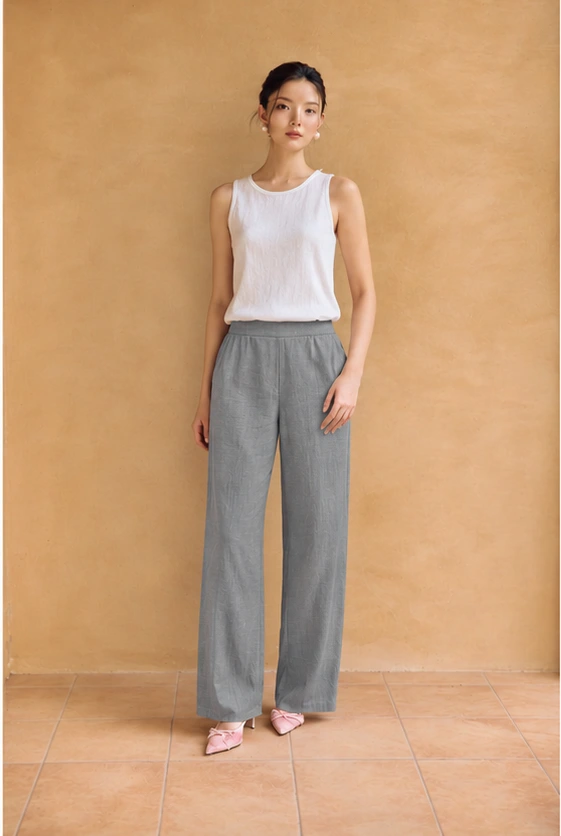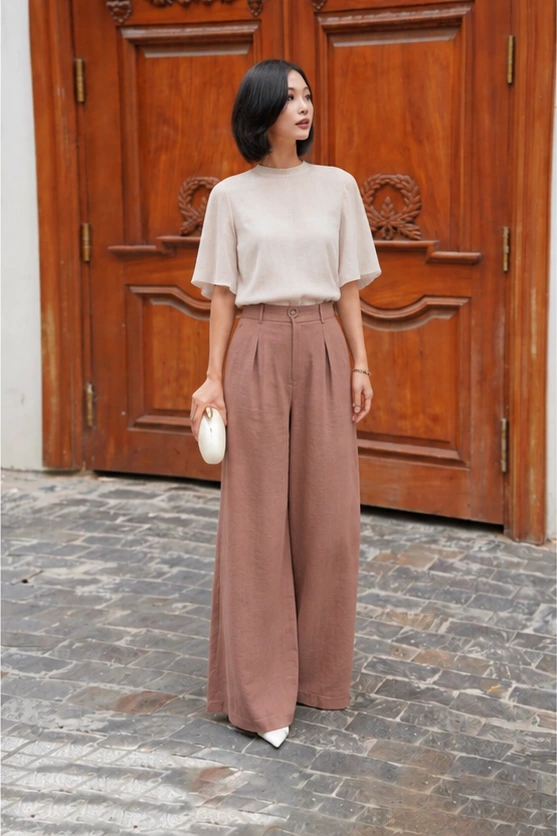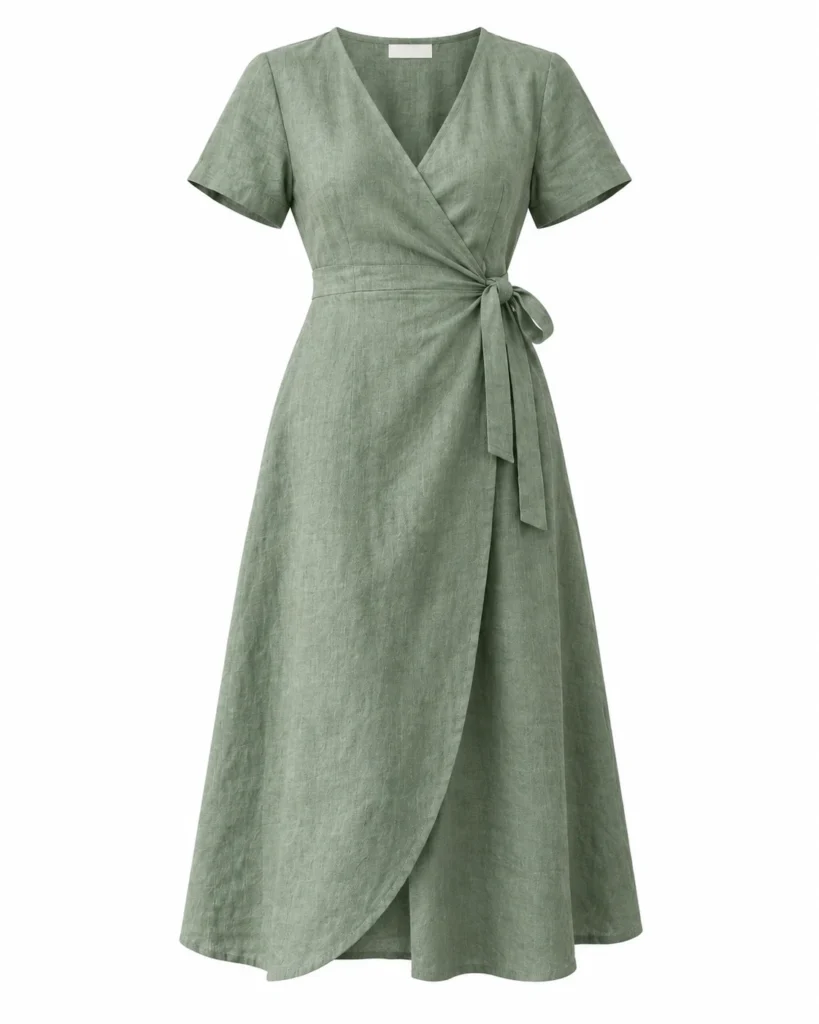
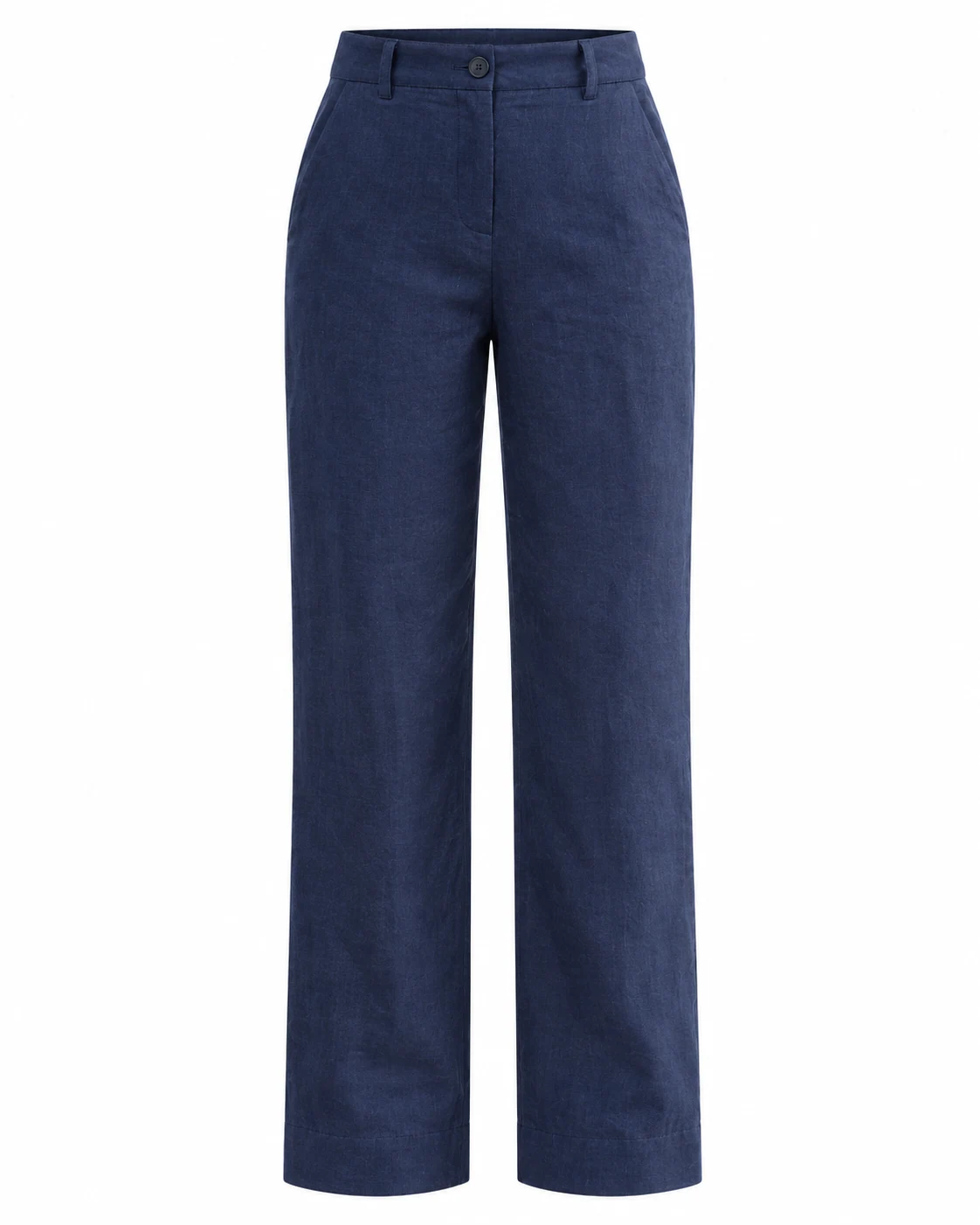
Wide-leg and straight-leg linen trousers can both be relaxed choices, but they distribute fabric differently. The decision is less about following a body-type rule and more about the line you enjoy, the shoes you wear and the situations in which the trousers will be used. Compare the whole silhouette before asking a studio to change one design into another.
Compare the lower-leg volume at the same length
Lay out two reference silhouettes at a comparable waistband and hem position. A wide leg carries more volume towards the opening; a straight leg keeps a more consistent line below the upper leg. Either can have a different rise or seat fit, so decide those parts separately.
For walking with flat shoes, check whether the selected width and hem clear the shoe and ground as you move. For a more flowing outline, consider whether the actual cloth and design supply the movement you want. Do not ask to turn a straight trouser into a wide leg solely by widening its hem; start with the closest listed silhouette.
Look from the hip to the opening
A wide-leg silhouette generally keeps more visible volume through the leg. A straight-leg silhouette aims for a different line down to the opening, though the exact proportions depend on the product. Names alone cannot tell you the thigh width, knee shape or finished opening of every pair.
Use photographs of the actual designs and, where available, garment information to compare them. Look at front and side views instead of a single pose. A model’s stance, a tucked top and the way fabric is arranged can affect the impression of width.
Decide the upper fit separately
Leg shape does not determine whether the waistband and seat will be comfortable. A wide leg can still have a relatively defined waist; a straight leg can include useful room through the hip. Begin with body measurements and the intended waistband position.
If one standard pair fits the hips but gaps at the waist, record that as an upper-fit issue. Choosing a wider or narrower leg is not automatically the answer. A custom discussion can keep the leg direction you like while investigating the actual proportion that needs attention.
Consider length with the intended shoe
A wide opening and a straighter opening can fall differently over the same shoe. A cropped line, a hem above a flat sandal and a fuller-length leg are distinct choices. Try a reference garment with your usual shoes before describing the finished length you want.
Do not assume a length copied from another design creates the same visible result. The waistband position, rise and width can change how the cloth hangs. Identify the starting point of each measurement and ask the studio how it should be recorded.
| Priority | Consider when comparing | Question for a custom brief |
|---|---|---|
| A fluid, generous line | Wide-leg design and fabric movement | Which pictured proportions should stay? |
| A quieter straight outline | Straight-leg design from hip to hem | How much room do you want through seat/thigh? |
| Frequent walking | Hem length, shoe and fabric volume | Where should the hem finish in use? |
| Easy outfit coordination | Tops and layers you already wear | Which waistband/hem relationship works? |
Start close to the silhouette you want
A substantial change to leg shape can affect the whole pattern. Ask whether choosing another listed design is more appropriate than narrowing or widening an existing one. Confirm availability and any extra work before treating the change as part of the standard custom option.
Compare the Daily Women’s Straight-Leg Linen Trousers with the palazzo format in the Air Linen Crop Top & Palazzo Set. Browse the women’s collection for the actual designs, then send a focused brief about upper fit, leg line and length.
Pieces to explore