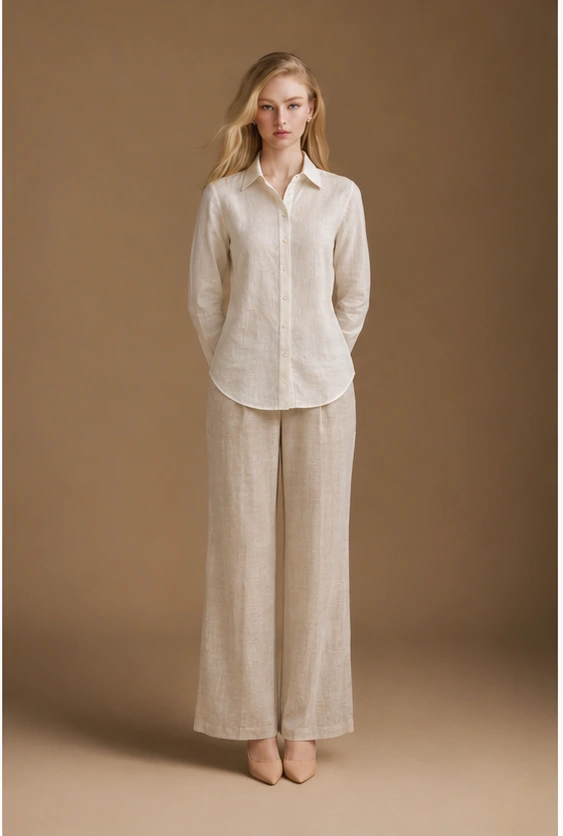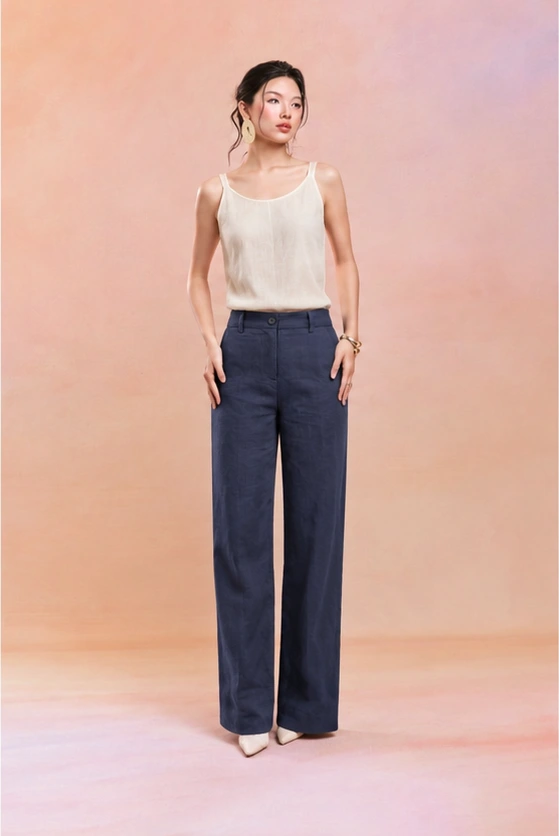

Linen and cotton are both plant fibres used in summer clothing. Linen usually offers a more visibly textured, crease-prone character; cotton can range from a fine smooth poplin to an open gauze or a heavy twill. Choose the actual cloth and cut together. Comparing a loose linen shirt with a dense fitted cotton shirt tells you about two garments, not just two fibres.
Compare the version of each material you are buying
| Decision | Linen direction to consider | Cotton direction to consider |
|---|---|---|
| Surface you enjoy | Visible woven texture and creases can be part of the look | Fine poplin can give a smoother-looking surface; gauze and seersucker are different again |
| Silhouette | Check the actual drape and whether the design is loose or structured | Check whether the cloth is crisp, soft, knitted or woven |
| Movement | Woven linen should have adequate room in the areas that move | A cotton knit and a cotton woven shirt have different movement; read the construction |
| A consistently pressed finish | Expect linen to form new creases during wear | Cotton also creases; any easy-care finish must be identified on the product |
| Coverage | Evaluate shade, weave, layers and light | Apply the same checks; white cotton is not automatically opaque |
| Laundry | Follow the finished item’s label | Follow its own label rather than borrowing the linen routine |
These are shopping distinctions, not comparative laboratory results for LINENELLAR fabrics. A product’s finish, yarns, weave and construction can change the outcome substantially.
Match the fabric to a real summer day
For a holiday wardrobe where a relaxed surface is welcome, linen can be a good starting direction. Look for a cut with room for walking and sitting, then check light-colour coverage. For an office where a very crisp outline is important, compare the actual linen design with the cotton shirt you already wear. Include the time you are willing to spend pressing; neither fibre name promises an unchanged appearance all day.
For active movement, do not mistake the give of a cotton jersey T-shirt for the behaviour of woven cotton or woven linen. If your reference is a stretch knit, its close dimensions may not transfer to a non-stretch woven piece. A custom order should describe the movement needed rather than simply copy that width.
Make a more useful comfort comparison
Try to hold the design reasonably constant: similar sleeve coverage, looseness and underlayers. Note whether you are indoors with air conditioning, outdoors in shade or walking in sun. Then record your own experience of the complete outfit. Changing all those variables at once makes a fibre-only conclusion unreliable.
There is no need to promise that linen will always feel cooler, dry faster or outperform every cotton construction. Those claims require a defined comparison. If a performance claim matters to your purchase, ask about evidence for the specific fabric rather than relying on a broad ranking.
Read the label before making the comparison final
“Linen-look” is not a fibre percentage. Check whether the item is 100% linen, 100% cotton or a stated blend, then read the care and construction information. Cotton Incorporated’s product-technology guidance also illustrates why a particular treatment is separate from the underlying fibre: an identified easy-care technology should not be assumed on every cotton item.
LINENELLAR describes its signature cloth as 100% natural linen at 150 GSM. That specification does not extend automatically to every item in a mixed home collection. Explore our linen, women’s clothing and men’s clothing with your preferred surface, coverage and movement in mind. Use custom fit to refine proportions, while choosing the fabric for the character you actually enjoy.
Pieces to explore