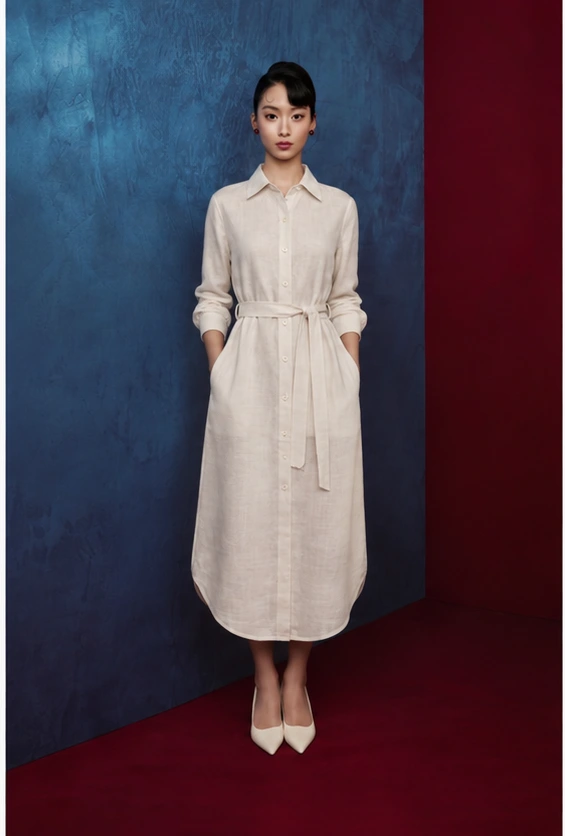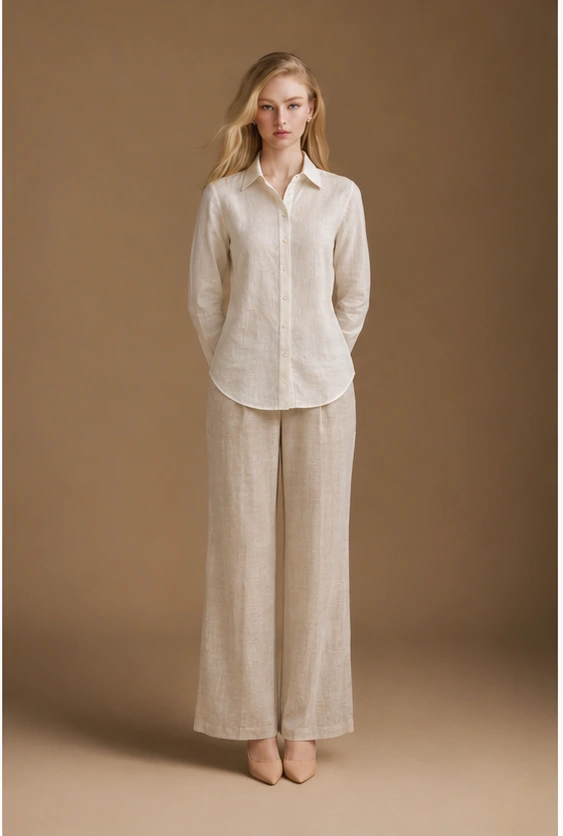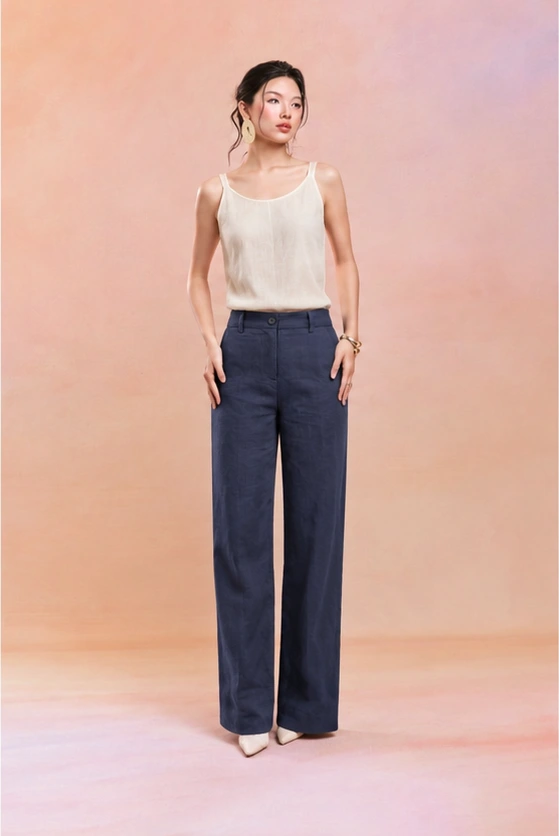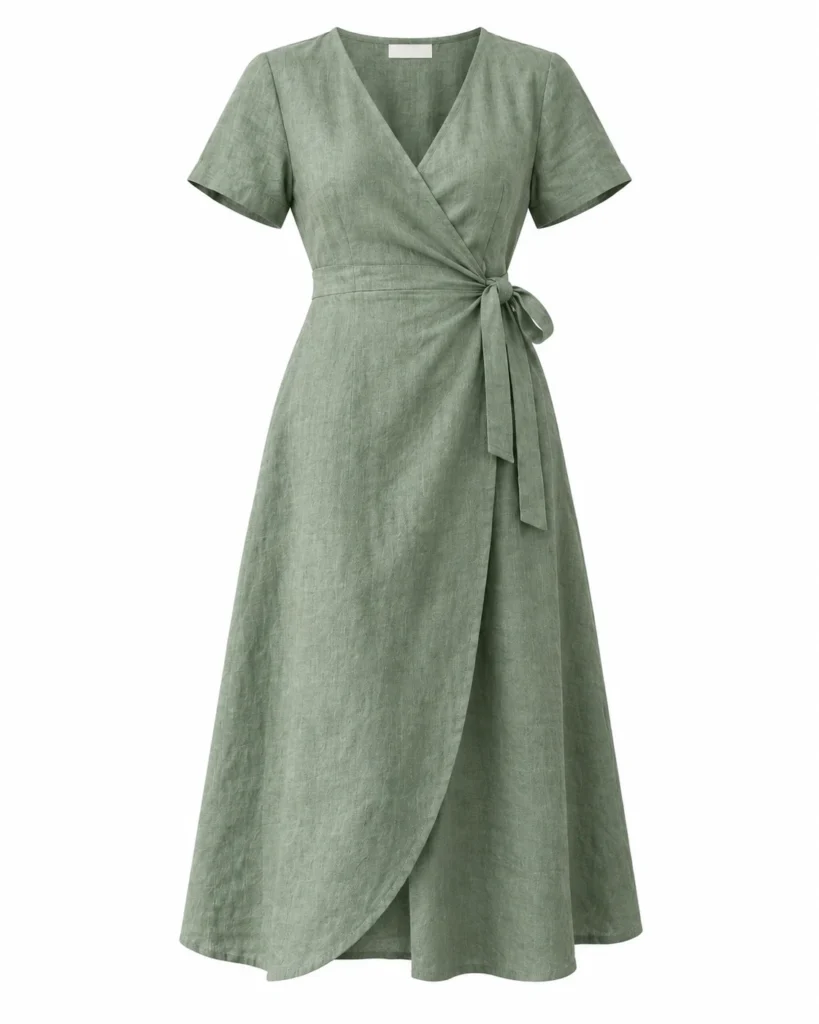
For a fuller bust, the right linen top is about more than finding a larger circumference. Neckline coverage, armhole shape, upper-body length and the amount of room through the front can influence how a design sits. Begin with the shape you like, then explain where standard tops usually feel or look wrong so that the studio can assess that specific design.
Check coverage in the intended underlayer
Wear the bra or underlayer intended for the top and look at the front, side and neckline while standing, sitting and reaching gently. Record which edge or area needs attention. A neckline that looks suitable head-on may expose an underlayer from another angle; a front hem that rises can also deserve a separate discussion from chest circumference.
Do not choose one neckline as a universal solution for a fuller bust. Send the product link, body measurements requested by the studio and the observed priority: neckline coverage, armhole coverage, front length or movement. A diagram or marked reference can locate the concern, while the maker confirms feasible shaping on that design.
Separate a circumference issue from a shaping issue
If a top feels restricted through the bust, the body measurement is important. But a larger overall size can also change shoulder width, neckline position and body volume. It may create space in areas that did not need it. Record what happens when you size up rather than assuming that the largest related figure is the whole solution.
If you already own a woven top with a comfortable chest but an unsatisfactory neckline, use it to describe those two different experiences. The studio needs to understand both what should be retained and what needs discussion.
Choose a neckline for your coverage preference
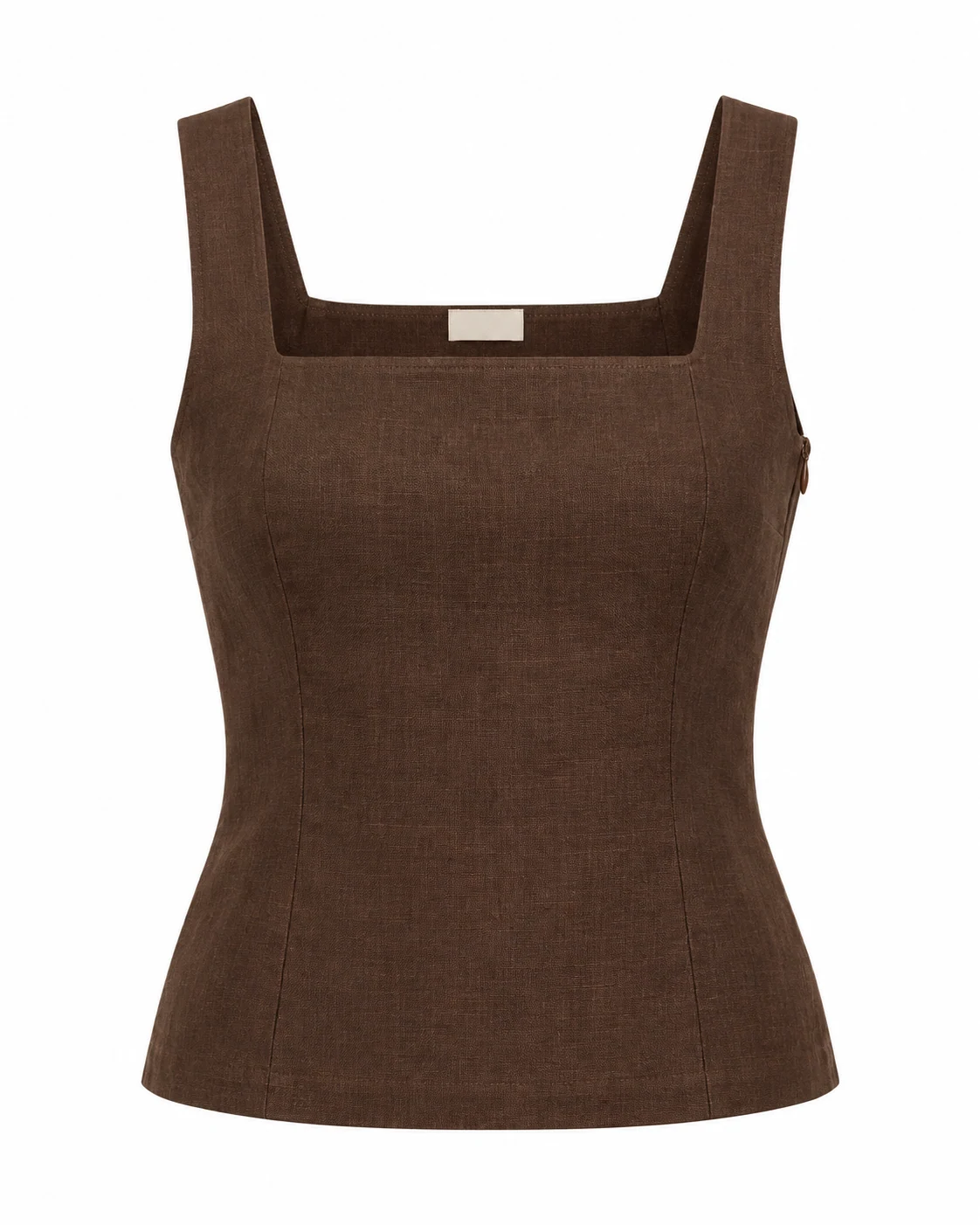
A square, round, open or buttoned neckline provides a different frame. Personal coverage preferences matter, particularly when leaning forward or sitting. Do not infer the amount of coverage on your body from a catalogue image alone.
Name the detail that concerns you. Ask whether the selected neckline and its relationship to the shoulder can be adjusted on that design. Changing a neckline may affect more than the visible opening, so it needs confirmation rather than a casual note assumed to be included in the custom charge.
Think about the armhole and side view
An opening can feel different at the side even when the front view looks right. Underlayers, the position of a bra and personal coverage preferences all affect what you want from the garment. Explain the practical requirement without sending private photographs that are unnecessary to communicate it.
For a sleeveless top, ask what dimensions or reference information the studio needs to discuss the armhole. More width at the bust does not automatically establish the correct opening. The relationship between the upper body and the design should be considered together.
| Concern | A clearer enquiry | A decision to confirm |
|---|---|---|
| Front feels tight | Where it restricts movement, with body measurements | Required room and shaping for that design |
| Neckline feels too open | Preferred coverage while standing and leaning | Whether the neckline can be adapted |
| Side opening exposes more than desired | Underlayer and armhole concern | Feasible armhole treatment |
| Front hem sits higher than expected | What happens on the body and preferred hem | Relevant length measurements |
Do not overlook the front length
The way fabric travels over the upper body can influence where a hem appears. If standard tops seem short in front while their back length is comfortable, describe that observation. Simply choosing a longer overall top can introduce a different proportion elsewhere.
Ask the studio for the measuring method needed to investigate it. A named front or back length is more useful than an unlabelled total. If using a reference garment, keep its dimensions separate from body readings and say whether it has a similar structure and fabric stretch.
Pieces to explore