
Retirement can change the balance of a wardrobe. Clothes once chosen for commuting and office meetings may have fewer outings, while daytime visits, personal projects or travel take up more space. That does not mean everything needs replacing. Before buying linen, look at what you actually wear across an ordinary week and what you wish felt more comfortable or more like you.
A useful wardrobe plan begins with activities rather than a prescribed number of pieces. Gardening, hosting lunch, visiting a gallery and attending a club dinner ask different things of clothing. Linen may have a place in several of those situations, but it does not need to become the answer to all of them.
Audit a real week, not an imagined lifestyle
For seven days, note the outfit you wore and the reason you chose it. Include the practical details: shoes, indoor temperature, sitting time and whether you changed later. An often-worn cardigan may tell you more about your daily needs than a saved photograph of a holiday outfit.
Then mark the friction points. Perhaps the trousers feel formal for home but you have no comfortable alternative for visitors. Perhaps a dress you love needs a layer you cannot find. Choose one gap to solve first. Buying a coordinated group without checking those gaps can produce an attractive wardrobe that still leaves the same everyday problem.
Give each proposed piece a job
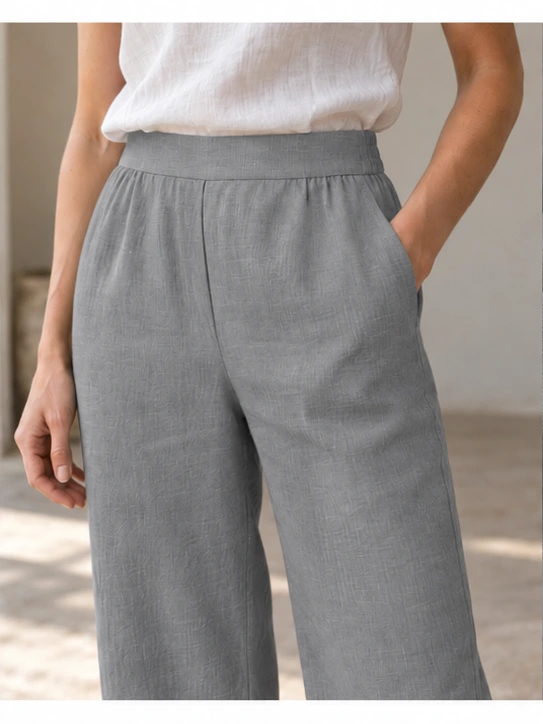
Think of three roles: a dependable bottom, a top that can alter the mood, and a single-piece outfit for days when you want fewer decisions. Those roles do not require purchasing all three. Existing jeans, a cotton shirt or a well-loved dress may already fill one perfectly.
For a linen bottom, decide how it will be worn at the waist and with which shoes. For a shirt, decide whether it must layer over another top or tuck into trousers. For a dress, consider whether its sleeve and neckline work without a second purchase. Defining the job exposes fit questions before you order.
Count outfits instead of counting garments
Suppose you are considering two shirts and one pair of trousers. Set each shirt beside the trousers and beside a bottom you already own. If all four combinations work with familiar footwear, the group has useful reach. If both shirts require the same special shoes you rarely wear, the apparent versatility may be less valuable in practice.
You can also build around a dress. Try it alone, with an existing cardigan and under an open shirt. Check the actual layers together: a full sleeve may feel crowded inside a narrow cardigan, while a long overshirt may hide a waist detail you enjoy. The aim is reliable combinations, not a theoretical capsule wardrobe.
Let maintenance influence the purchase
Retirement does not create a universal preference for low-maintenance clothing. Some people enjoy pressing a shirt; others prefer a natural, softly creased finish. Decide which approach suits you and consult the garment’s linen care instructions. Different constructions, trims and fabrics can require different treatment.
Do not buy a smaller size assuming the fabric will relax, or a larger size assuming you can shrink it at home. Fit and care should be discussed separately. If exact length matters, ask how the supplied garment and recommended care have been accounted for rather than experimenting after delivery.
Keep occasion clothing proportionate to your calendar
A retirement wardrobe can include polished pieces without returning to office dressing. One suitable outfit for dinners or family events may be enough if those events are occasional. If they are frequent, a second direction could be worthwhile: for example, a dress for one setting and shirt with trousers for another.
Think about the environments as well as the invitations. A long lunch involves sitting; an outdoor celebration may involve uneven ground; a theatre visit may need an extra layer. Make those conditions part of the outfit brief. A garment that looks right while standing may still need a different rise, hem or sleeve arrangement for its intended use.
Buy in stages and learn from the first piece
Start with the gap that matters most. Wear the first purchase in ordinary life before ordering a larger group. Notice whether the chosen shade combines as expected, whether the pockets are useful and whether the length suits your shoes. Those observations make the next order more precise.
LINENELLAR’s standard and custom routes let you start from a listed design. Custom adds 20% to the selected product price; one optional note can describe fit preferences, with details confirmed before making. You do not need to supply a complicated tailoring specification to begin the conversation.
A successful retirement wardrobe supports the life you are living, including work or volunteering if those remain part of it. Keep the clothes that still serve you, add selectively, and judge the result by how easily you get dressed for your own plans.
Continue reading
Pieces to explore
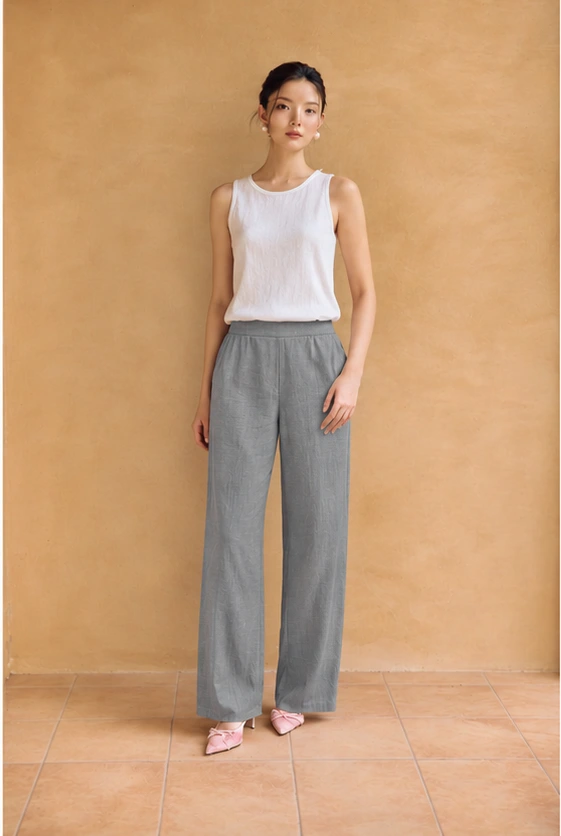
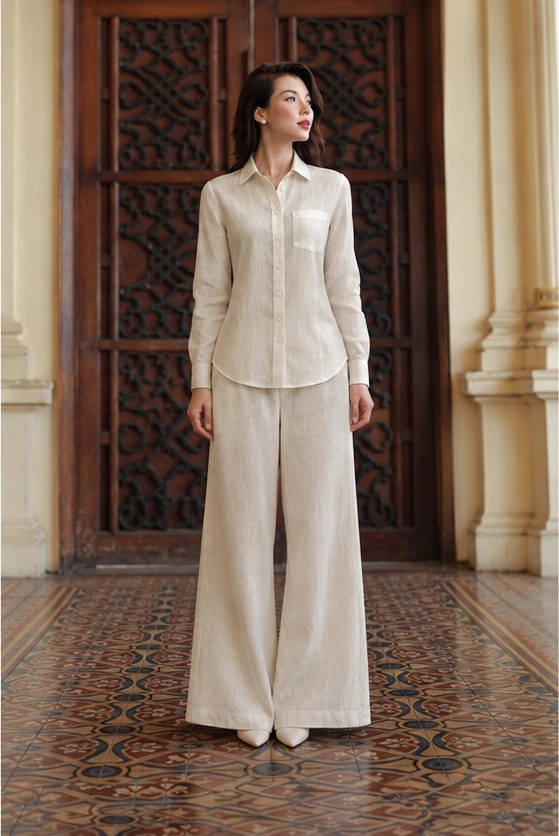
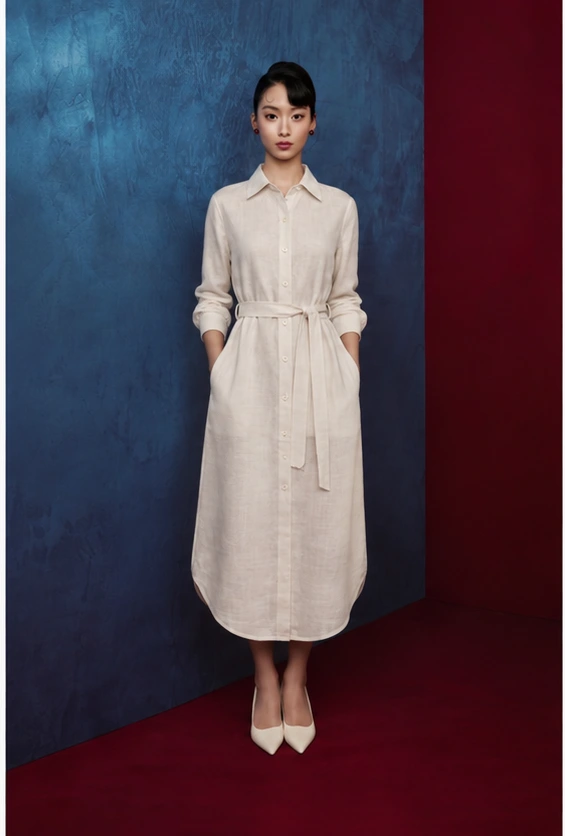
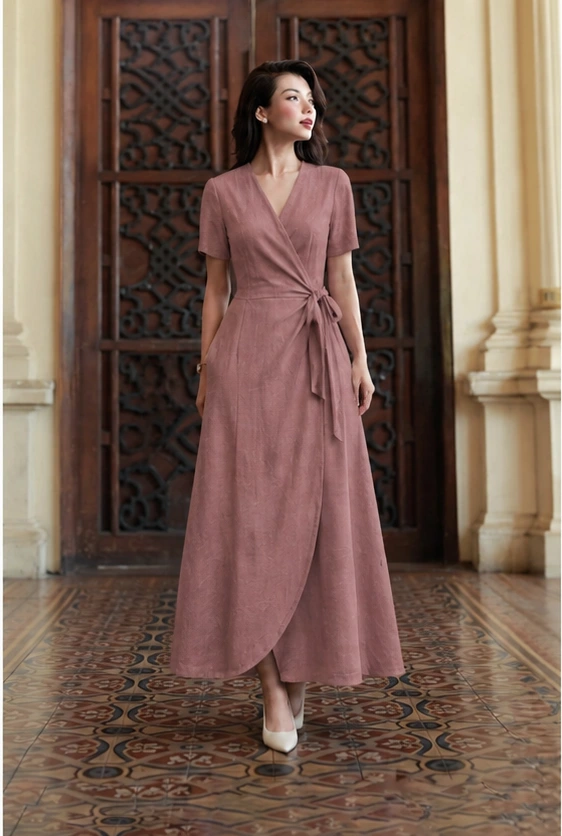
Three designs to compare with the ideas in this article. Open each product for current pricing, available choices and construction details; confirm any requested fit or design change with our studio.
Comments (1)