


Custom Christmas Tree Skirt. The right tree skirt begins with the floor plan rather than the height printed on the tree box. Measure the stand and the lower branches before deciding how much fabric you want to show.
The right tree skirt begins with the floor plan rather than the height printed on the tree box. Measure the stand and the lower branches before deciding how much fabric you want to show.
Separate the stand, skirt and branch measurements
Record the widest part of the stand, the branch spread and the free floor area. The skirt must conceal the hardware while leaving room for access to the stand and any watering point.
The tree stand establishes the minimum area that needs disguising, while the lowest branches establish a visual reference. Neither measurement alone dictates the skirt size. Look at the tree from the doorway and from the main seat in the room. Decide whether you want a narrow visible border or a broader area for presents. Also consider the central opening and how you will reach the base after the fabric is positioned. Those details are part of a usable custom brief.
A realistic decision in your own home
Suppose the stand is wider on one axis than the other. Measure its longest overall dimension, including projecting feet, and draw that shape inside your paper skirt template. Move the template around the tree rather than assuming the trunk sits exactly at the center of the stand. A quick physical test reveals problems that a diameter chosen from a catalog cannot show.
A practical way to test your idea
For a stand measuring 24 inches across, draw a 36-inch paper circle and compare it with a larger one. These are planning examples, not a universal size recommendation.
A common ordering mistake
A skirt diameter is the full width across the circle. Sending a radius as a diameter can result in a piece half the intended size.
Should the skirt be wider than the branches?
There is no compulsory proportion. A visible border can look deliberate, but the room may not allow it. Prioritize covering the actual stand, keeping access practical and maintaining a comfortable walking route. Send the proposed finished diameter after testing it on the floor.
Use a full-size floor template before approving the diameter
Cut or arrange paper into the proposed finished circle and mark its center and opening. Put it around the actual base with the tree in its intended position. This gives you a way to test the outline, access and visible border together. A circle drawn on a small sketch cannot show whether a nearby door catches the edge or whether the most important viewing angle reveals the stand. Repeat the test with the gifts or containers you expect to place nearby.
Keep design measurements and support requirements separate
The stand must be appropriate for the tree independently of the skirt. Do not reduce or change the stand to make a preferred decorative diameter work. If the base projects beyond the footprint you originally imagined, revise the textile brief or the tree location. Describe any central opening, raised platform or access point as part of the custom discussion. The decorative piece should be designed around the practical setup, rather than being used to conceal an unresolved support or access problem.
Check the outline from more than one viewpoint
A floor template should be assessed from the places where the display will actually be seen. The doorway may reveal a stand foot that disappears from the sofa, while a side view may show that presents occupy the area you intended to leave visible. Test the proposed circle with the tree in place and note any asymmetry in the base. If the outline only works when the fabric is pushed behind furniture, reconsider the diameter or location before treating the measurements as final.
Should I measure before or after placing the tree?
Measure the stand itself first, then test the decorative footprint with the tree in its intended position. The two checks answer different questions: what needs covering, and how much room the display can use without compromising access.
| Information | What to explain |
|---|---|
| Stand and available floor area | Measure the widest projecting part of the stand and identify nearby doors or furniture. These constraints help explain what the decorative piece needs to cover. |
| Finished diameter and central opening | State the full intended width across the skirt. Ask how the opening and access to the base are handled, rather than inferring those details from an overall size. |
| Appearance and final arrangement | Describe whether you want a narrow visible border or space around presents. Send a photo of the actual setup so the proportions can be discussed in context. |
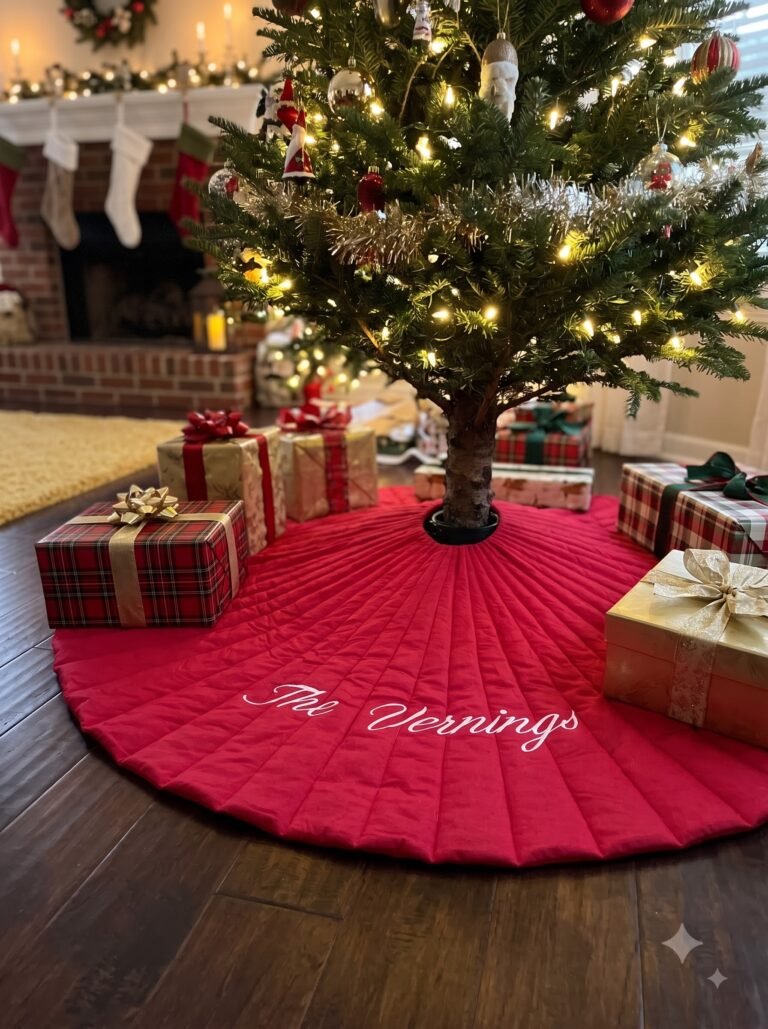
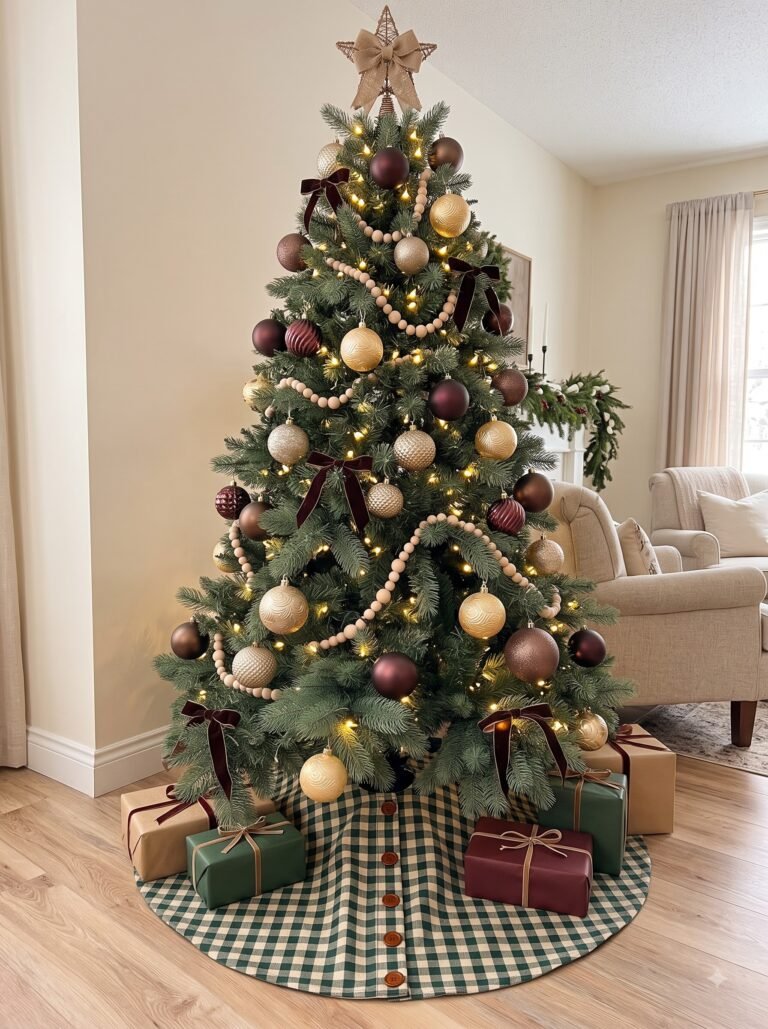
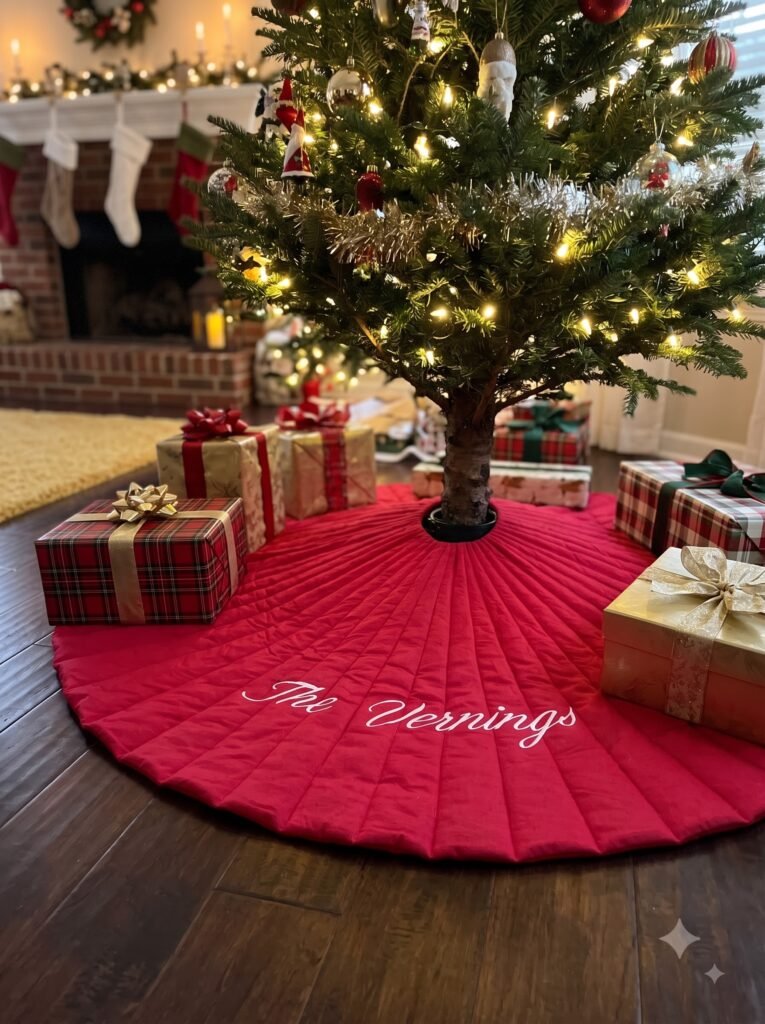
Pieces to explore
Comments (5)