
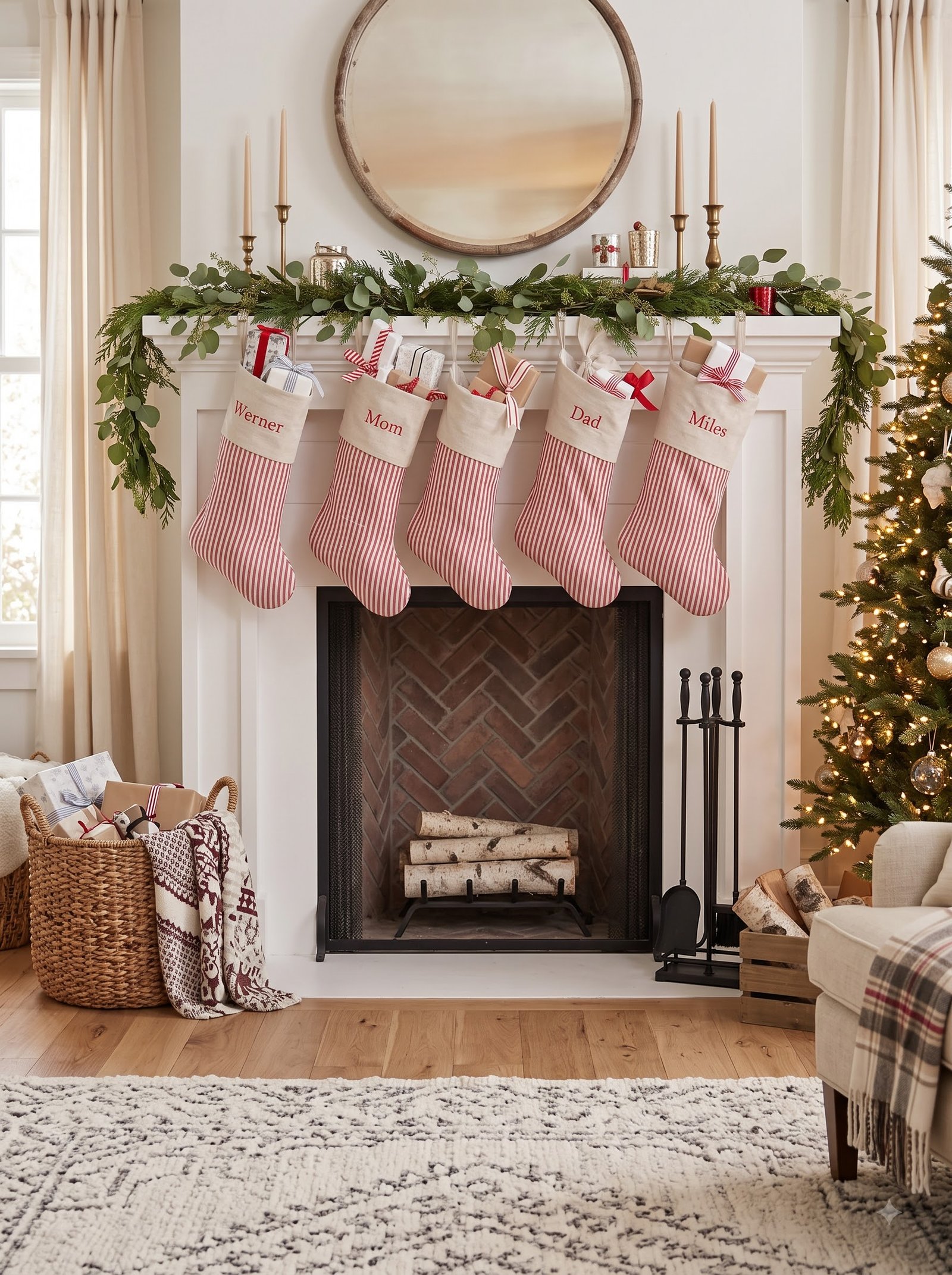
Stocking measurements can be confusing because height, cuff width and foot length describe different parts of the shape. A custom request should identify each dimension clearly.
Define the opening as carefully as the overall height
State whether height includes the loop or cuff, and whether the width is measured flat. Describe the intended display position and whether the stocking will hold small gifts or mainly serve as decoration.
The most useful stocking dimension may be its opening, particularly if gifts will be placed inside. A tall decorative shape can still have a narrow cuff, while a shorter one may be easier to fill. Think about the intended contents and the display separately. Describe which matters most before requesting custom dimensions. If the piece is mainly decorative, proportion may lead the discussion; if it will hold treats, access and usable space need attention too.
A realistic decision in your own home
Place the intended small gifts on a table and identify the widest one. Compare that with the proposed cuff opening, remembering that a flat measurement describes a different shape from the opening when filled. Ask how the chosen construction affects access rather than assuming the product's overall height describes its capacity.
A practical way to test your idea
Draw a simple stocking outline on paper and write the dimensions on it. Photograph the drawing beside a ruler so the maker can understand where each measurement begins.
A common ordering mistake
Do not order from a single diagonal measurement. Two stockings with the same diagonal can have very different openings and overall proportions.
Is the hanging loop included in the stated height?
Confirm this for the selected item. Different measurement conventions can include or exclude the loop or cuff. In your own brief, state the convention explicitly and use a labeled sketch. Agreement about the measuring points is more useful than an apparently precise number without context.
Prioritize usable access when gifts will go inside
A display stocking and a container for treats are not quite the same brief. If use matters, think about the opening and the shape of the contents as carefully as the overall outline. A tall narrow form may photograph well but be inconvenient for a particular boxed gift. Tell the maker which dimension is driven by appearance and which by intended contents. This gives a clearer basis for discussing a custom adjustment than simply asking for a bigger stocking.
Does increasing height also increase the opening?
Not necessarily. Height and opening width are separate dimensions of the pattern. Specify both if they matter to the request, and label the measuring points instead of assuming one overall size communicates every proportion.
| Information | What to explain |
|---|---|
| Finished height and measuring points | Show the top and bottom reference points on a sketch. State whether the loop or cuff is included so a single height cannot be interpreted in two ways. |
| Opening and shape | Give the flat cuff width and explain any important foot or outline proportion. Mention whether the piece is mainly decorative or intended to hold particular small gifts. |
| Display relationship | Photograph existing stockings if coordination matters. Explain which details should repeat and which can differ, and keep hanging hardware requirements separate from the textile brief. |
Pieces to explore
Comments (3)