

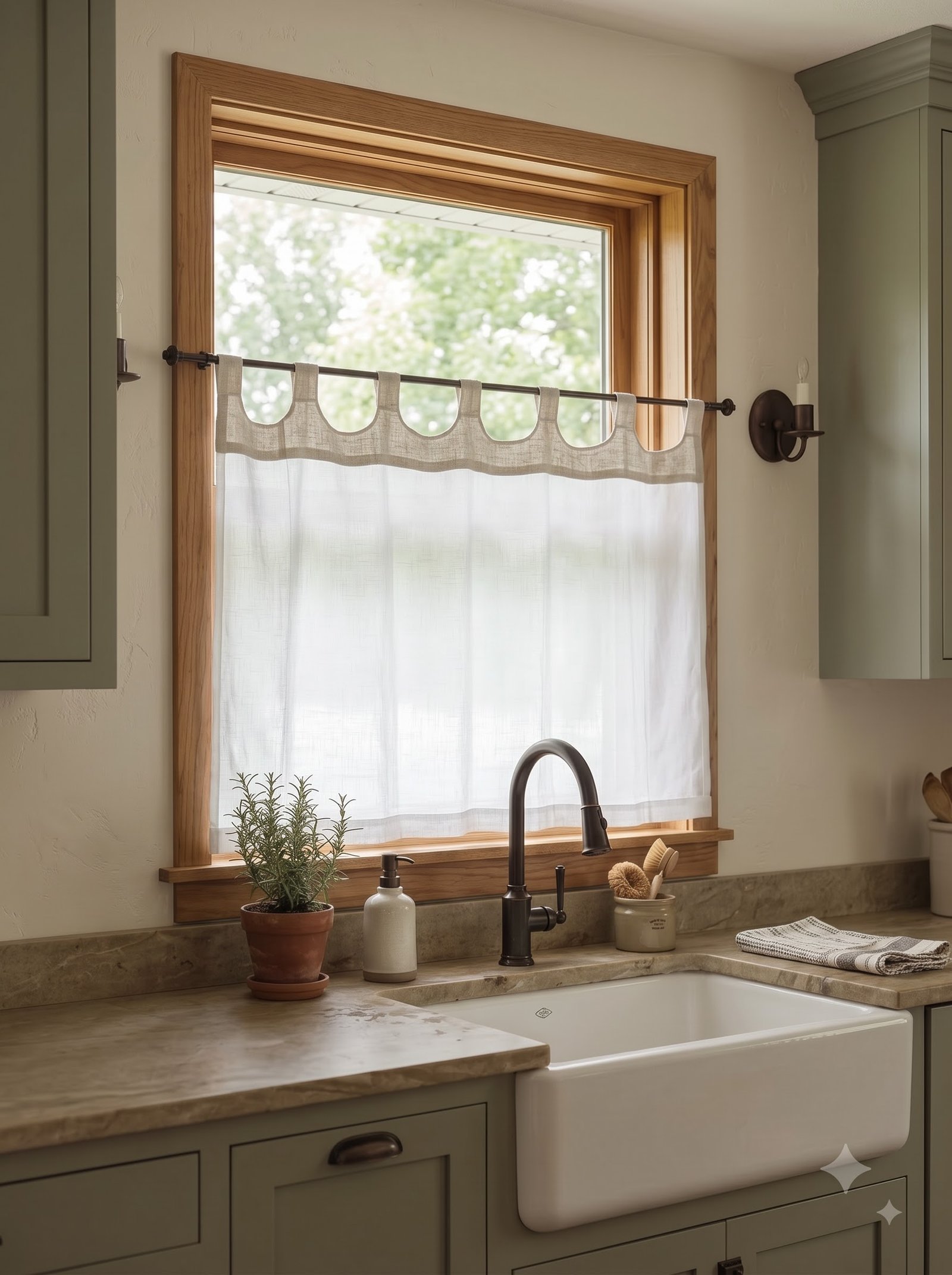
Café Curtain Fullness. Opening width and fabric width are different measurements. Fullness describes how much fabric is distributed along the rod, which changes the folds and the view through the window.
Opening width and fabric width are different measurements. Fullness describes how much fabric is distributed along the rod, which changes the folds and the view through the window.
Use fullness to choose an appearance, not just a number
Start with the usable rod span, then describe your preferred effect: flatter, gently gathered or more generous folds. Confirm the finished width of each panel before placing a custom order.
More fabric produces a different rhythm of folds, but it can also make a small window treatment look crowded. Less fabric may reveal more of a heading detail or show a pattern more clearly. Think about the effect you prefer before choosing a ratio. The appropriate construction and available material also matter, so a commonly mentioned ratio should be treated as a discussion point rather than a rule for every design.
A realistic decision in your own home
For a usable span of 80 cm, a proposed total panel width of 120 cm gives a planning ratio of 1.5. If you want a pair, make clear whether that 120 cm is shared between two panels or applies to each. A two-column note separating measured span from proposed fabric width keeps the arithmetic understandable.
A practical way to test your idea
A 30-inch span with a proposed 45-inch total fabric width gives a planning ratio of 1.5. This is a calculation example, not the correct specification for every fabric or heading.
A common ordering mistake
Do not apply a fullness multiplier twice. If a quote already includes gathering, adding it again can produce more fabric than you intended.
Is a higher fullness ratio always more luxurious?
No. The right amount depends on the window, fabric, heading and the look you want. A restrained panel can be deliberate, while excess gathering may hide details. Judge the result you want and confirm the specification rather than choosing the largest ratio available.
Keep fabric width and installed span in separate columns
Fullness calculations become easier when the physical span is never overwritten by the proposed panel width. Record both, label the ratio as a proposal and state whether the fabric width is shared between panels. If you change panel count, revisit the calculation instead of carrying the old numbers forward automatically. This avoids one of the most common ambiguities in a gathering discussion: a total width being interpreted as the width of each of two pieces.
Does more gathering improve privacy automatically?
Do not rely on fullness alone to establish privacy. The fabric, coverage and lighting conditions also matter. Choose gathering for the intended appearance and movement, and discuss screening requirements as a separate part of the window brief.
| Information | What to explain |
|---|---|
| Usable span and panel count | Measure the area where the curtain can actually hang. State one panel or a pair, and identify whether your proposed fabric width is per panel or combined. |
| Finished drop and heading reference | Mark the intended lower edge in a photo. Ask where the chosen design measures its length from, including how the top detail relates to the rod. |
| Hardware and intended coverage | Give the rod diameter, mounting position and any obstruction. Describe the amount of glass you want covered and whether the curtain must move frequently. |
Pieces to explore



Comments (3)