

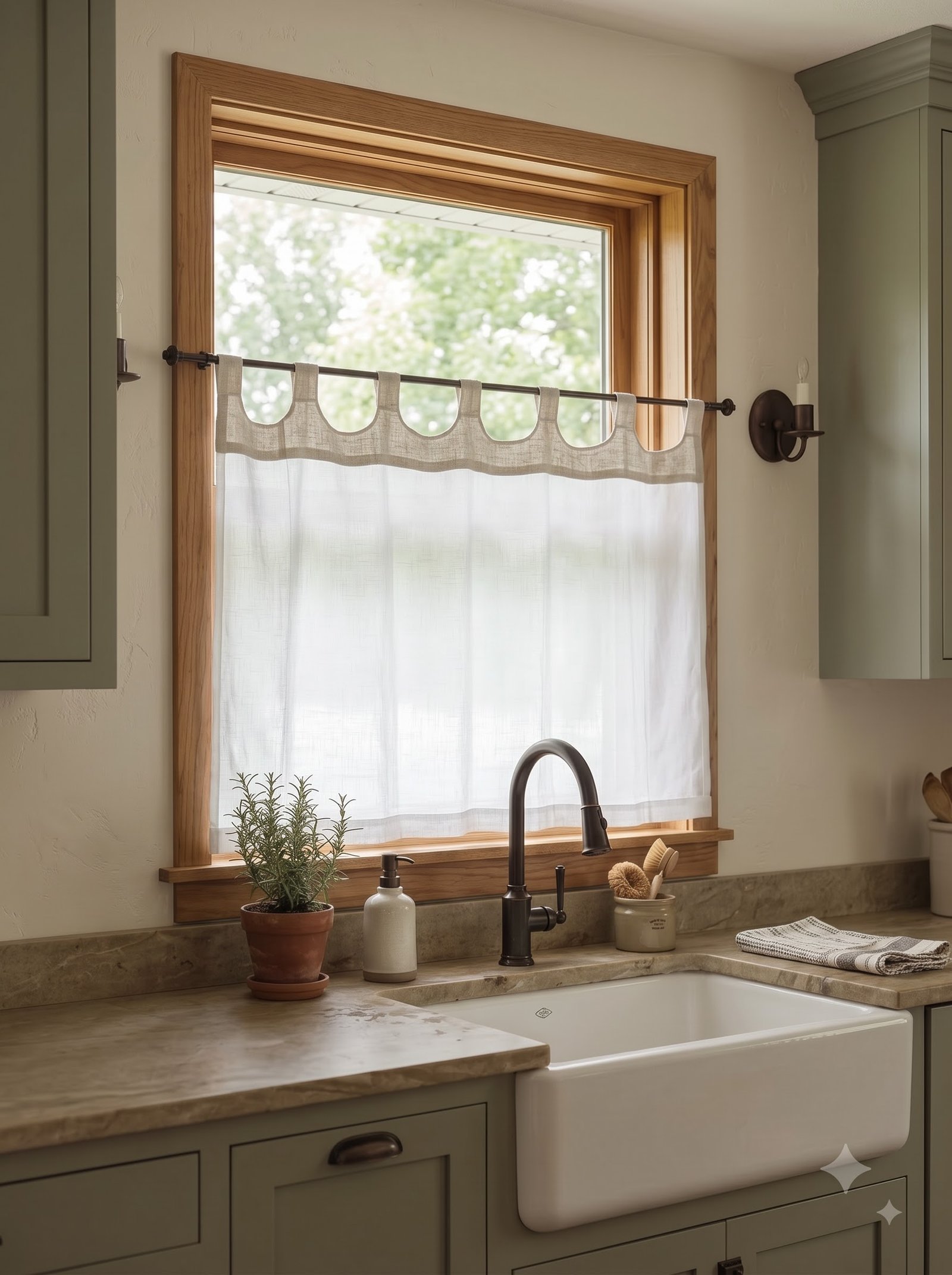
A half-window curtain does not need to end at a fixed fraction of the glass. Its lower edge should reflect the sightline, the frame and the way the room is used.
Set the hem by sightline and daily use
Decide how much of the lower pane you want covered, then check the view while seated and standing. Keep the hem clear of obstructions where practical.
A café curtain is often described by how much of a window it covers, but coverage should respond to the room. Consider what is visible from a seated position, how the window opens and which part of the view you want to retain. Marking two or three lower edges with paper helps turn an abstract length into a visible decision. Once a position feels right, measure from the actual hanging reference.
A realistic decision in your own home
In a kitchen with a low window over a counter, a few centimeters can decide whether the hem clears objects placed below. Test the planned drop with the counter in normal use, not freshly cleared for a photograph. Adjust the arrangement before converting it into the final order note.
A practical way to test your idea
Use a sheet of paper at two proposed hem positions and look from the usual seat in the room. The better choice may be a little higher or lower than the window midpoint.
A common ordering mistake
Do not treat the phrase half curtain as a precise measurement. Send the intended finished drop and identify whether the heading is included.
Should a café curtain finish exactly at the sill?
It can, but it does not have to. The desired coverage, hardware position and nearby obstructions determine a useful drop. Explain the intended hem location and confirm the measurement convention for the heading. A generic sill-length description is less precise than a marked photograph.
Test the hem from a seated and standing position
A lower pane may need different coverage depending on the view you want to retain and where people usually sit. Use temporary paper at several heights and look from ordinary positions in the room. Include the sill, counter and window mechanism in the test. Then choose the finished drop from the actual hanging reference. This gives a better reason for the measurement than treating half-window as a literal percentage of the total glass height.
Can I change coverage by moving the rod instead of changing the curtain?
The two decisions are related, but moving the rod also changes the heading position and visible glass above it. Test the proposed installation before finalizing the dimensions. Describe both rod location and intended hem in the approved brief.
| Information | What to explain |
|---|---|
| Usable span and panel count | Measure the area where the curtain can actually hang. State one panel or a pair, and identify whether your proposed fabric width is per panel or combined. |
| Finished drop and heading reference | Mark the intended lower edge in a photo. Ask where the chosen design measures its length from, including how the top detail relates to the rod. |
| Hardware and intended coverage | Give the rod diameter, mounting position and any obstruction. Describe the amount of glass you want covered and whether the curtain must move frequently. |
Pieces to explore