
Light-Filtering Linen Curtains. Softly filtered daylight and complete privacy are different needs. A woven curtain can change the atmosphere of a window without functioning as a blackout or fully opaque covering.
Softly filtered daylight and complete privacy are different needs. A woven curtain can change the atmosphere of a window without functioning as a blackout or fully opaque covering.
Make the privacy requirement explicit before choosing the look
Consider the distance to neighboring buildings, the height of the window and how the space is lit after dark. Discuss your privacy needs before choosing the fabric and coverage.
A light-filtering treatment can soften a view and change the room’s atmosphere, but it is not the same product as a blackout or fully opaque covering. Decide whether you need partial screening, an unobstructed upper view or more complete coverage. Describe the actual sightline from outside, including distance and window height. This gives the maker a useful problem to discuss rather than a general request for privacy that could be interpreted several ways.
A realistic decision in your own home
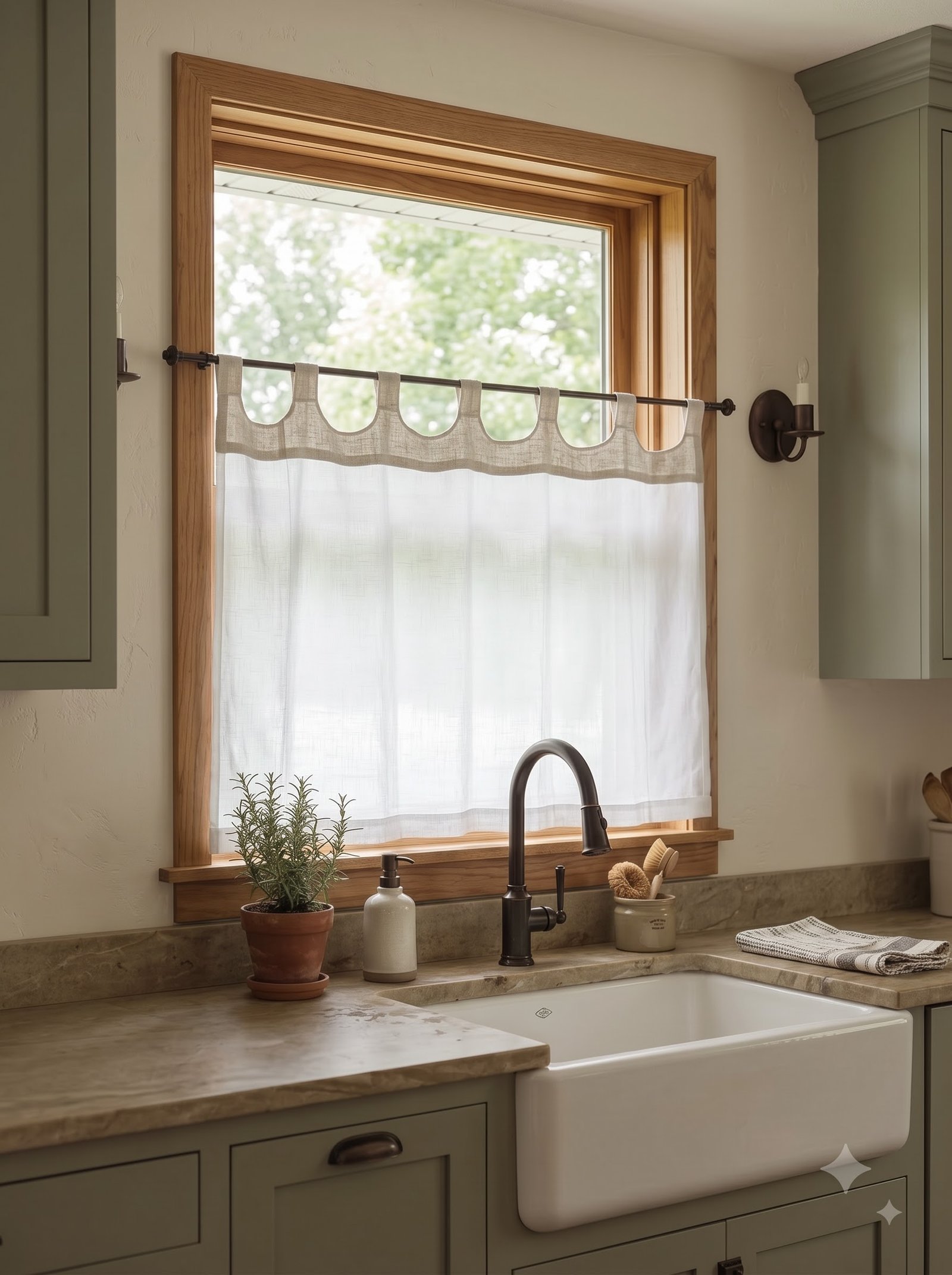
Consider a ground-floor kitchen facing a walkway. Daytime softness may be enough for some households, while others need a separate solution after dark. Assess the view with indoor lights on and decide whether the café curtain is the decorative layer, the main screening layer or part of a combination.
A practical way to test your idea
Stand outside the window at night with the room lights on and assess the existing sightline. If full screening is required, ask about an additional appropriate layer.
A common ordering mistake
Do not assume a daytime photograph demonstrates nighttime privacy. Interior and exterior lighting can reverse the apparent transparency of a fabric.
Will light-filtering linen guarantee privacy at night?
No blanket guarantee should be inferred from that description. Visibility depends on the weave, color, lighting and viewing conditions. Explain your requirements and consider an additional suitable covering if full privacy is important. A daytime product photograph cannot answer every nighttime situation.
Evaluate the view from outside as a separate exercise
Privacy should be assessed from the relevant viewing position, not only from the pleasant light seen indoors. Note the distance, height and angle of neighboring windows or a public walkway. Compare day and night conditions if both matter. Then decide whether the café curtain is the primary screening layer or one decorative component of a broader solution. This makes the buying decision more realistic than assuming a softly lit interior photograph establishes performance in every setting.
Can I keep daylight and guarantee complete screening with this curtain alone?
Those are different requirements and should not be assumed from a light-filtering description. Explain which matters most, assess the actual conditions and consider an additional suitable covering if complete privacy is necessary for the room.
| Information | What to explain |
|---|---|
| Usable span and panel count | Measure the area where the curtain can actually hang. State one panel or a pair, and identify whether your proposed fabric width is per panel or combined. |
| Finished drop and heading reference | Mark the intended lower edge in a photo. Ask where the chosen design measures its length from, including how the top detail relates to the rod. |
| Hardware and intended coverage | Give the rod diameter, mounting position and any obstruction. Describe the amount of glass you want covered and whether the curtain must move frequently. |
Pieces to explore