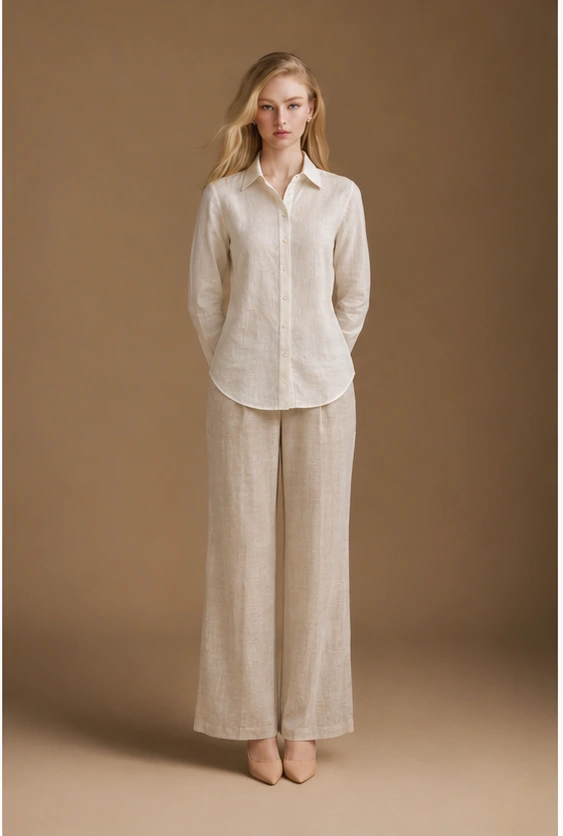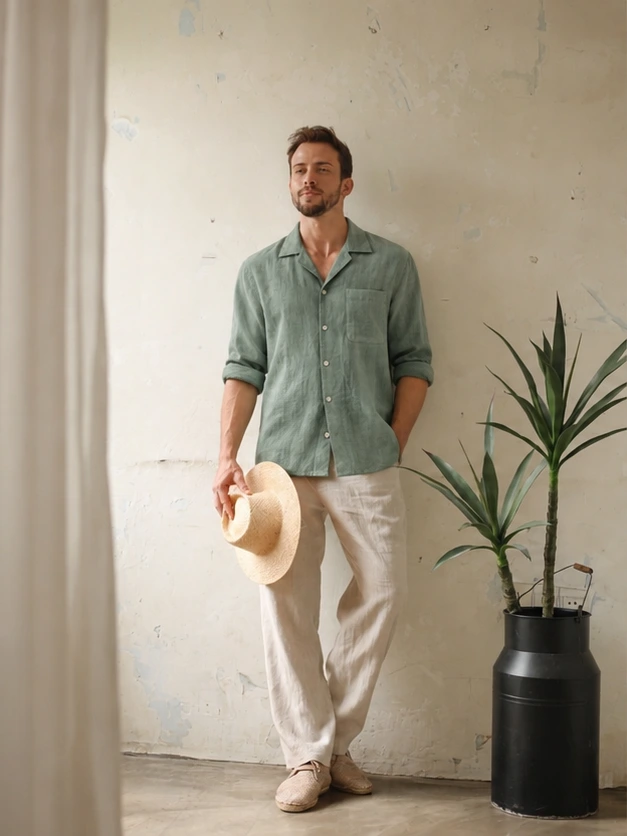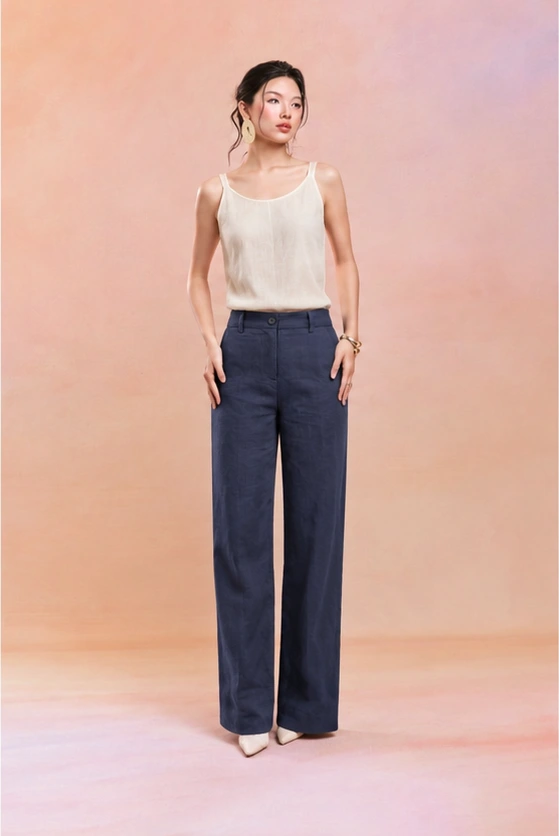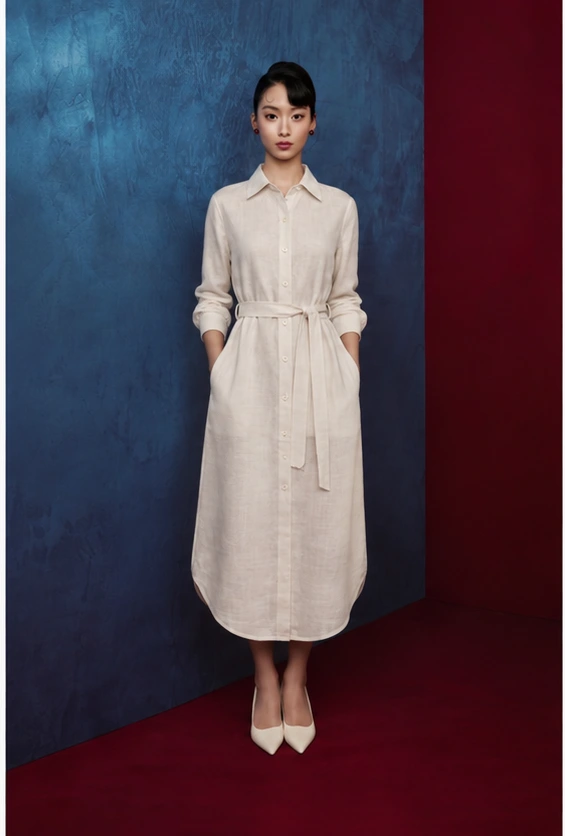
Linen can be part of an office wardrobe when its shape, coverage and finish suit the workplace. A relaxed creative setting and a more formal client-facing environment may expect different things. Begin with the actual workday, then choose the garment and custom proportions that support it rather than relying on a fabric name to establish formality.
Build for the workplace you actually enter
| Workplace direction | Illustrative outfit | Main trade-off to check |
|---|---|---|
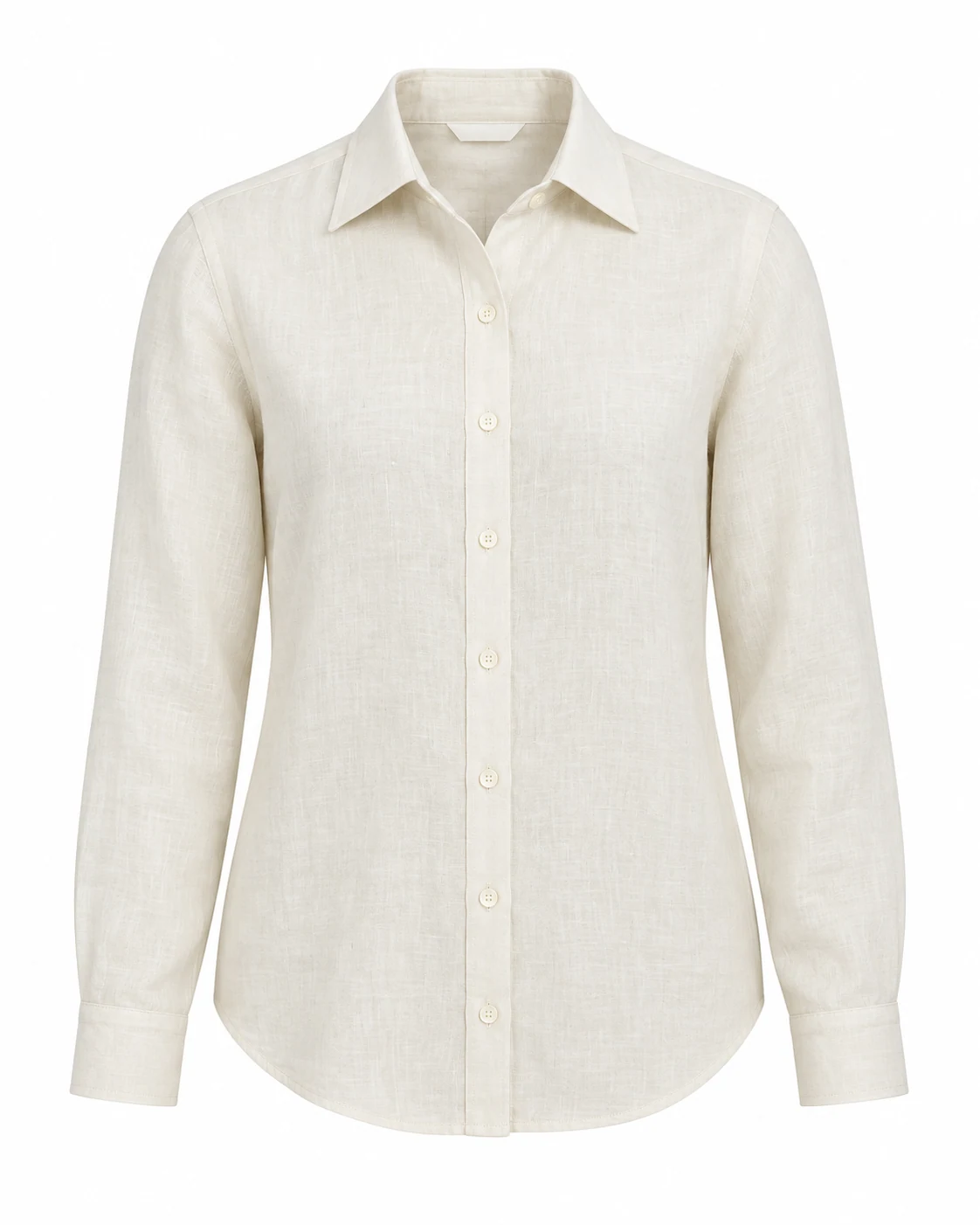
| Casual creative office | Linen shirt and straight trousers | Seated comfort and an intentional untucked hem |
| Business casual | Simple top, trousers and an approved jacket | Coverage, layering room and the jacket’s actual structure |
| A formal client setting | A suit only if its construction meets the dress code | Required formality and tolerance for creasing |
These combinations are planning examples, not claims that every LINENELLAR piece suits all offices. Sit at a desk, reach for a keyboard and check the neckline with your usual underlayer. Keep a suitable care routine, but expect linen’s surface to change during the workday. A larger size alone may not solve a specific sleeve or shoulder restriction.
Identify the level of structure you need
A light top, a soft suit and a firmly structured jacket are not interchangeable. Check the specific product’s construction and ask about lining or internal shaping when those details matter. A catalogue image cannot confirm every hidden feature.
Consider what you already wear successfully at work. If your workplace expects a consistently sharp outline, discuss whether the actual linen design meets that requirement. A custom length adjustment cannot turn every lightweight garment into another type of tailored construction.
Assess fit during a working day
Think about sitting at a desk, reaching forward, walking and carrying ordinary work items. A shirt can look neat standing still but need more appropriate movement through the back or arm area. Trousers need an upper fit that remains comfortable when seated, not just the correct labelled waist size.
Write down the specific priority: room when sitting, sleeves clear of the hands, a hem that stays useful tucked in, or a waistband position you prefer. Keep these requests separate from factual body measurements so the studio can confirm the finished specification.
Decide coverage with your usual underlayers
Office lighting and daylight near windows can reveal a different impression from a product photograph. For light shades, ask about the fabric and construction, then consider the underlayer you intend to use. Opacity cannot be guaranteed by GSM or a colour name alone.
Check neckline and armhole position for the movements you make at work. If you want a different opening, confirm whether it is feasible on the chosen design and whether it is an additional construction request. A note in the order field is not a substitute for that agreement.
| Workday priority | Design/fit decision | Useful check |
|---|---|---|
| Desk comfort | Waist, seat and rise | Sitting as well as standing |
| Reaching | Shoulder, sleeve and upper body | Intended underlayer |
| Tucked shirt/top | Body length and waistband relationship | Movement through the day |
| More formal setting | Actual structure and finish | Product details, not the word suit alone |
| Light-colour outfit | Coverage and layers | Comparable lighting |
Plan a realistic care routine
Linen develops creases in use. Decide how much natural texture suits your workplace and how you will maintain the pieces according to their labels. A pressed collar or trouser line may be a preference, but the surface will not necessarily remain identical all day.
Avoid selecting aggressive treatments simply to chase a permanently smooth appearance. Care belongs to the finished garment and its components. If a piece needs a particular routine, include that time and effort in the buying decision.
Pieces to explore