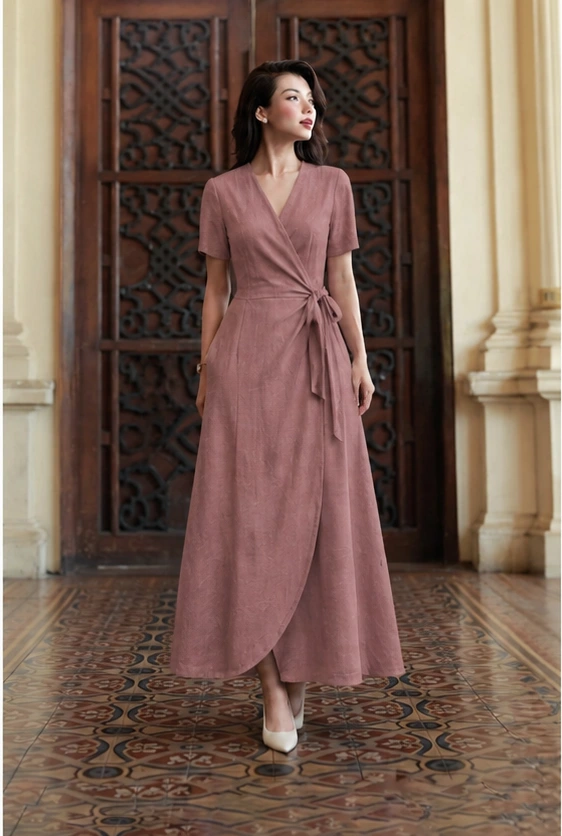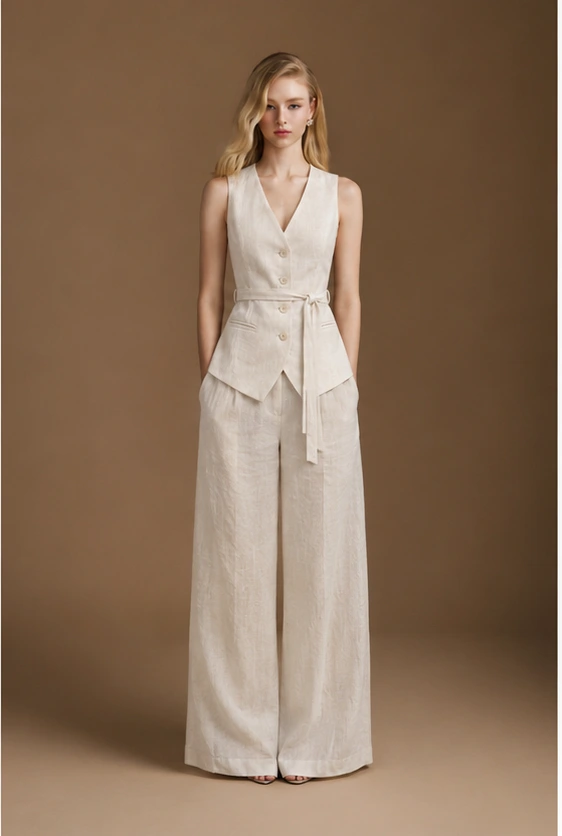

“Linen” is a useful starting description, but it is not a complete fabric specification for a brand collection. The same design can look and behave differently in fabrics with different weights, weaves, finishes and colours. A clear sourcing brief connects the intended garment with the material you will approve.
Start with the use of the garment
Describe whether the piece is intended as a light shirt, a dress, trousers or a layer. Explain the coverage, structure and feel you want. These requirements help the discussion stay focused on the actual product rather than selecting a fabric solely because it looks attractive in a close-up photograph.
The LINENELLAR collection can provide design context, while the linen library offers colour references. Retail colour availability should not be treated as automatic confirmation of production fabric availability, quantity or lead time for a business project.
Record measurable material information

Where known, include fibre composition, fabric weight, weave, usable width, colour reference and finishing requirements. Ask which details can be confirmed through supplier documentation and which require a physical sample or agreed testing. Do not attach an unsupported certification or origin claim to a fabric because it resembles another material.
If you do not have a fixed specification, describe your priorities and ask for feasible options. Distinguish a required property from a preferred one. This makes alternatives easier to compare without silently changing the brief.
Review colour in a consistent way
Screen images are references. Agree how physical colour approval will be handled and which sample or reference controls the order. If matching several pieces within one collection matters, raise it before fabric is committed.
Discuss acceptable shade variation and batch handling where relevant. An order containing several garments in a named colour does not by itself establish a documented matching standard across separate fabric purchases or later reorders.
Check the fabric in the intended construction
Review coverage, drape and feel in a garment sample as well as a loose swatch. Seams, interfacing, lining and garment proportions affect the result. Clarify care expectations and ask how any required dimensional or colourfastness checks will be specified, performed and recorded.
Avoid promising customers a performance result before it has been established for the fabric and garment you will actually sell. Marketing wording should follow verified specifications, not get ahead of them.
Link fabric approval to the production record
Keep the approved fabric reference with the final sample, tech pack and quotation. If a substitute is proposed, review its effect on fit, appearance, cost and timing before approving it. Discuss your fabric brief with LINENELLAR. Fabric options, quantities, sample costs and production timing are confirmed individually for brand projects.
Production guidance from LINENELLAR. The scope, MOQ, sampling, pricing, quality requirements and delivery terms are confirmed in each project quotation.