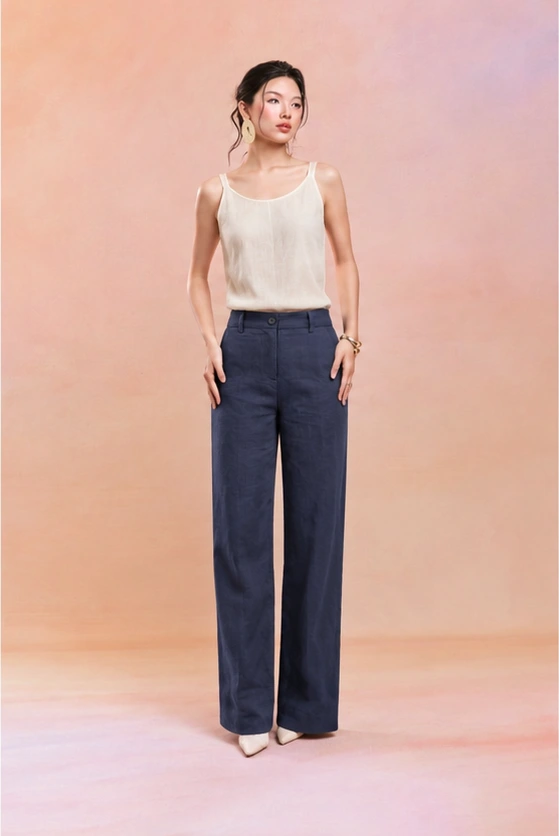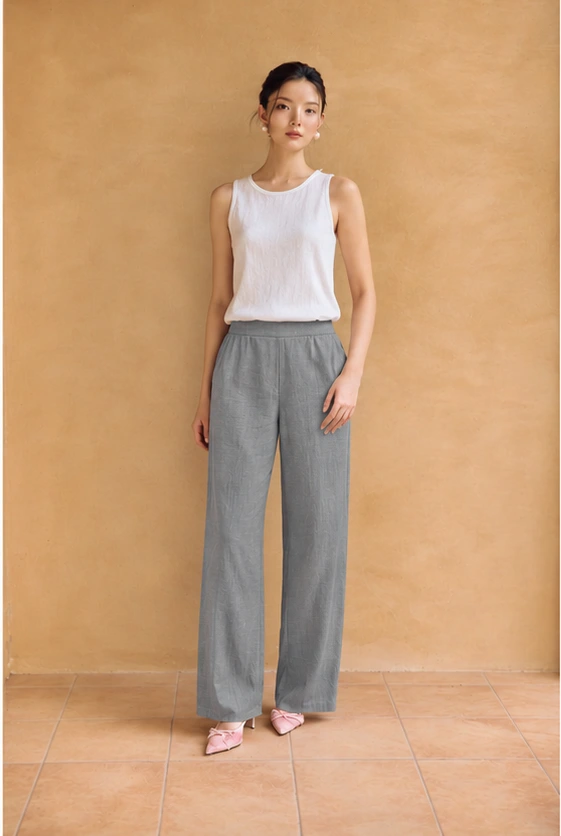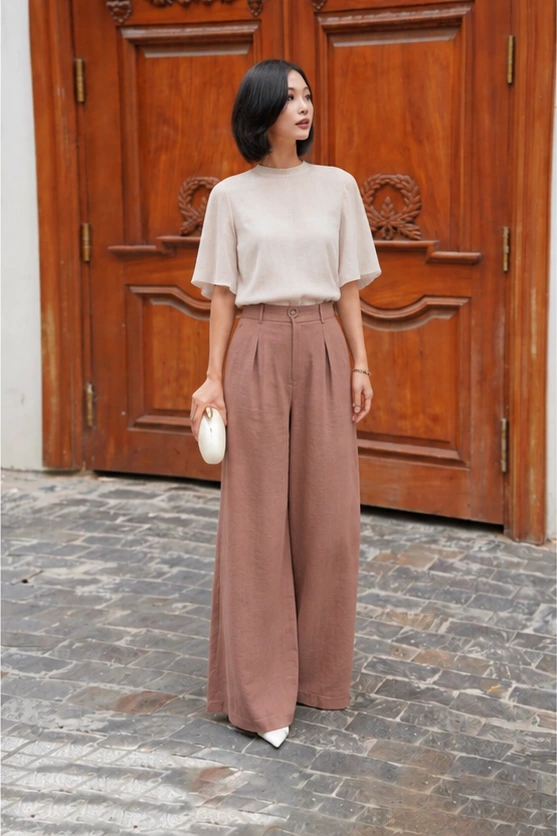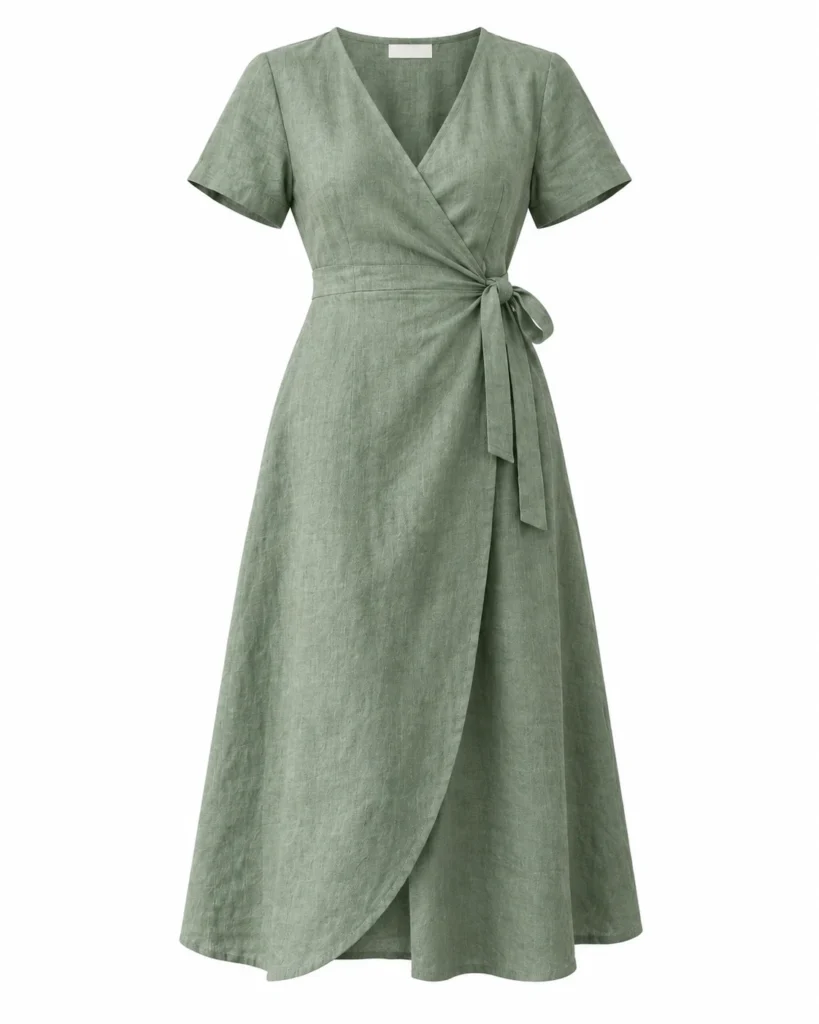
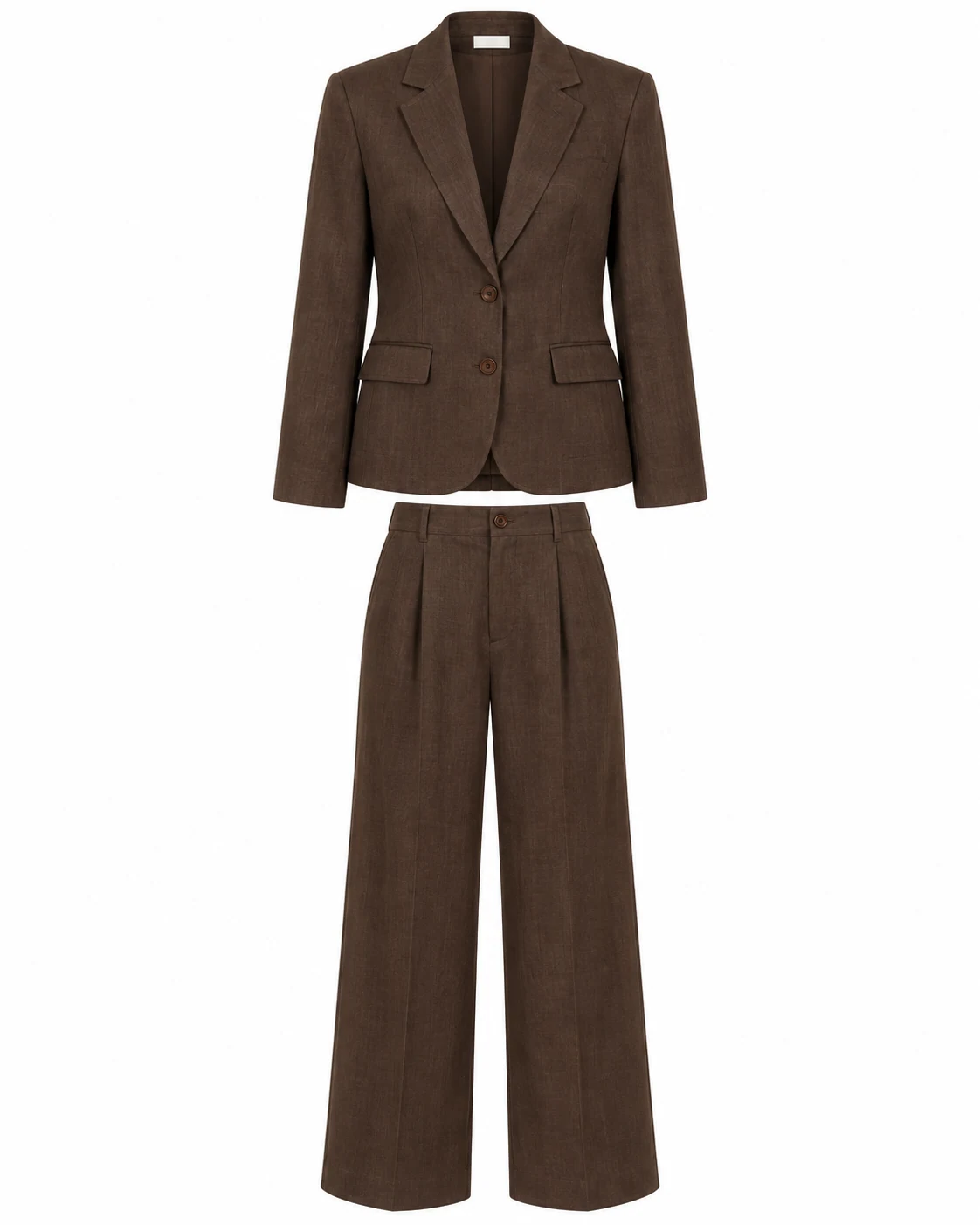
A women’s linen suit brings a jacket and trousers into one visual line. Shoulder position, jacket length and waistband height can influence that line as much as a bust or waist measurement. For custom work, begin with the specific suit design and explain whether you want to preserve its pictured balance or adjust a particular proportion.
Try the suit as the outfit you will wear
Use the Coast suit as the starting design only if its silhouette suits your aim. Try your reference jacket over the intended underlayer: stand, reach forward and sit with the trousers at their usual level. Record shoulder restriction, collar movement, sleeve endpoint, jacket hem and where that hem meets the waistband. These are observations for the studio, not a remote diagnosis of the pattern.
Ask what the actual product includes before describing its lining or internal structure. A length change should be considered with the jacket’s balance and the trouser rise, rather than treating the suit as two unrelated numbers. Keep the accepted fit decisions for both pieces together.
Read structure from verified product details
A linen suit can have different lining, shaping and internal construction from another suit. A photograph does not establish every hidden detail. Ask about the actual model if a particular level of structure or coverage is important to you.
This matters when describing the desired result. A light, relaxed suit should not be assumed to behave like a firmly structured formal jacket. Choose a design close to the intended use and confirm any request that would change its construction rather than treating it as a simple size adjustment.
Consider the shoulder and sleeve together
The shoulder line helps organise the jacket’s appearance, but its intended position depends on the design. Explain any recurring issue with standard jackets: a seam that seems too broad, restriction when reaching, or sleeves that finish in the wrong place.
Avoid diagnosing the pattern change from one photograph. Provide the relevant body measurements and reference-garment observations, with measuring endpoints clearly labelled. The studio needs to assess the connection between the shoulder, sleeve and upper body of that specific jacket.
Choose jacket length with the trousers in mind
The point where the jacket finishes affects the balance of the outfit. A higher or lower waistband can alter the perceived proportions without any change in jacket length. Consider the two pieces together, especially if you will wear the jacket open, closed or with different underlayers.
If you want a different length, identify the desired hem position and ask which starting point the studio uses. Do not describe the request only as more flattering or a little shorter. A reference garment can help if its measurements and the aspect you like are clearly stated.
| Suit decision | What to discuss | Useful reference |
|---|---|---|
| Shoulder/sleeve | Movement, position and finished sleeve length | Similar woven jacket with labelled measurements |
| Jacket body | Intended ease and hem position | How you will wear it open/closed |
| Trouser upper fit | Waistband level, waist and hip/seat | Standing and sitting comfort priorities |
| Trouser hem | Leg shape and usual shoe | Preferred finished position |
| Coverage | Actual fabric and construction | Underlayer and lighting expectations |
Plan a real wearing situation
An office day, a dinner and an outdoor event can ask different things of a suit. Think about sitting, reaching, walking and the underlayer you intend to use. If you want the jacket and trousers to work separately too, explain that aim before choosing lengths around one particular outfit.
Linen’s natural creasing is also part of the decision. An expectation of a permanently crisp synthetic-looking surface can be difficult to reconcile with the look you chose. Discuss the material and use rather than relying on the word suit as a guarantee of formality.
Pieces to explore