A neckline frames the face, but it also has a practical job. It needs to feel comfortable against the body, work with any underlayer and stay in a position you are happy with during normal movement. A product photograph can help you choose a visual direction; it cannot answer every question about how an opening will behave on your proportions.
Rather than asking which neckline is suitable for your age, start with what you enjoy wearing. You may like an open V, a higher boat neckline or a shirt you can fasten to different points. Personal comfort and coverage preferences are more useful than a rule about what mature women should avoid.
Judge the opening on your body, not the model’s height
The depth and width you see in a photograph relate to that model, that size and that styling. A neckline can sit differently when the torso length, bust position or shoulder shape differs. The visual reference remains useful, but it is not an exact measurement of the opening you will receive.
If coverage matters, explain where and when. “I prefer the opening to feel secure when leaning towards a table” gives more information than “not low.” If you have a favourite top, ask the studio how to measure or photograph its neckline as a reference. Label that information as coming from a garment rather than from your body.
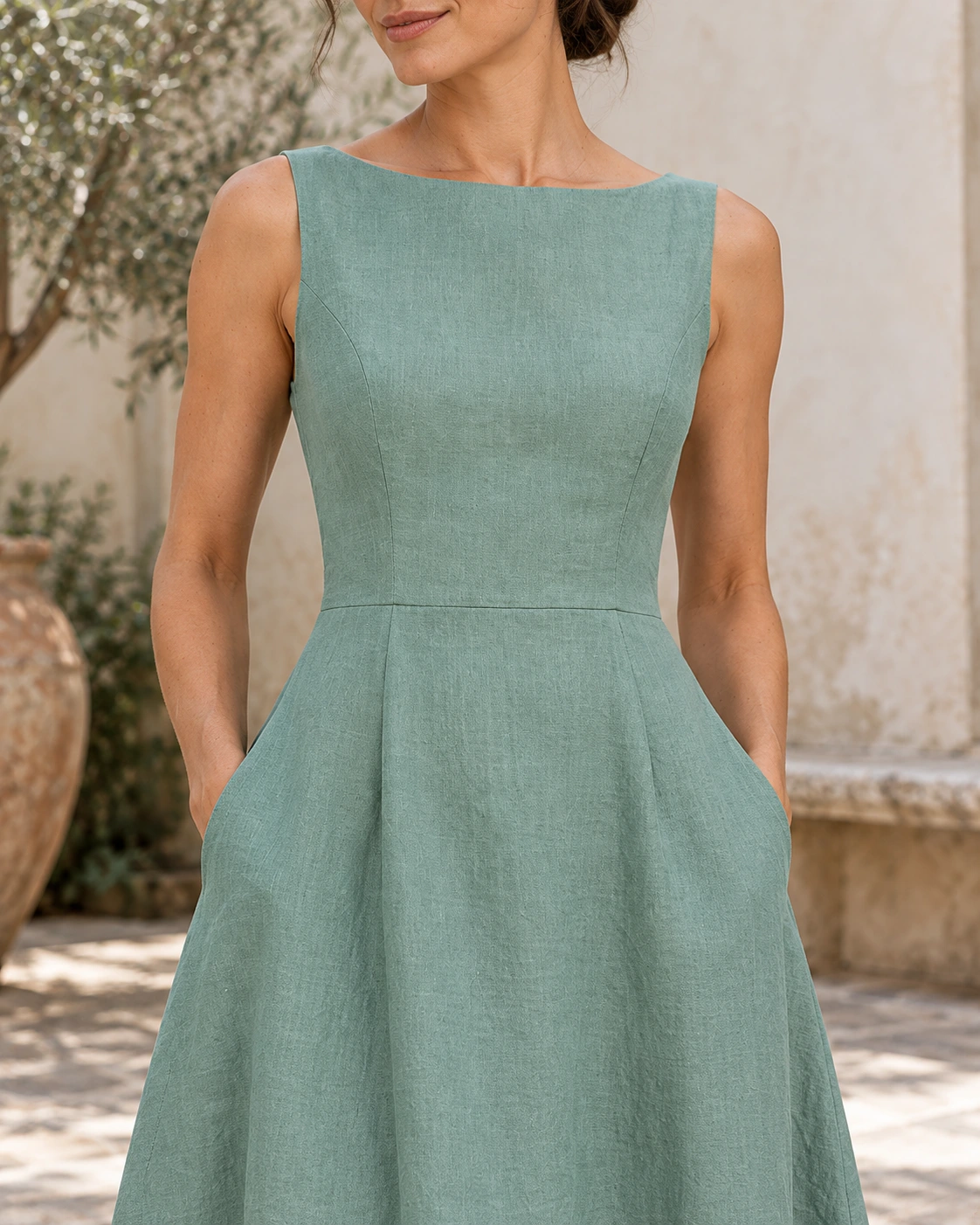
Consider width as well as depth
A neckline can feel too open because it is wide rather than low. It may also reveal an underlayer at the shoulder even if the centre front is high. Conversely, a narrow opening may feel close around the neck despite looking modest in a picture. Identify the specific sensation or coverage concern.
Try a similar garment with your usual underwear and move through an ordinary day’s actions. Sit, turn your head and reach for a bag within your comfortable range. Note whether you keep repositioning the neckline. Those observations help you decide whether to choose another listed design or discuss a change the studio can confirm.
Check the route into the garment
An opening must work when dressing as well as once the garment is on. A pullover neckline and a button-front opening offer different experiences. Do not assume a neckline has a concealed fastening because it looks easy to put on in a photograph; check the product details.
If ease of dressing is important, ask directly about the opening and how it functions. You can explain an ordinary preference without giving private medical information. For instance: “I prefer a front opening rather than pulling a close neckline over my head.” A studio can then identify suitable designs or confirm whether a request is feasible.
Plan for necklaces, scarves and layers
A necklace that works beautifully with one opening may sit awkwardly against another. A scarf may add the finish you want, but it should not be a compulsory fix for a neckline you dislike. Try your usual accessories with a reference top and decide which combinations you actually want to repeat.
Layers matter too. An open shirt over a dress creates two neckline shapes; knitwear can cover a detail you chose specifically. Check the outfit together, including whether a collar sits comfortably under a cardigan or jacket. This is a styling choice, not a requirement to buy a separate layer for every linen piece.
Discuss changes without assuming unlimited redesign
Raising, narrowing or changing an opening can affect other parts of a garment. It should not be treated as a small numerical adjustment that is always possible. Ask whether the chosen design is the right starting point, and whether another listed design would meet your preference more simply.
A clear brief might be: “I like the relaxed shape of this dress, but prefer the neckline position on my existing top. Can you confirm an appropriate design and what information you need?” This leaves the technical decision to the studio while keeping your preference central. Wait for confirmation before assuming that the order includes the requested change.
Use fabric information alongside fit information
If an underlayer is part of your plan, consider its colour and outline under the selected fabric. Opacity varies with material, colour, construction and lighting; a higher neckline alone does not establish coverage through the whole garment. Use the colour library and ask about the chosen option when necessary.
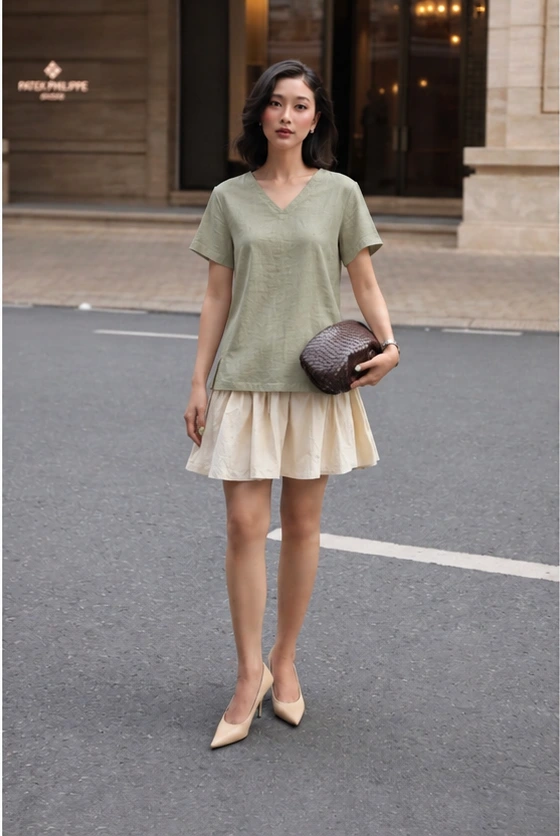
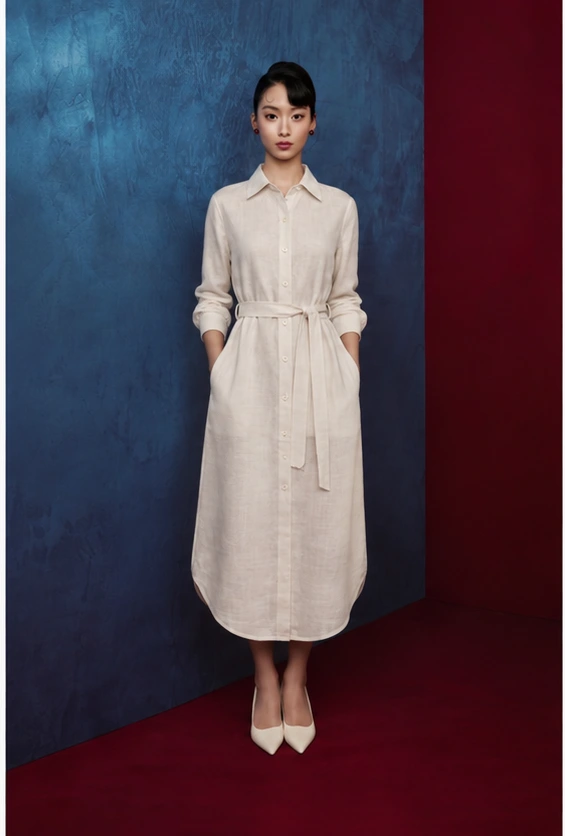
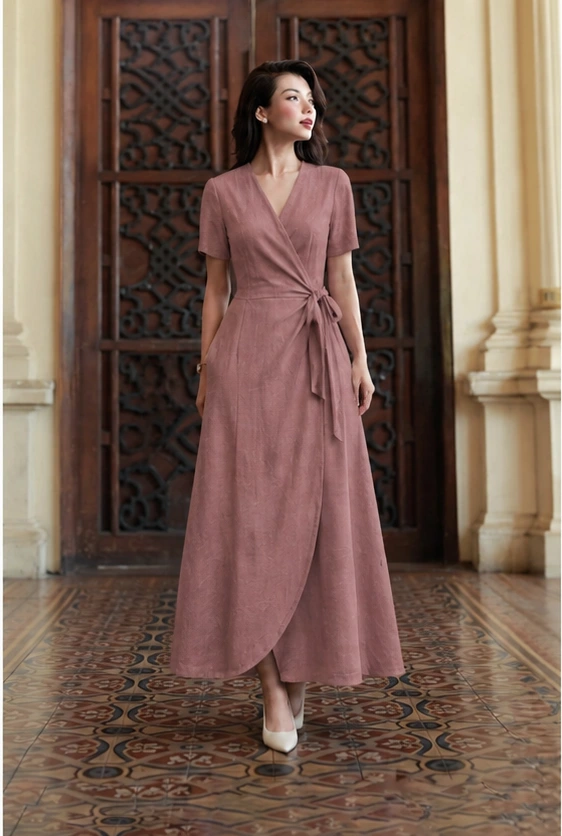
The Riviera Boat-Neck Linen Midi Dress offers one neckline direction; the V-neck and shirt suggestions below offer others to compare. LINENELLAR’s custom route carries a 20% surcharge on the selected product price, with details confirmed before making. A comfortable opening is one you have chosen for its appearance and its behaviour in your own day.
Continue reading
Pieces to explore
Three designs to compare with the ideas in this article. Open each product for current pricing, available choices and construction details; confirm any requested fit or design change with our studio.