More coverage is a personal preference with several possible meanings. You may want a higher opening, a sleeve ending at the elbow, a longer seated hem or fabric that works with a particular underlayer. Naming the specific requirement makes online shopping more useful than searching for a broad label such as modest or mature.
No single photograph can establish every aspect of coverage. The model’s proportions, the lighting and the way the garment is arranged all influence what you see. Use the images to choose a direction, then ask focused questions about the details that matter for your own use.
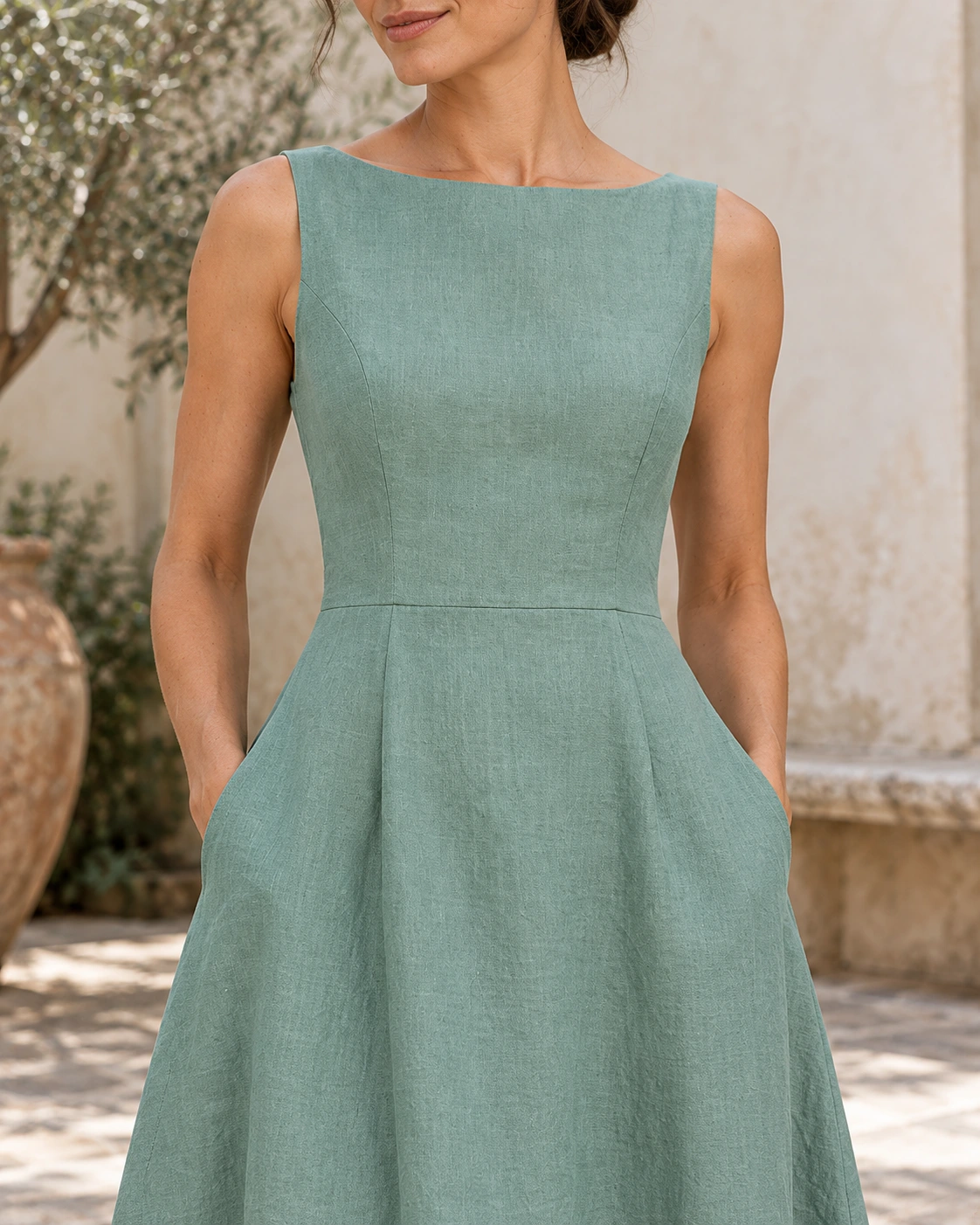
Check the neckline in the situation you care about
If leaning forward is the concern, say so. A neckline may look secure standing but move differently at a table. Width can matter as much as depth, particularly near the shoulders or over an underlayer. A higher centre front does not answer every coverage question.
Compare a top you already like and identify the opening position you prefer. Ask the studio how to provide a useful reference rather than sending an unlabelled number. If a change is requested, confirm whether the chosen design can support it; another listed neckline may be a more straightforward solution.
Define sleeve coverage on your body
Short, three-quarter and long are broad descriptions, not guaranteed positions for every wearer. Decide where you want the hem to finish and whether you intend to roll the sleeve. Check upper-arm and elbow room separately from length. More fabric coverage is not useful if the sleeve feels restrictive in normal movement.
An ordinary linen sleeve should not be assumed to carry a tested sun-protection rating. If you need clothing with a specific protective performance, check an appropriate verified specification. For a personal coverage preference, focus the brief on length, room and how the garment will be worn.
Check the hem while seated and walking
A skirt or dress length seen on a standing model may not reflect your preferred seated coverage. Try a comparable garment, sit in an ordinary chair and observe where the hem rests. Also walk normally to consider stride and any overlap in the design.
For trousers, decide the relationship with shoes and the ground. If you want ankle coverage, do not assume a cropped style will become full length without design review. Ask about the intended finished position and provide the studio’s requested measurements, clearly labelled as body or garment references.
Treat opacity as a fabric-and-construction question
Colour is not a complete opacity test. Weave, weight, lining, lighting and underlayers all influence what is visible. Avoid universal assumptions that pale linen is always transparent or that dark linen is always fully opaque. Ask about the selected material and garment rather than the fibre name alone.
Use the linen colour library alongside the product detail images, then clarify any important concern before ordering. If a slip or other underlayer is part of your plan, include it in the fit discussion. Room for an underlayer and the visual effect of that underlayer are separate considerations.
Consider openings and movement together
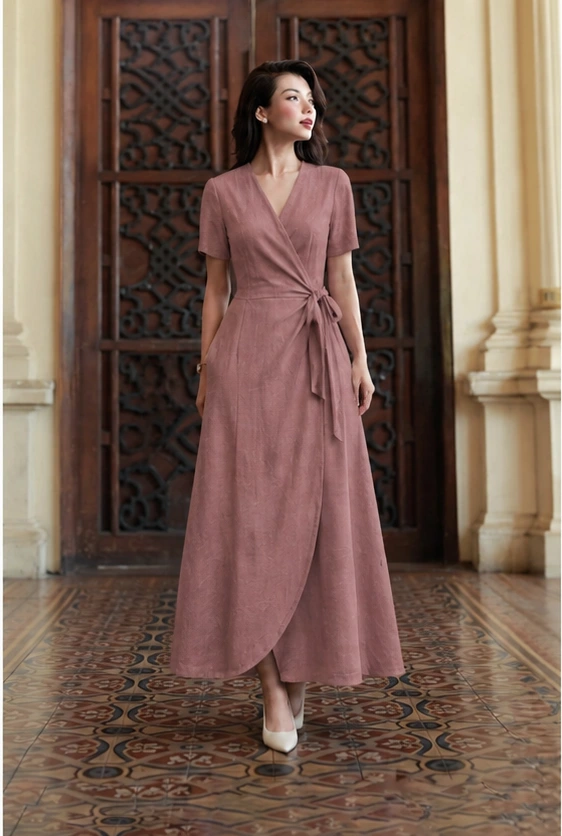
A front opening, side opening or wrap overlap can affect coverage during sitting and walking. Read the actual construction details and ask where the opening finishes if that is important. Do not infer concealed fastenings or a fixed overlap from a neatly arranged photograph.
Use a practical brief: “I like this dress direction and want the opening to remain within my preferred coverage when seated.” This states the requirement without claiming a technical solution. The studio can confirm the suitability of the design, ask for more information or suggest another starting point.
Test the complete outfit, not just the garment
The underwear, shoes, bag strap and outer layer can all affect how the piece sits. A cardigan may change the neckline position; a crossbody bag may pull a shoulder; a belt may alter the seated hem. Try comparable combinations together before deciding what the new garment needs to do.
Do not make a layer a compulsory solution unless you want to wear it throughout the outing. If conditions become warmer and you remove it, the underlying outfit should still offer the coverage you prefer. Plan suitable weather protection separately when the forecast requires it.
Confirm the essentials before making
Summarise the chosen design, shade and the two or three coverage details that are essential. Ask the studio to confirm accepted changes, rather than treating a note as automatic approval. LINENELLAR’s custom option adds 20% to the selected product price; notes are optional and details are confirmed before making.
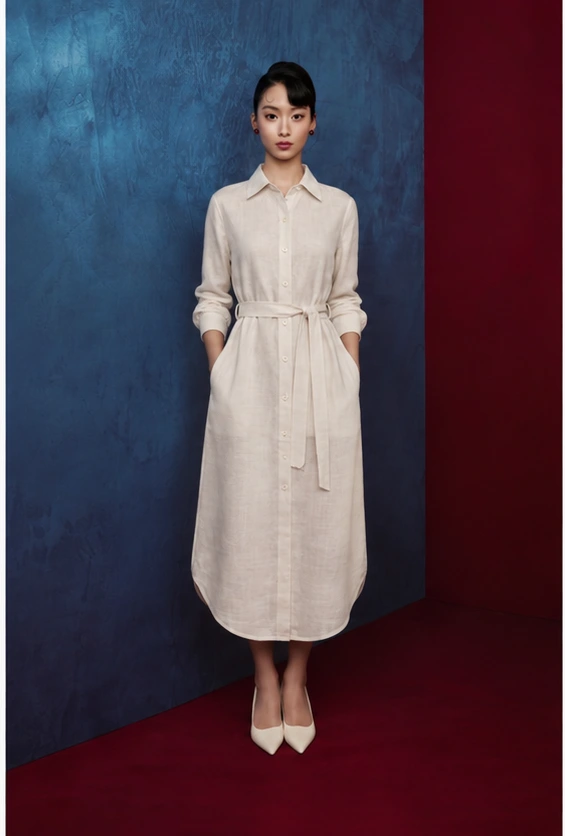
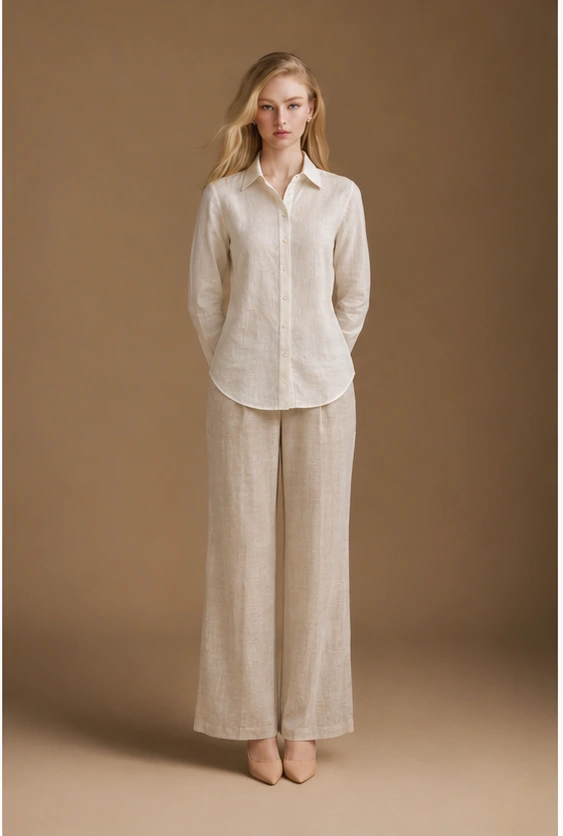
Review returns and alterations and allow time to try the garment before a fixed occasion. The pieces below are different coverage directions to investigate, not promises of identical sleeve lengths, opacity or openings. A clear checklist keeps the decision personal and specific, without imposing rules about what any age group should wear.
Continue reading
Pieces to explore
Three designs to compare with the ideas in this article. Open each product for current pricing, available choices and construction details; confirm any requested fit or design change with our studio.