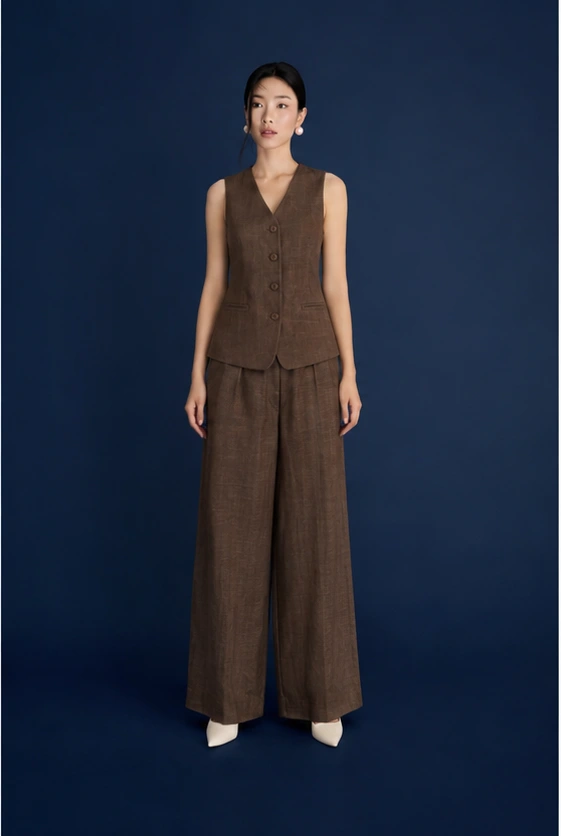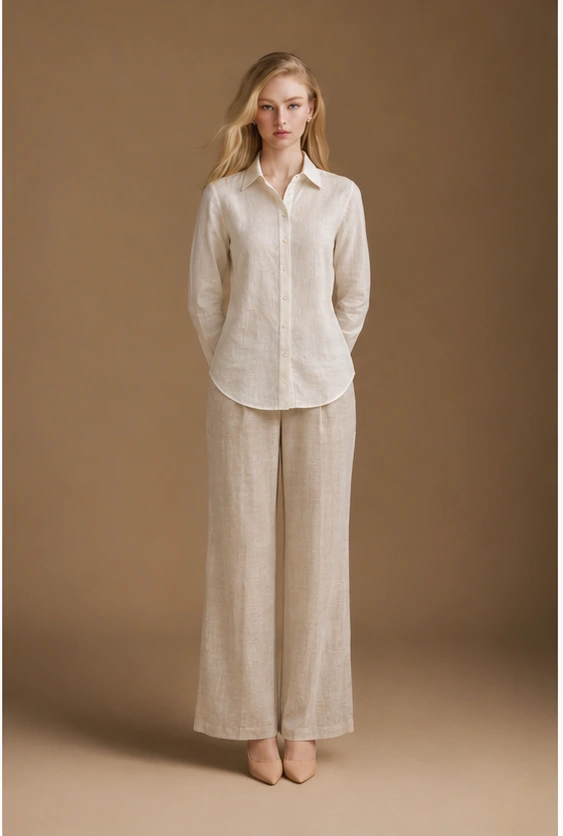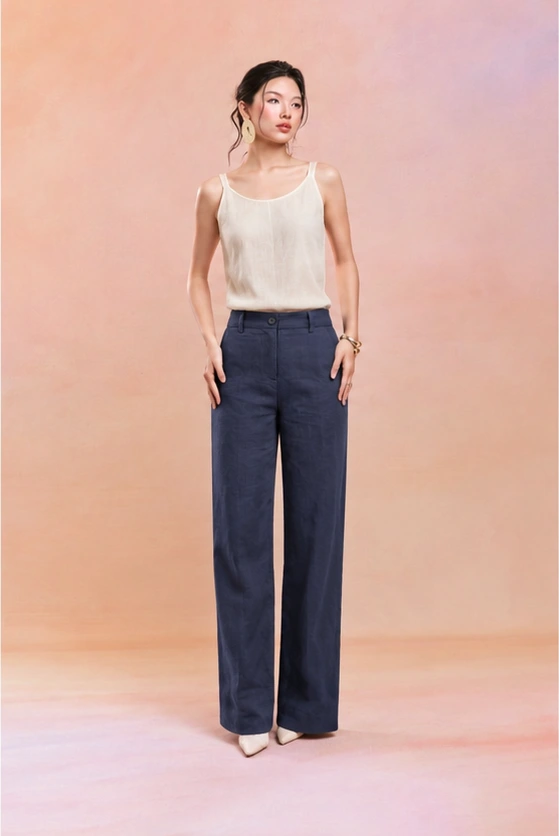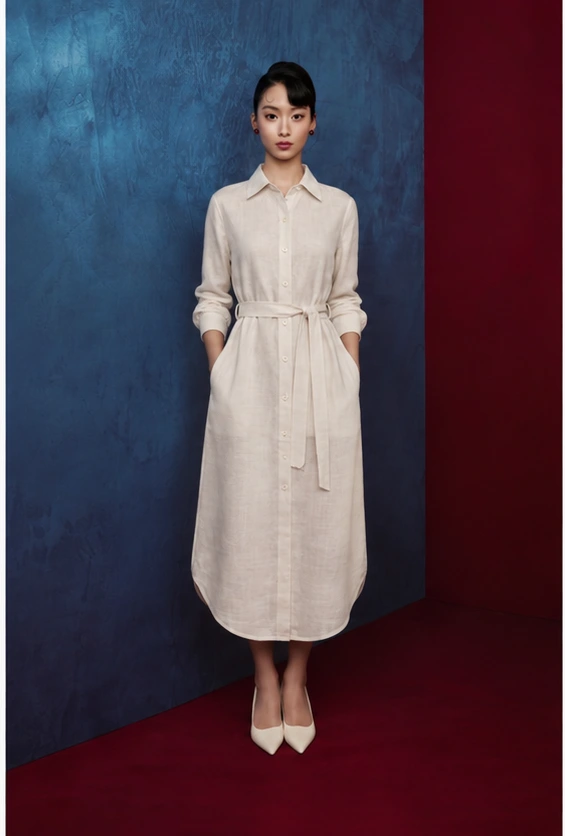
If your preferred top size differs from your preferred trouser size, that is useful ordering information rather than a problem to conceal. Size labels are a retailer’s grouping system, and a single label does not describe every proportion of the body. The important task is to make each garment fit its intended area and work with the other pieces in the outfit.
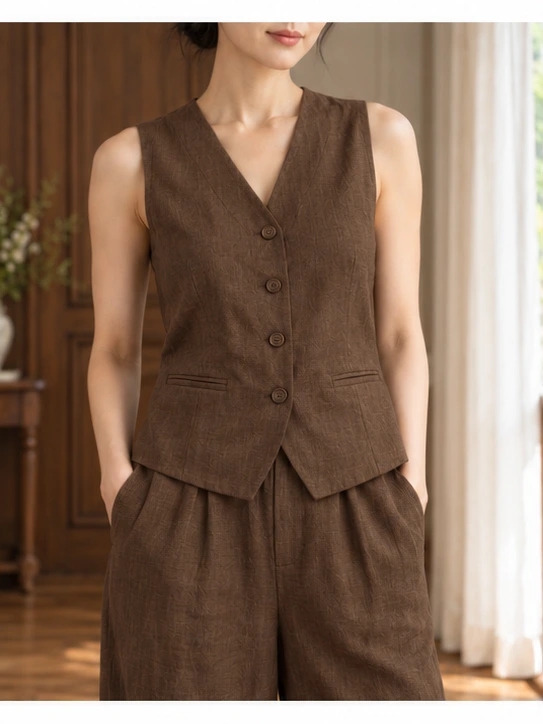
This matters particularly when considering a coordinated set. A photograph may show a complete look, but it does not tell you how the retailer handles different top and bottom requirements. Ask before ordering rather than assuming one selected size can represent both comfortably.
Separate the two fit decisions
For the top, identify the priorities: shoulder position, upper-back room, bust or chest room, sleeve and finished length. For the bottom, consider waistband position, hip or seat room, rise, leg shape and hem. Keep those observations distinct even if the garments will be worn together.
Then consider the relationship between them. A top worn untucked needs a length that works with the bottom’s rise; a tucked top needs comfortable room at the waistband. If the pieces are intended to be worn separately too, describe those uses. A set should not only work in the single arrangement shown in its first photograph.
Check the guide before transferring familiar labels
An M from one brand may not correspond to an M from another. Read the LINENELLAR size guide and identify what its measurements describe. If anything is unclear, ask rather than silently treating a body-measurement reference as finished garment dimensions.
Do not average two preferred sizes into one compromise size. That can make one garment larger than needed while leaving the other restrictive. Instead, ask which standard selections are available for separate pieces or how a custom set should be specified. The studio should confirm the actual ordering arrangement for the chosen product.
Use two reference garments if useful
Choose a comfortable top and a comfortable bottom with purposes reasonably similar to the intended purchase. A stretchy legging and a woven linen trouser are not direct fit equivalents. Likewise, a close knitted top does not demonstrate the same room requirements as a woven shirt.
Ask how to measure each reference and label the figures clearly. State units and whether the measurement is a flat width, a circumference or a finished length. A list containing “waist 42” is not enough if the unit and source are unknown. Keep body measurements separate from garment measurements throughout the conversation.
Describe where standard sizes usually disagree
You may find that shirts fit the shoulders but pull across the bust, or that trousers fit the waist but not the hips. Explain that relationship rather than assuming the studio will infer it from two size labels. The recurring issue can help identify which information needs closer review.
For example: “I usually choose a larger top than bottom. My reference shirt has comfortable upper-back room, while these trousers sit at the waist position I prefer. I would like the set to retain a relaxed outline.” This communicates the difference without prescribing a technical pattern solution or adding guessed ease to body numbers.
Confirm the set’s scope before paying
Ask whether the listed product can be supplied with the top and bottom proportions you need, and whether a particular request falls within custom fit or requires a separate design discussion. A custom option is not an automatic promise that every construction detail can be changed.
Also confirm which shade and material apply to each piece. Coordinated outfits should be agreed deliberately; do not assume matching colour names from separate images establish an exact fabric match. If the set is important for an event, discuss that expectation and leave time to assess it after delivery.
Keep fit notes attached to the right garment
When sending information for a set, use clear labels such as “Top” and “Trousers” within the note. If ordering separate products, put the relevant information with the relevant item and check the order summary. Do not rely on a general comment that could be interpreted as applying to every garment in the basket.
LINENELLAR’s made-to-measure route adds 20% to the selected product price. Its note box is optional and the studio confirms details before making. You can begin with the sizing difference and ask for guidance rather than supplying a complete technical specification at checkout.
Judge the result as separate pieces and as an outfit
When the order arrives, try each garment with the intended underlayers and shoes, then try them together. Sit and move normally. Check whether the top and bottom retain their own comfortable fit when combined, including any tuck or belt you planned.
Review the returns and alterations information before ordering and raise any issue against the agreed brief. A genuinely personalised order and a standard-size order may be treated differently, so clarify that in advance. The goal is two pieces that serve you individually, not a single size label that forces both into the same proportions.
Continue reading
Pieces to explore
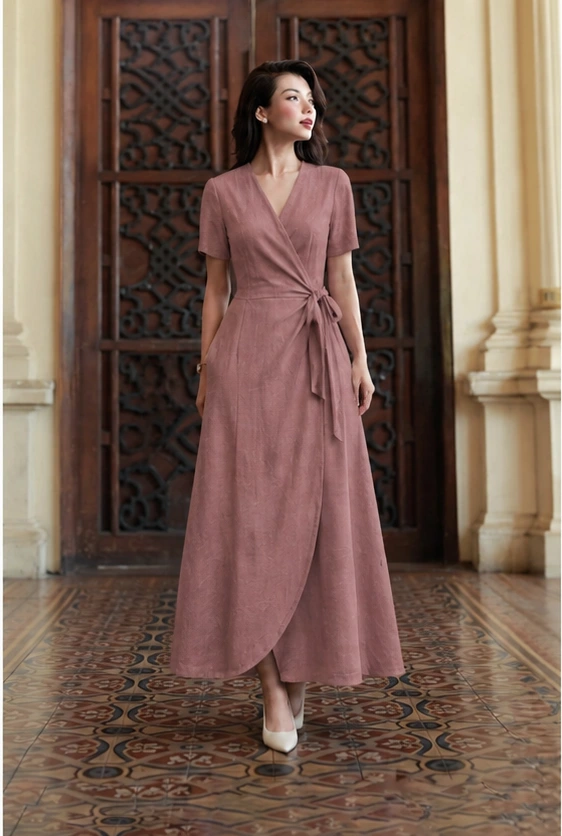
Three designs to compare with the ideas in this article. Open each product for current pricing, available choices and construction details; confirm any requested fit or design change with our studio.