

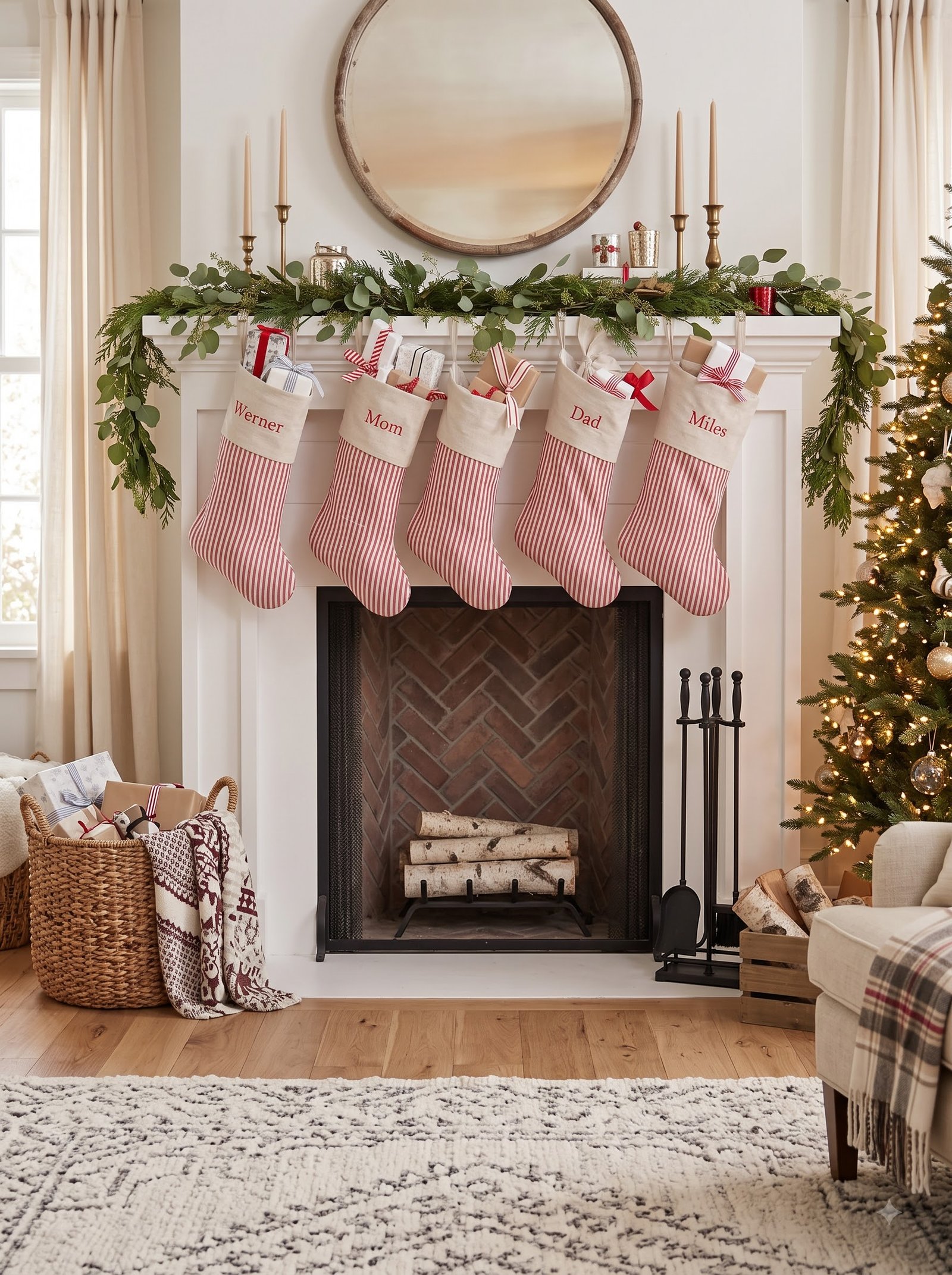
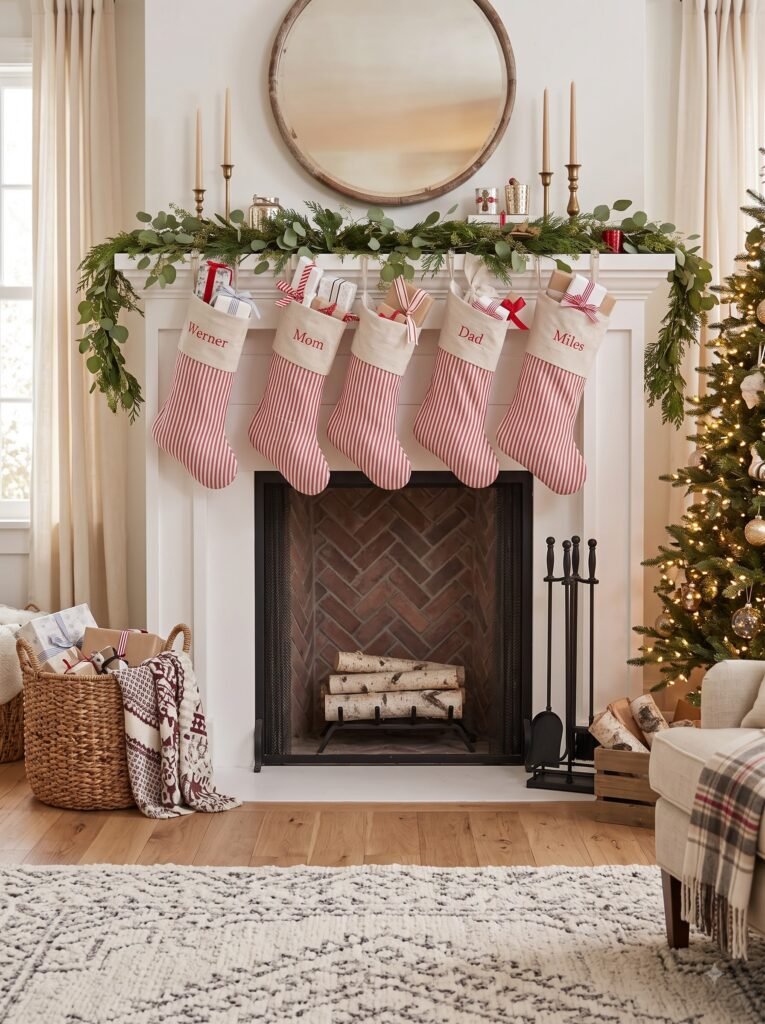
Striped Cotton Stockings. Stripes add a quiet graphic detail to a holiday display. Their regular rhythm can connect natural wood, plain greenery and neutral wrapping without making the room feel busy.
Stripes add a quiet graphic detail to a holiday display. Their regular rhythm can connect natural wood, plain greenery and neutral wrapping without making the room feel busy.
Let the stripe guide the surrounding palette
Keep the surrounding decorations simple and vary the height of nearby objects. A small stack of books or a ceramic vessel can help the display feel lived in rather than staged.
Striped cotton can bring a crisp note to a room that otherwise relies on timber, greenery and soft upholstery. The stripes work best when their rhythm remains visible, so avoid surrounding the stocking with several similarly strong linear patterns. Choose whether you want a traditional, playful or quieter arrangement before coordinating the other pieces. The same stocking can feel different depending on the scale and color of its neighbors.
A realistic decision in your own home
Try the striped stocking beside plain kraft wrapping and then beside patterned wrapping. Photograph both from your normal viewing distance. The more successful arrangement is often the one where you can still read the stocking's outline and stripe without studying the details. This simple comparison is more informative than adding more decorations immediately.
A practical way to test your idea
Place the stockings in position before adding garlands. This makes it easier to see the stripe pattern and prevent foliage from hiding the cuff or loop.
A common ordering mistake
Keep the cotton description when comparing this stocking with linen products. Styling pieces together does not make their materials interchangeable.
Can this stocking be treated as a linen product?
Its current listing identifies it as cotton, so use that description. A linen brand can offer selected pieces in other materials. Keep the care and material decisions attached to the individual item rather than assuming the whole collection has one fabric composition.
Compare the stripe with the room's existing lines
Stripes can relate to shelf edges, timber boards and furniture, but too many parallel details can compete. Look at where the stocking will hang and decide whether it needs more empty space around it. Try the display before adding the final greenery or wrapping. If the outline is difficult to read, simplify the neighboring objects rather than automatically replacing the stocking. This approach keeps the focus on the arrangement, which is often what makes the same product feel relaxed or busy.
Will the stripe need identical accessories to look coordinated?
No. A plain surface or a repeated color can be enough. Coordinate the visual effect and keep the stocking's cotton material description separate from the materials of the pieces you place beside it.
| Information | What to explain |
|---|---|
| Finished height and measuring points | Show the top and bottom reference points on a sketch. State whether the loop or cuff is included so a single height cannot be interpreted in two ways. |
| Opening and shape | Give the flat cuff width and explain any important foot or outline proportion. Mention whether the piece is mainly decorative or intended to hold particular small gifts. |
| Display relationship | Photograph existing stockings if coordination matters. Explain which details should repeat and which can differ, and keep hanging hardware requirements separate from the textile brief. |
Pieces to explore
Comments (1)