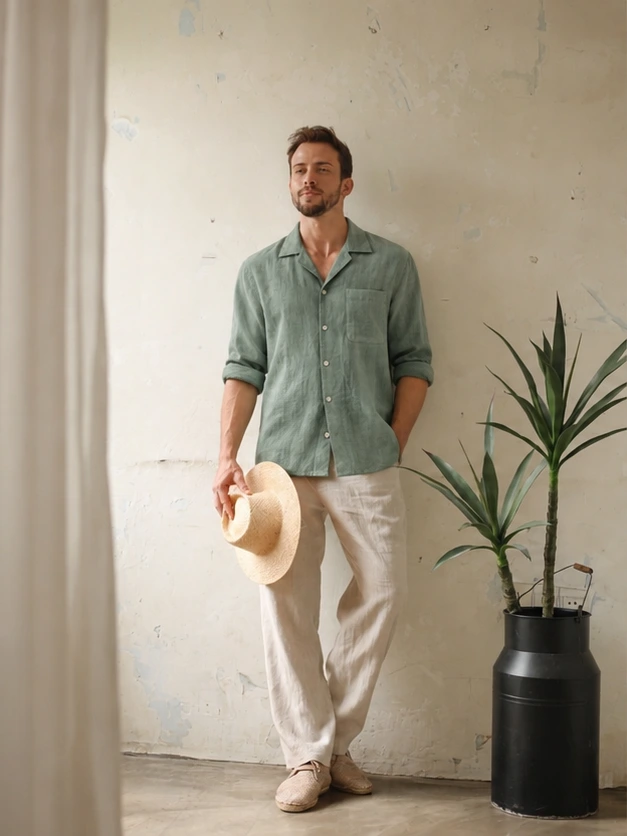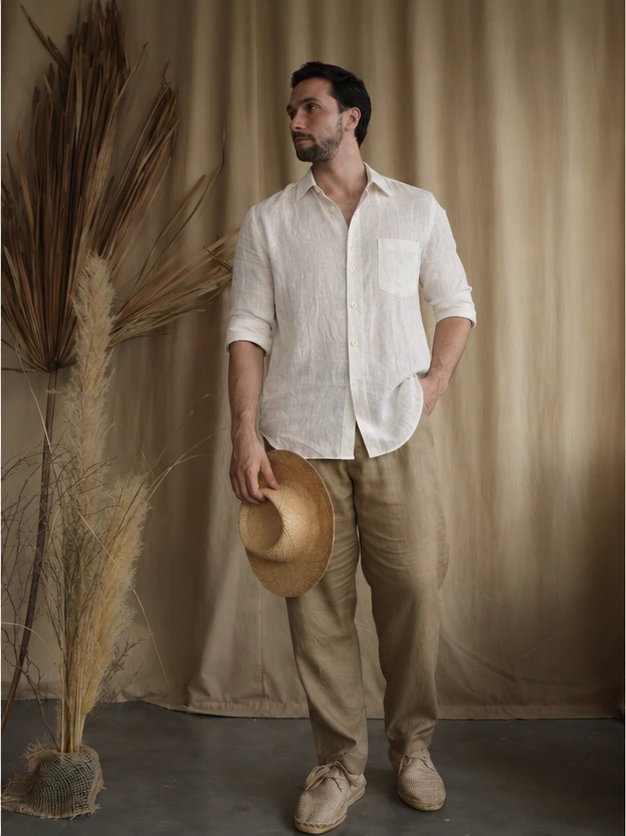

A band collar stands around the neck without the folded points of a conventional point collar. A classic point collar adds a fold and visible tips that frame the opening. That difference changes the neckline and how the shirt relates to a jacket or underlayer; it does not determine the whole shirt’s fit or make either option universally right for an occasion.
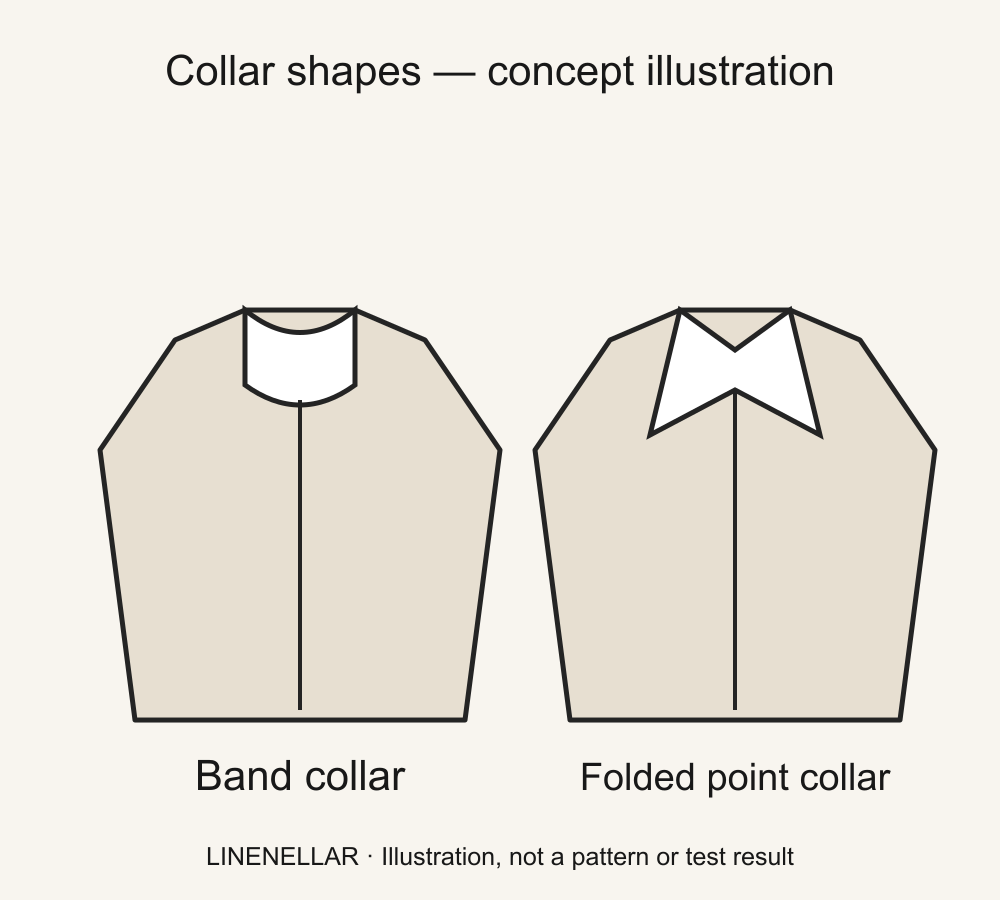
Compare the part that actually changes
| Detail | Band collar | Folded point collar |
|---|---|---|
| Visible shape | A band around the neckline, without folded tips | A collar stand/fold with points visible on the chest |
| Worn open at the top | The opening is framed by the band ends | Folded leaves and points frame a larger neckline area |
| With a jacket | A cleaner neckline without points resting beside the lapels | Point length and spread enter the relationship with lapels |
| If a tie is required | Do not assume a band design serves that requirement | Consider an appropriate folded-collar design and neck fit |
| Main custom fit question | Neck opening, band height and intended fastening | Neck opening plus how the fold and points sit |
| What it does not decide | Body width, sleeve length or hem | Body width, sleeve length or hem |
The actual band height, point shape, spread, support and button placement still belong to the selected shirt. A side-by-side detail view is more useful than comparing two full-body photographs with different styling.
Do not confuse a camp collar with every classic collar
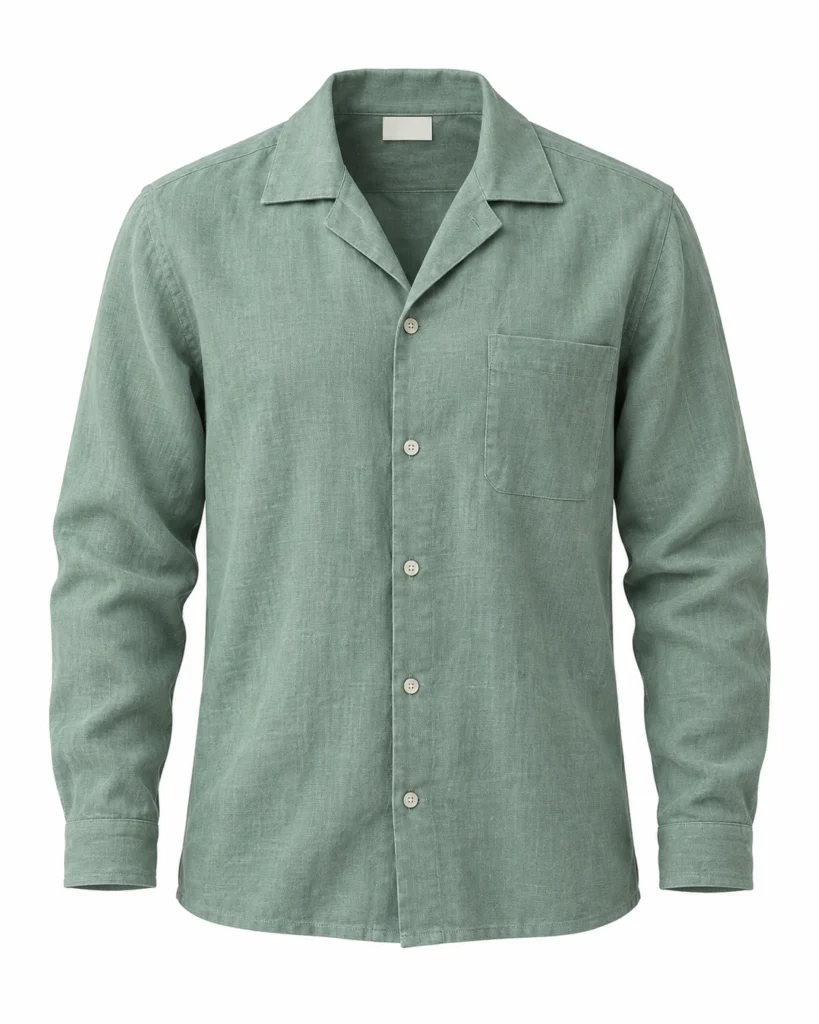
A camp or open collar can also fold, but it has a different open-neck profile from the point-collar concept shown here. When you browse, use the close image and product description to identify the construction. Do not choose a shirt as a classic-collar reference solely because some fabric folds away from its neckline.
The Dune Men’s Band-Collar Linen Shirt is a band-collar design to examine. For a folded option, check the actual collar details in the men’s collection rather than assuming the necklines of different models can be swapped within a measurement adjustment.
Test three ordinary outfits
For a relaxed meal with an open-neck shirt, decide which frame you prefer around the visible underlayer or skin. For a jacket outfit, compare how the neckline sits beside the lapels and whether the shirt will remain buttoned. For an event with a stated dress code, check that requirement first, particularly if a tie or a specific formal shirt is expected.
These are outfit decisions, not fixed rules about which collar suits a face or body type. Use your normal jacket and underlayer as context. The practical goal is a neckline you like in the way you will actually wear it.
Separate neck fit from changing the collar design
Record a neck measurement with its method and say whether you will fasten the top button. Describe any pressure or opening you want addressed. A different collar shape, height or fastening is a construction request; a suitable neck circumference alone does not specify it.
For example: “I want this band-collar design, usually open at the top, with sleeves ending at my preferred wrist position” keeps the chosen construction clear. “Please combine this body with the collar in another photo” is a separate design enquiry to resolve before an order total is approved.
Use the shirt-measurement guide for named readings and the made-to-measure service to confirm the shirt you want.
Pieces to explore