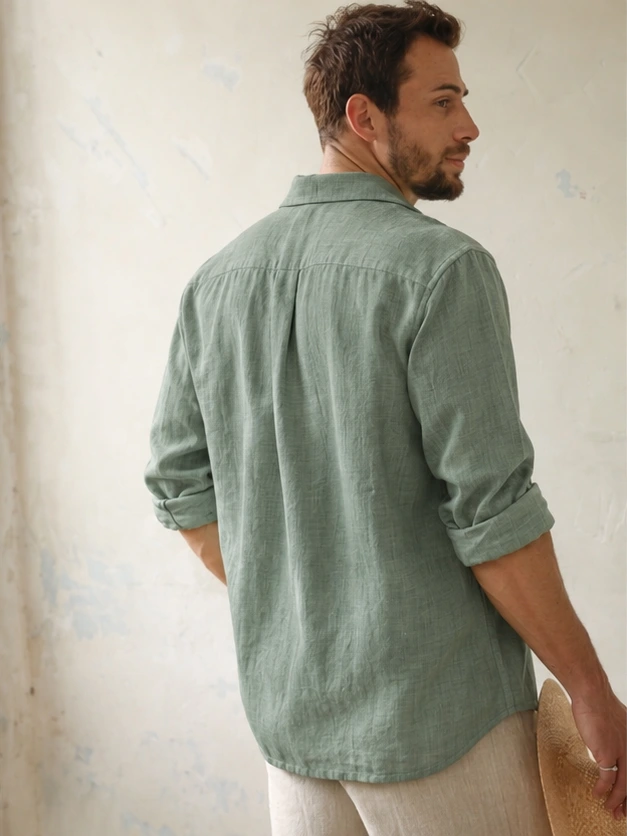
For a custom men’s linen shirt, prepare a body list and, if useful, a separate list from a shirt you already wear. The chest is a circumference around you; a flat shirt chest is a width across a garment. Start with a product link, one unit and a clear description of whether the shirt will be tucked, untucked, buttoned at the collar or layered.
Take the main body readings
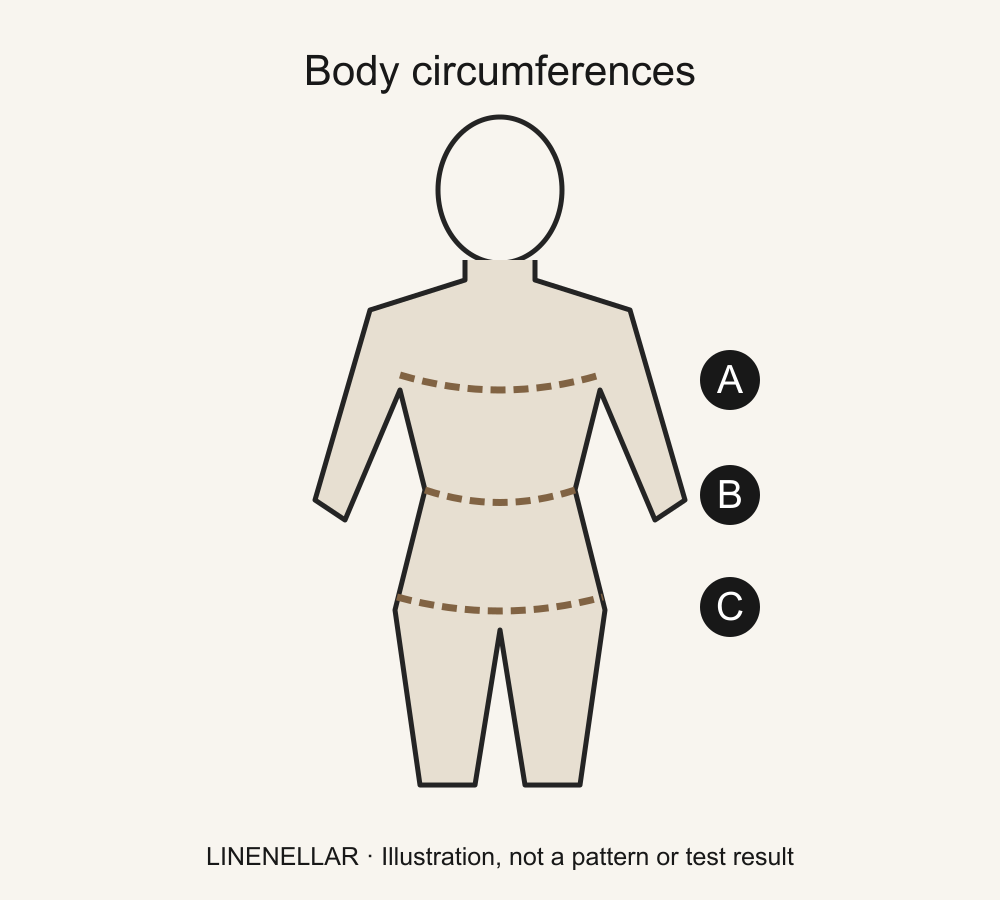
- Chest: pass a flexible tape around the fullest chest level and across the back. Keep it level, shoulders relaxed and breathing normal. Read it lightly against the body without squeezing.
- Midsection or waist: name the level you measure. If using the natural waist, say so; do not replace it with the waist size printed inside your trousers.
- Neck: for a raw body reference, place the tape around the level where the collar rests, below the larynx, with your head in a natural position. Record the close body reading and describe collar comfort separately. If you use a method that includes a finger or another allowance, label that fact rather than presenting it as the same raw reading.
Do not add a shrinkage percentage or an allowance to every body number. Those figures would stop describing your body and make the brief harder to interpret.
Use named shoulder and sleeve methods
A helper can measure across your back between the outer shoulder points where the upper arm begins. Let the tape follow the back’s shape, then label the reading “Body shoulder, outer point to outer point across back”. Do not send it as a flat garment-yoke measurement.
For a body centre-back sleeve reference, start at the base of the back neck, pass over the shoulder and along a slightly bent arm to the wrist point you identify. Write that endpoint in your note. A reference shirt offers another method: shoulder/sleeve seam to cuff edge. It produces a different number because it starts elsewhere.
The distinction is also visible in Proper Cloth’s measurement explanation, which treats body and flat-shirt measurements separately. That is a reference about terminology, not a transfer of another tailor’s fit or shrinkage allowances to a LINENELLAR order.
Measure an existing shirt if that is clearer
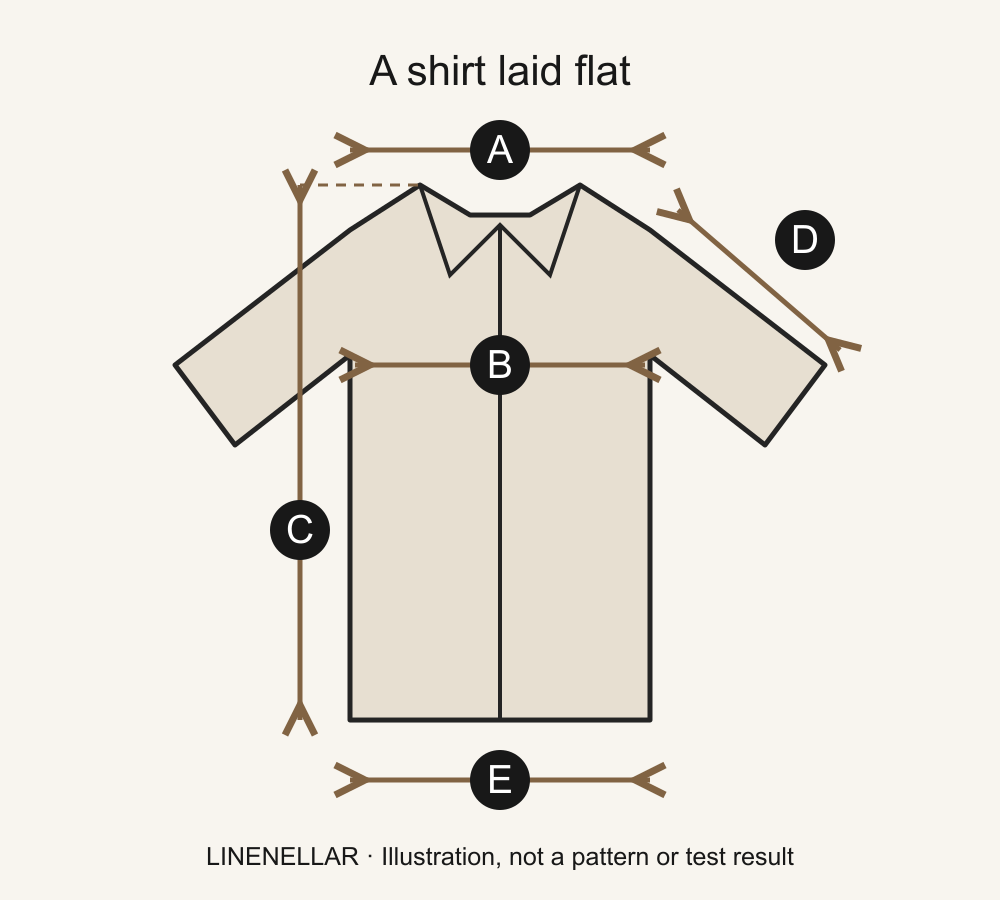
Close the shirt’s fastenings, lay it flat and smooth it without stretching. Measure chest width just below the armholes. For the front body length, start at the high shoulder beside the neckline and measure to the hem; record a longer back separately. Measure the sleeve from its shoulder seam to cuff edge and keep that label with the number.
Use the full garment-reference guide for the individual steps. A stretchy shirt is a less direct dimensional reference for woven linen, so identify its fabric if you use one.
Add the fit information numbers cannot supply
| Intended use | Include this preference | Check on your reference |
|---|---|---|
| Buttoned collar | Where the collar feels comfortable | Neck position and closure |
| Untucked shirt | Desired front and back hem positions | Side profile and usual waistband |
| Tucked shirt | Length that stays useful with movement | Reach forward and sit normally |
| Light overshirt | Underlayer and desired body volume | Shoulder and upper-arm movement |
A useful note might read: “Reference shirt chest 55 cm flat; sleeve 63 cm from shoulder seam to cuff. Its hem works untucked; I would like more room across the back when reaching.” These are illustrative figures, not a size recommendation.
Explore the Rest Men’s Linen Lounge Shirt and the men’s collection. Submit the two clearly labelled lists through the custom service so the chosen shirt’s final specification can be agreed.
Pieces to explore