
A bathroom window may need softness, light and screening in different proportions from a kitchen. Begin with the actual privacy requirement and the room's ventilation conditions.
Define privacy and moisture needs separately
Describe the window's position, whether it is near direct water and how the room dries after use. Confirm the suitability of the chosen fabric and any additional privacy solution.
A bathroom brief needs two different conversations: how much screening you require and what conditions the fabric will encounter. A window outside the wet zone is a different setting from one beside direct spray. Describe ventilation, the position of the bath or shower and how the room dries. Avoid choosing a textile solely because a bathroom photograph looks inviting; the physical conditions in your room matter.
A realistic decision in your own home
For a window facing a neighbor, assess the actual view with the lights on and consider whether another layer is needed. Separately, note the distance to any direct water. Send a clear room sketch so the privacy question is not confused with the material-suitability question.
A practical way to test your idea
Send a photo showing the shower or bath in relation to the window, without personal details. Add the intended rod position and the finished coverage area.
A common ordering mistake
Do not treat a decorative light-filtering curtain as a waterproof shower curtain or as guaranteed complete privacy.
Is a linen café curtain a shower curtain?
Not by default. A decorative window covering is not automatically waterproof or suitable for direct shower exposure. Ask about the actual use and product guidance. If full screening or water resistance is required, plan an appropriate solution rather than assuming the café curtain supplies it.
Describe the bathroom's actual conditions
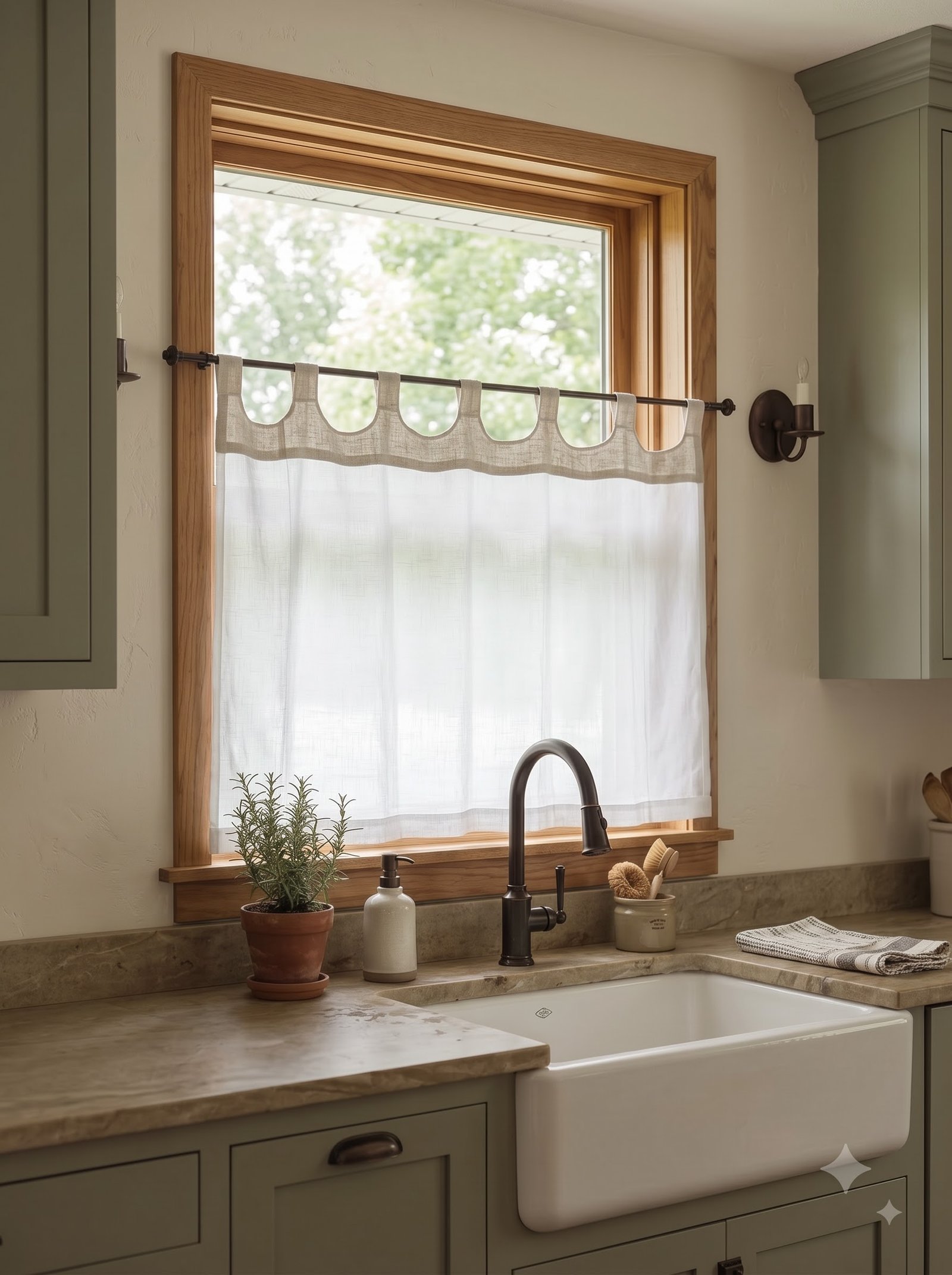
A bathroom photograph may show a window well away from direct water, while your opening may sit beside a shower. Explain that difference before selecting the same design. Keep the privacy question separate from moisture exposure and ventilation. A decorative window covering should not be assumed to provide waterproofing or complete screening. The best brief identifies the conditions first, allowing suitability and any additional solution to be discussed before aesthetic details become fixed.
What if I need privacy but the fabric looks too transparent?
Explain the required screening level and assess the actual sightline. Consider an appropriate additional covering instead of expecting a decorative light-filtering panel to perform as an opaque barrier. The right solution depends on the use of the room.
| Information | What to explain |
|---|---|
| Usable span and panel count | Measure the area where the curtain can actually hang. State one panel or a pair, and identify whether your proposed fabric width is per panel or combined. |
| Finished drop and heading reference | Mark the intended lower edge in a photo. Ask where the chosen design measures its length from, including how the top detail relates to the rod. |
| Hardware and intended coverage | Give the rod diameter, mounting position and any obstruction. Describe the amount of glass you want covered and whether the curtain must move frequently. |
Pieces to explore