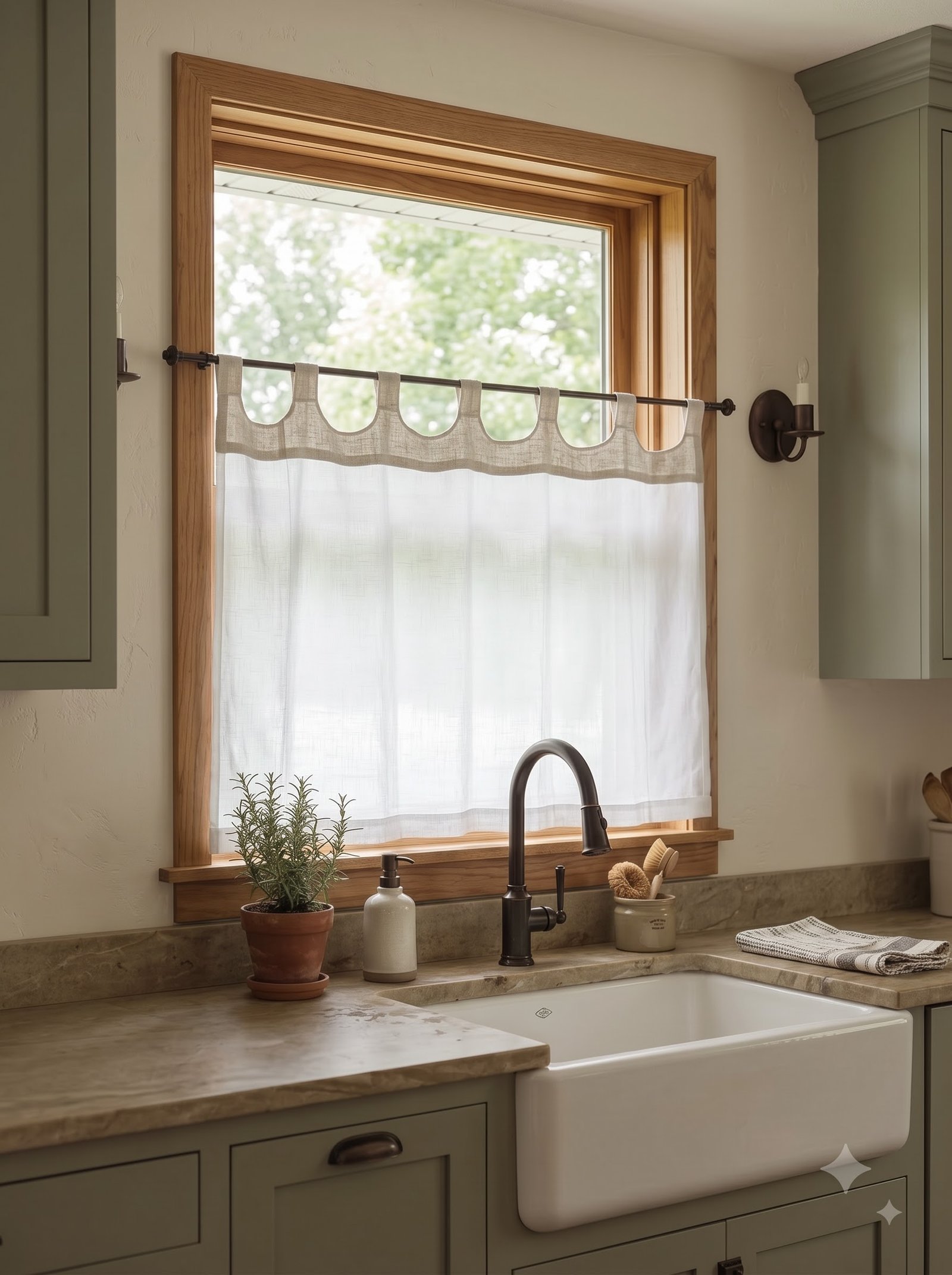
Windows in the same room do not have to be identical for their curtains to feel related. Shared fabric, heading and visual alignment often matter more than matching every dimension.
Use shared details without erasing real differences
Measure each opening and label it separately. Decide whether the top line or the lower hem should provide the visual connection, then discuss any practical constraints.
Unequal windows can look coordinated when fabric, heading and visual alignment are considered together. Exact dimensions should remain accurate even if they differ. Decide which line matters most: the rod height, the bottom hem or the relationship to a fixed architectural feature. Explain that choice in the brief, because the maker cannot infer your visual priority from a list of widths alone.
A realistic decision in your own home
For two windows separated by a corner, photograph both in one wider view and number them. Then supply individual close views and measurements. If the sill heights differ, state whether the hems should follow the sills or align visually. These are different design intentions with different resulting drops.
A practical way to test your idea
Prepare one room photograph with numbered windows and a separate measurement list. State which details should remain consistent across the order.
A common ordering mistake
Do not alter accurate measurements to force the windows onto one standard size. A coordinated custom order should acknowledge their differences.
Can I order all panels in one size for consistency?
Only if that size genuinely suits every opening. Consistency of design does not require inaccurate dimensions. Where the windows differ, a coordinated custom order can use related construction with individually agreed sizes so the finished room feels deliberate rather than forced.
Choose the shared line before comparing sizes
Unequal windows can coordinate through the rod line, hem line, fabric or heading, but those are different design choices. Decide which relationship matters most in the room and make it visible on a wider photograph. Then retain accurate measurements for each opening. Forcing the same dimensions onto different frames can create the inconsistency you were trying to avoid. The custom brief should explain how the windows relate visually as well as how they differ physically.
What if the sill heights do not match?
State whether you want each curtain to follow its sill or the hems to align across the room. Test the alternatives in a photograph or paper mock-up. Neither intention should be left for the maker to infer from the numbers alone.
| Information | What to explain |
|---|---|
| Usable span and panel count | Measure the area where the curtain can actually hang. State one panel or a pair, and identify whether your proposed fabric width is per panel or combined. |
| Finished drop and heading reference | Mark the intended lower edge in a photo. Ask where the chosen design measures its length from, including how the top detail relates to the rod. |
| Hardware and intended coverage | Give the rod diameter, mounting position and any obstruction. Describe the amount of glass you want covered and whether the curtain must move frequently. |
Pieces to explore