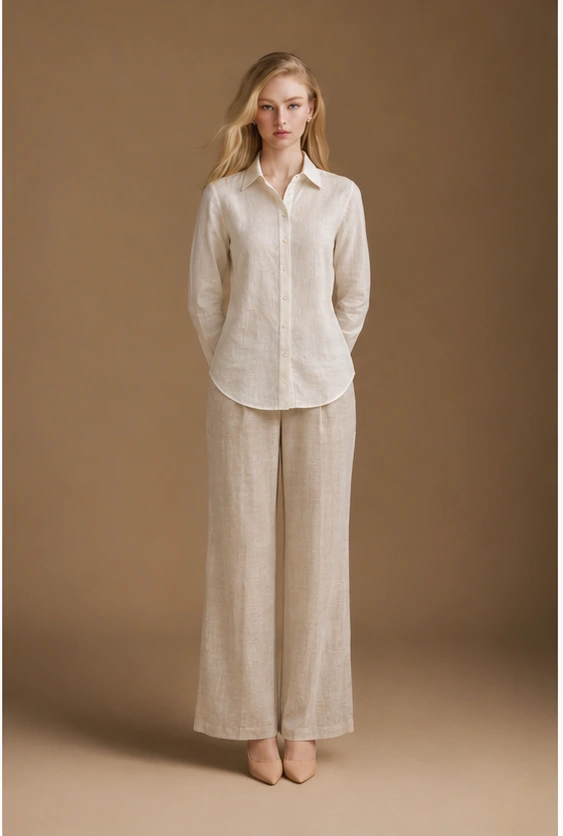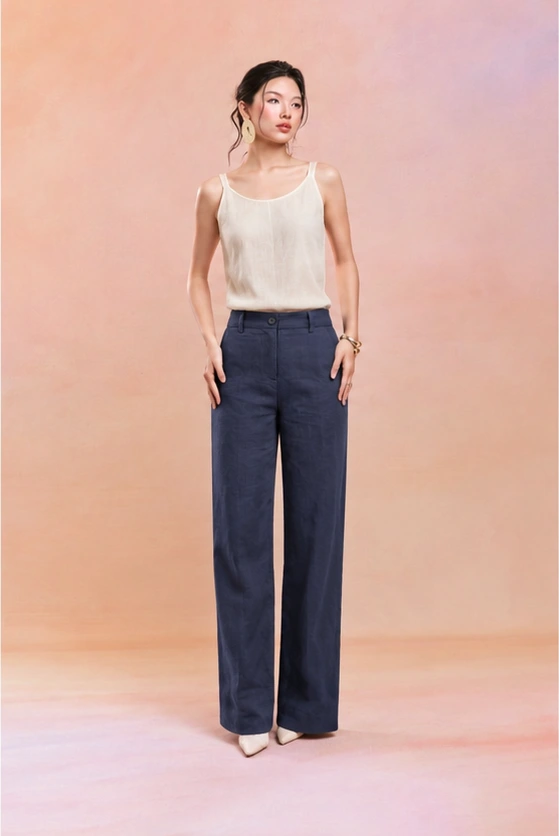
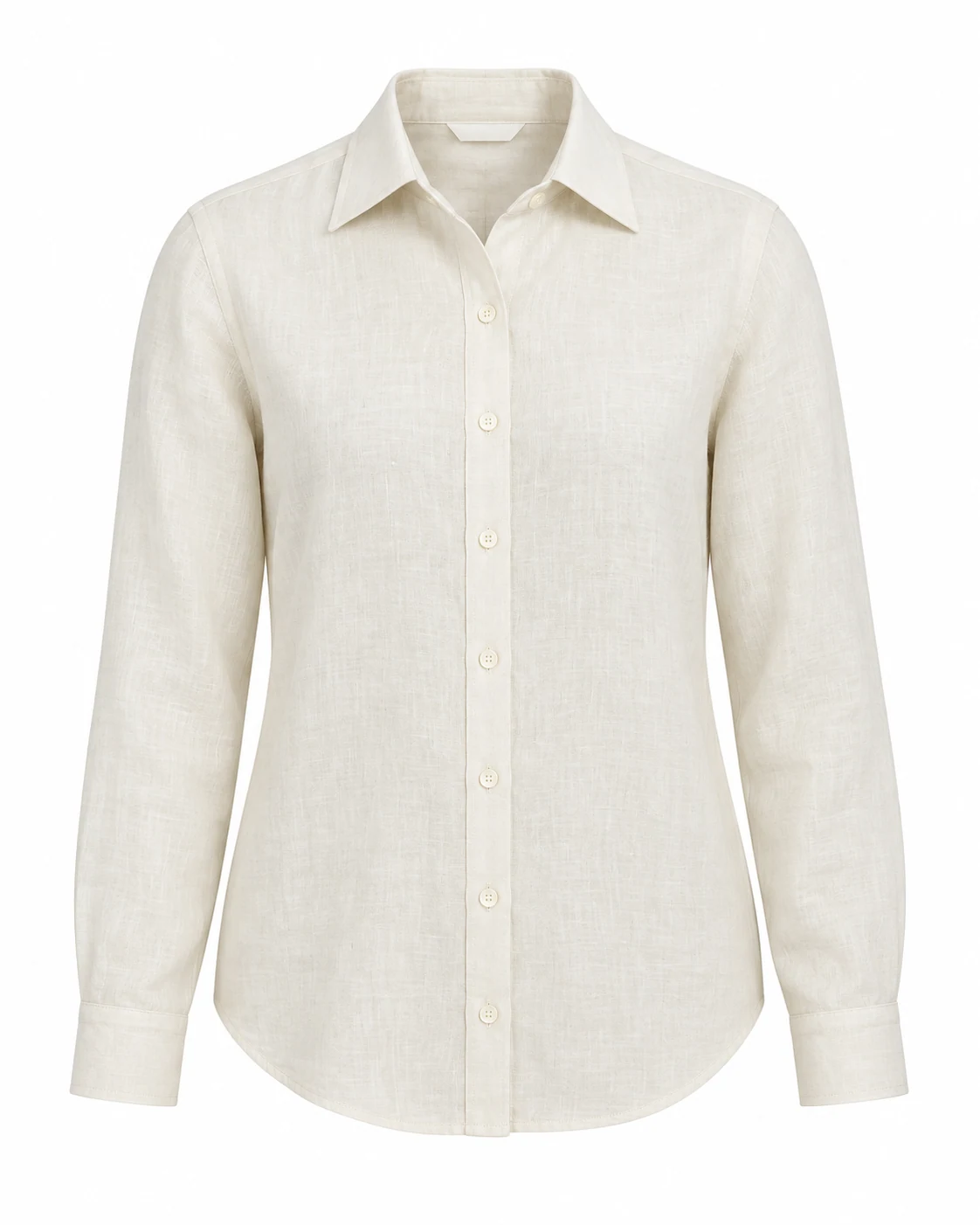
An iron is useful for a deliberate collar, cuff or trouser line; a steamer is useful for easing storage creases while retaining a softer surface. Either method must be allowed by the finished garment’s care label. Steam is still heat and moisture, so it is not automatically safe for every lining, trim or finish.
Choose the result before the tool
| Desired result | Method to consider, if permitted | Detail to preserve |
|---|---|---|
| Crisp collar or cuff | Iron on a supported section | Existing shape and button details |
| Soft dress or loose shirt refresh | Hanging steamer | Drape without pulling the garment longer |
| Defined trouser line | Iron aligned with an intended crease | Do not add a new crease accidentally |
| Removing a packing fold | Local treatment first | Avoid repeatedly treating unaffected areas |
The iron symbol’s dots identify permitted heat categories; a crossed-out symbol rules out the indicated treatment. Read the actual label and equipment settings. GINETEX explains the care symbols. Avoid selecting maximum heat merely because the main fibre is linen.
An orderly ironing sequence
- Set up a stable board and check that the soleplate is clean. Choose a setting within the garment’s allowed limit and check whether steam is permitted.
- Test a small inconspicuous area first, following any protective-cloth instruction. Check for surface shine, colour change or distortion before moving to a visible panel.
- For a shirt, work on small details first, then sleeves, back and front panels. Keep buttons and bulky seams from being pressed into the cloth underneath; reposition rather than forcing the board to hold every layer flat at once.
- For trousers, align the intended seams and any existing crease before treating a leg. If the design has no crease, do not press a sharp line through it by default.
- Let the piece cool and dry on appropriate support before wearing, folding or packing it. A freshly treated surface is easily crushed into new folds.
Slightly damp linen can be easier to press where the item’s instructions permit it. Damp does not mean dripping, and this approach should not be applied to an incompatible lining or trim. Lift and reposition the iron around shaped seams instead of dragging the garment into a new length.
A safe steamer sequence
Hang the piece on stable support and follow your steamer’s filling, warm-up and operating instructions. Test an unobtrusive area, then work section by section with the distance and motion specified for that appliance. Keep the garment supported without stretching it.
Never steam a garment while someone is wearing it, direct steam towards a person, or use a bare hand behind the cloth as backing. Tefal’s garment-steamer instructions, for example, warn against steaming clothing while it is worn. Use your own equipment’s manual for its operating method. Allow the garment to dry before storing it.
Stop if the surface changes
A glossy patch, dye transfer, puckering or an unexpected response from a lining is a reason to stop, not increase heat. Photograph the area and describe the label, tool and setting when asking for advice. Repeated treatment can make a small issue harder to assess.
Linen will form new folds during wear. Concentrating on the collar, hem or one packing crease may give the arranged finish you want without flattening every natural texture. Read the washing routine and keep LINENELLAR’s care information with the finished garment’s instructions.
Pieces to explore