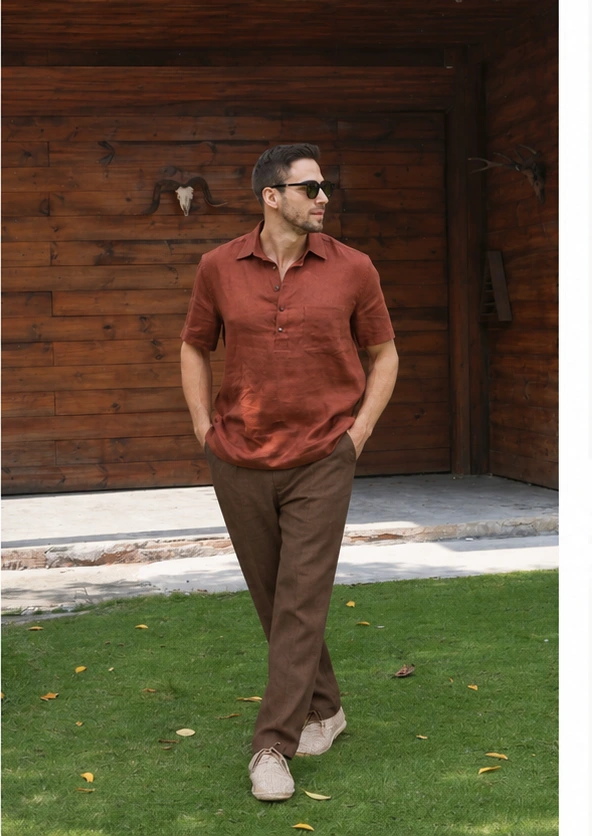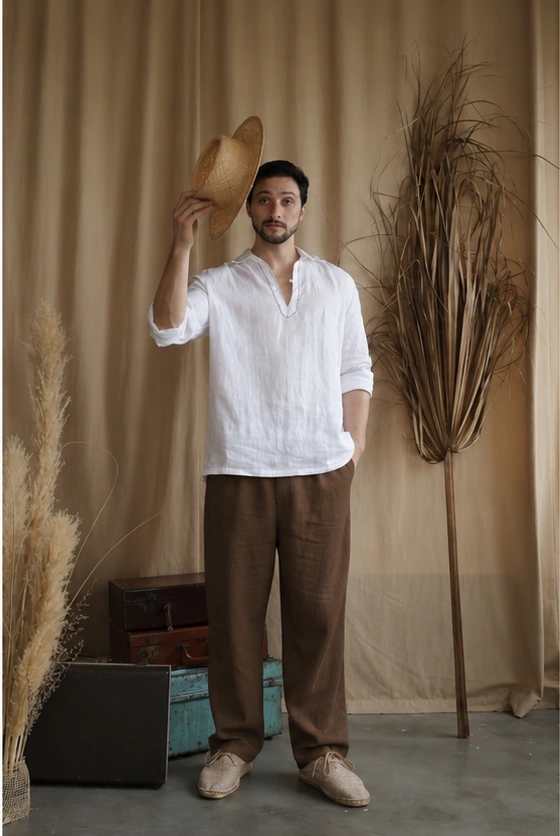
Flat-front and relaxed are not opposite technical categories. Flat-front describes a construction or styling feature at the front, while relaxed often describes the overall fit or mood. A pair of trousers can have a flat front and still offer a generous silhouette. Understanding that distinction makes online comparisons more useful.
Rather than choosing between two vague labels, decide what you want from the waistband, seat, leg and finished length. Men looking for comfortable linen trousers often need those proportions considered separately. A photograph or product name cannot establish the complete wearing experience.
Define the outline you want to see
A cleaner trouser line may have less visual volume through the leg, while a fuller direction allows more fabric to fall below the waist. Neither is automatically more polished or more comfortable. The result depends on the pattern, fabric and how the garment fits your own body.
Look at a pair you already enjoy and identify the part that works: perhaps a straight leg, a particular waistband position or room around the thigh. Then identify what you want to change. “Keep this leg direction but discuss seated comfort” is a stronger brief than “make it relaxed,” which could be interpreted in several ways.
Read the actual waistband and fastening details
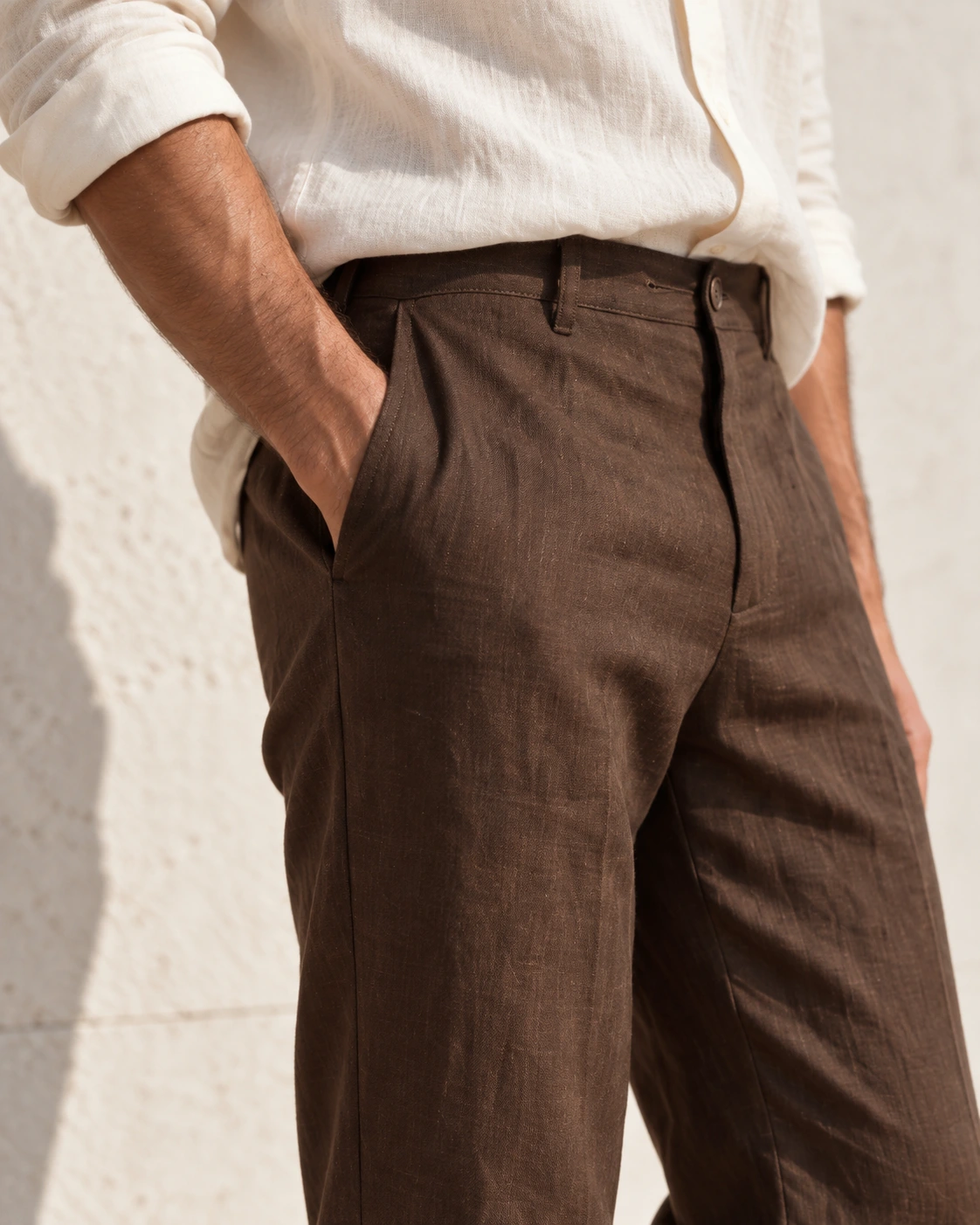
Do not infer elastic, drawstrings or stretch from a casual-looking image or the word ease. Check the selected product’s construction. A fixed waistband, a partially elastic arrangement and another fastening system each need to be assessed on their own terms.
Decide whether you want to use a belt and where you like the waistband to sit. If a belt is needed only to hold an oversized waist in place, ask whether another proportion would work better. Adding width at the waist may not solve a restriction through the seat, and tightening a belt may create a different comfort issue.
Check sitting before deciding the fit is right
Sit in the reference trousers with the waistband at the intended position. Notice pressure at the front, pulling through the rise and room across the hips. Stand and walk again. A trouser can look neat standing yet feel restrictive at lunch, while a fuller leg does not automatically prevent that problem.
Describe the location and activity to the studio rather than prescribing a universal allowance. If measurements are requested, distinguish body figures from flat garment measurements. Do not add extra room to body numbers without agreeing the method, because the pattern may already include design-specific ease.
Choose leg width with the shoes in mind
Try the intended shoes with a comparable trouser shape. A substantial loafer or walking shoe may change the effect of a hem compared with a slim sandal. Decide whether you like a cleaner break or a softer meeting of fabric and shoe, then check practical clearance from the ground.
If alternating footwear, test both. One length may work for several shoes, or you may prefer trousers with a more specific role. Do not assume the inseam from a different trouser design will create the same result; rise and waistband position influence where the finished hem sits.
Consider how the shirt will be worn
Tucked and untucked shirts place different emphasis on the waistband and upper trouser shape. If you usually leave shirts out, look at how their hem meets the trousers. If you tuck, assess the amount of fabric at the waist and whether it remains comfortable sitting.
A jacket or overshirt can change the outfit’s mood, but should be tried with the actual trouser proportions. There is no age-based requirement to choose a narrow leg or a loose one. Choose the outline you enjoy, then make sure the other pieces support it rather than relying on a style label to do the work.
Use product comparisons as questions, not guarantees
The Daily Men’s Straight-Leg Linen Trousers, City Men’s Tailored Linen Trousers and Ease Men’s Linen Trousers offer directions to investigate. Read each description and confirm the details that matter. Their names should not be treated as proof of identical waistbands, rises or allowances.
Ask which design is closest to the combination you want: a cleaner front, comfortable seated room and your preferred leg width. Substantial design changes may need separate review. It can be more effective to start with a suitable listed pattern than to request several unconfirmed alterations to another one.
Confirm before making
LINENELLAR offers standard options and made to measure at a 20% surcharge on the selected product price. One optional note can explain your fit priorities, and the studio confirms details before production. Review the care guidance rather than planning to shrink or stretch the delivered trousers into shape.
The right direction is the one that works with your waist position, movement, shoes and shirt. Treat flat-front and relaxed as starting descriptions, then make the actual fit and construction the basis of the decision.
Continue reading
Pieces to explore
Three designs to compare with the ideas in this article. Open each product for current pricing, available choices and construction details; confirm any requested fit or design change with our studio.