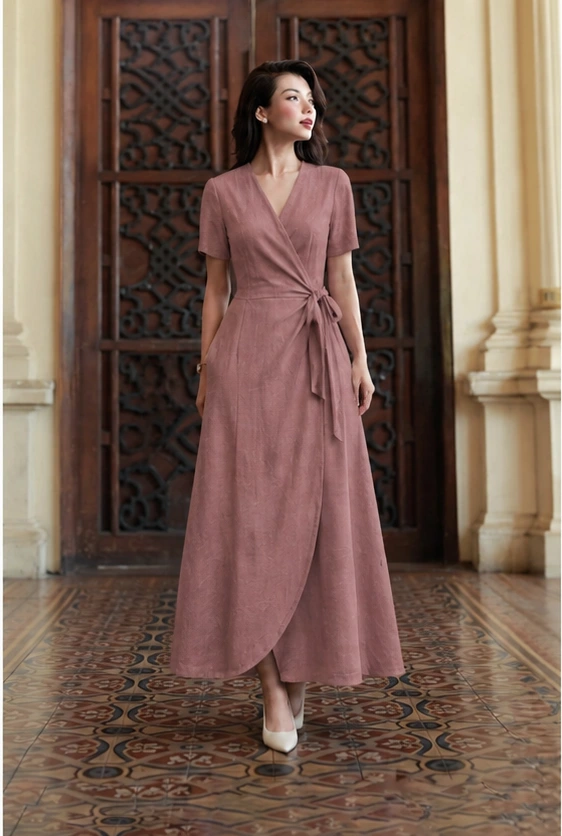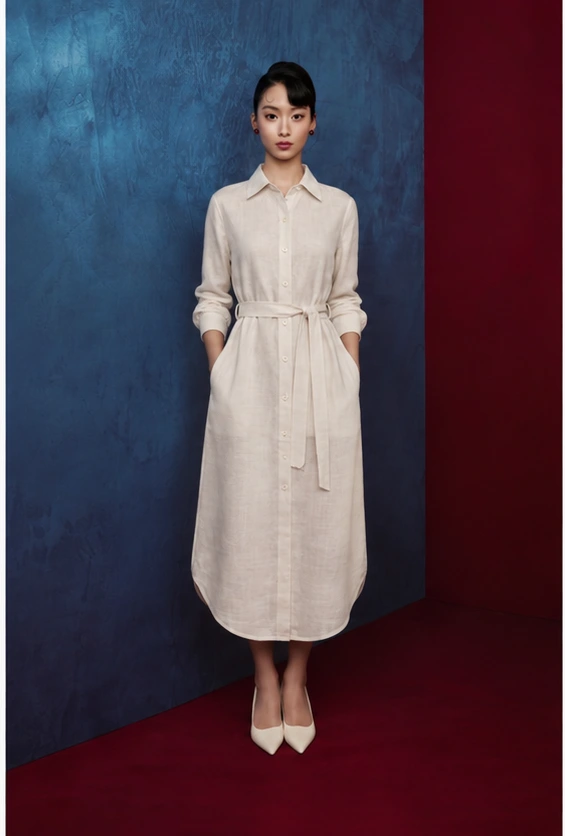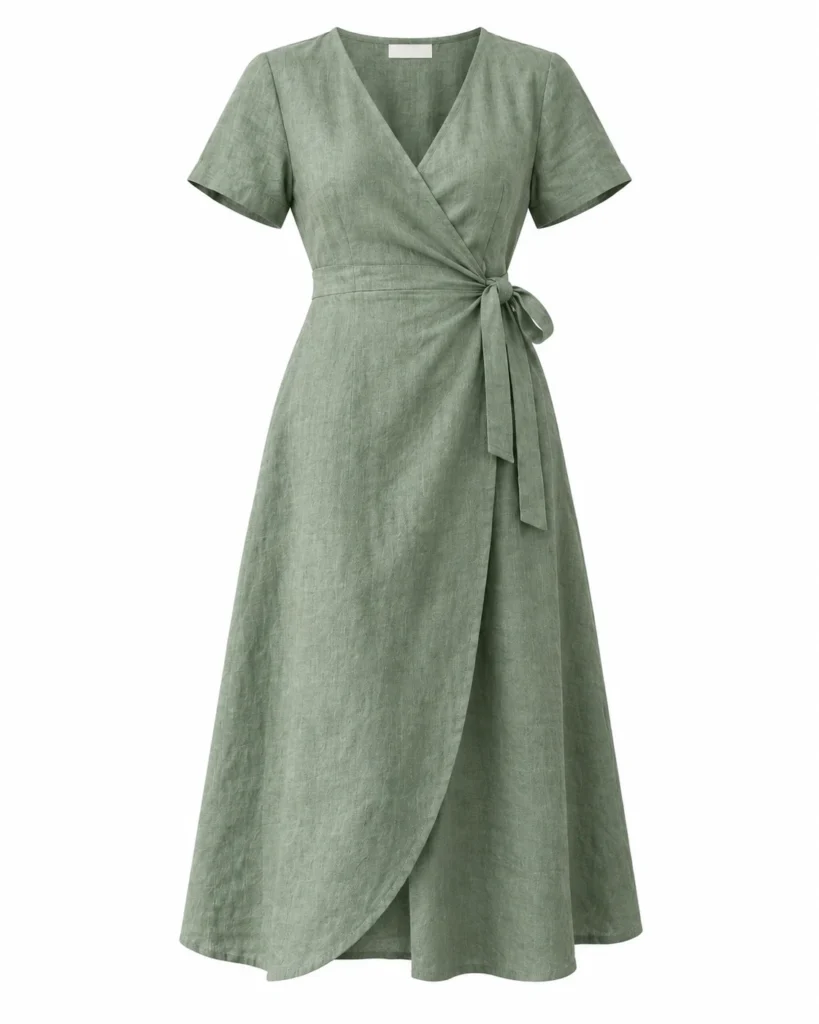
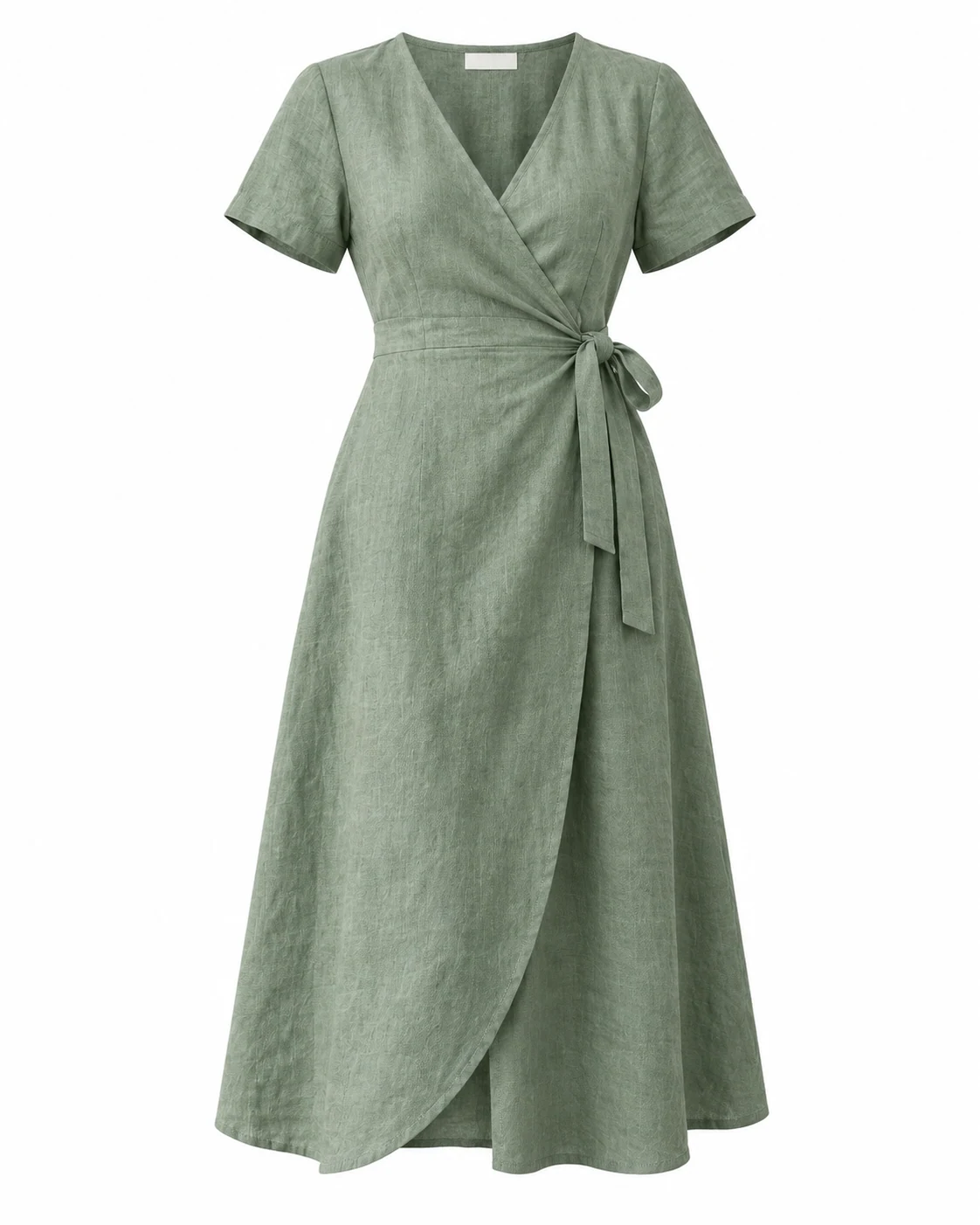
A petite linen dress is a question of proportion, not just a shorter hem. If the shoulder, bust shaping or waistline sits in the wrong place, removing fabric at the bottom may leave the original problem untouched. A useful custom enquiry identifies which part of a standard dress feels too long and which parts already work.
Separate a long skirt from a long upper body
If the waist seam is already where you want it but the skirt ends too low, the hem is the first issue to discuss. If the waist sits below your intended position and the neckline or armhole also feels low, shortening only the bottom will not explain the upper-body problem. Observe these points in a natural standing position and with your usual underlayer; the studio must assess the actual cause.
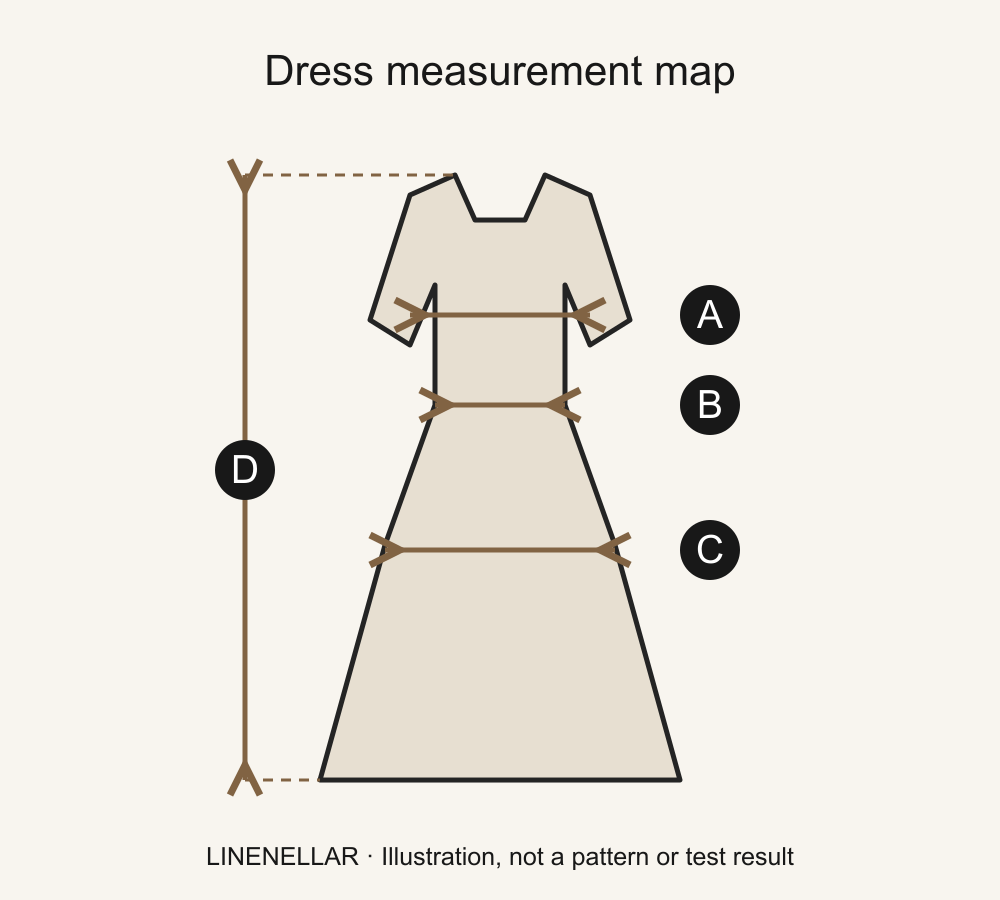
Use the selected dress link, name the desired waist position and provide the requested measurement method. Avoid a rule that subtracts the same number from every length solely because you are petite.
Describe where the dress loses proportion
Look at a similar dress you own. Does the waist seam sit below your preferred position? Is there extra length in the upper body, or is the torso comfortable and only the skirt too long? Does the neckline open more than you want because the upper section sits differently on your body?
These are different observations. Write them separately rather than asking for every length to be reduced by the same amount. Two people of the same height may have different torso and leg proportions, and a shorter wearer may still prefer a long, flowing skirt.
Separate waist position from skirt length
A waist seam or tie helps organise the visual shape of a dress. Its position can influence how the bodice and skirt meet, where volume gathers and how the garment moves. If that point is wrong, a hem-only change does not relocate it.
Ask which body or reference-garment measurement the studio needs to discuss the waist position. Use the same measuring endpoints it specifies. A general instruction such as raise the waist slightly is better treated as an enquiry than a complete making specification until both sides understand the intended position.
Consider the upper body as a connected area
Shoulders, neckline, armholes and bust shaping interact. Shortening a bodice is not necessarily a change that can be applied to every dress without affecting another detail. The studio needs to assess what is feasible on the chosen pattern and whether it remains within the offered custom option.
Explain coverage preferences and any recurring issue, such as an armhole that tends to feel low or excess fabric above the waist. Avoid diagnosing the pattern adjustment yourself from a photograph. The observation is valuable; the construction decision needs design-specific confirmation.
| What you notice | Possible discussion | What not to assume |
|---|---|---|
| Hem too low, upper body comfortable | Finished skirt/overall length | Every upper-body dimension must shrink |
| Waistline sits low | Torso proportion and seam position | Cutting the hem moves the waist |
| Neckline opens more than expected | Neckline, shoulder and bodice relationship | Smaller overall size fixes coverage |
| Too much volume through the body | Intended silhouette and ease | Petite must mean close-fitting |
Choose length according to how you will wear it
Decide where you want the hem with the shoes you plan to use. Think about walking, stairs and sitting, especially with an opening or wrap construction. A preferred midi length is personal; an arbitrary height-based rule cannot determine the right position for every wearer.
If measuring a favourite dress, state whether the reading belongs to its front or back and where it begins. Keep that list separate from body measurements. A dress that works well in a stretchy knit is not a direct dimensional template for a woven linen design.
Pieces to explore