

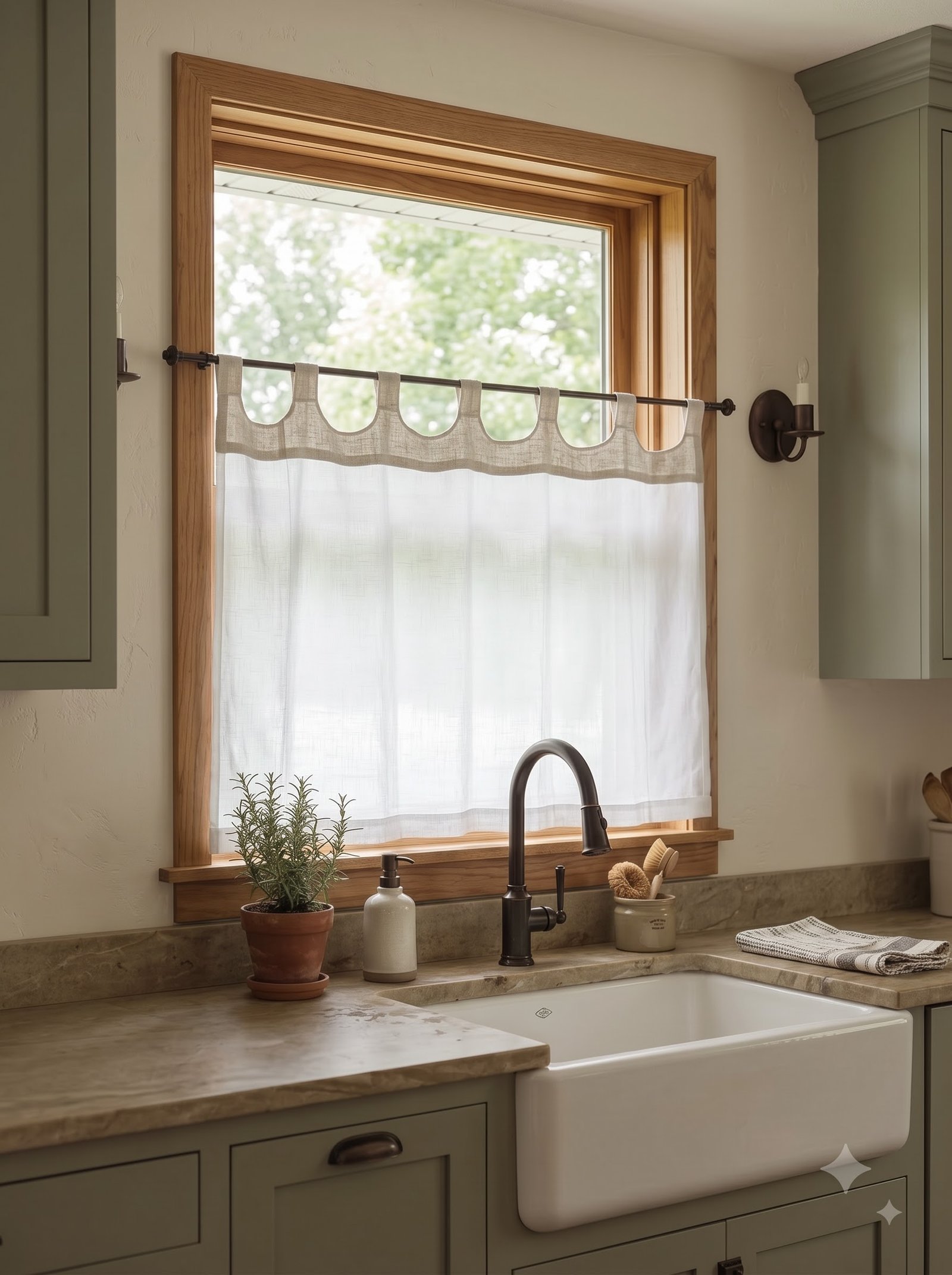
A small kitchen benefits from a window treatment that respects the available light and working space. A measured panel can add softness without filling every part of the frame.
Keep the window useful in a compact working room
Keep the coverage focused on the area where it is needed. Check that the fabric does not interfere with handles, shelves or the window opening, and keep the surrounding sill uncluttered.
Small kitchens place several demands on one area: light, ventilation, storage and access to the counter. Choose the curtain coverage with those activities in mind. A panel can create a calmer visual edge, but extra width or length should have a reason. Identify the part of the glass that needs covering and leave the rest of the window's function intact wherever possible.
A realistic decision in your own home
If the only opening sash swings inward, test it before deciding the curtain line. A paper mock-up can show whether the fabric would catch a handle or bunch against a shelf. Solving the mounting or drop question first is more effective than accepting a curtain that must be moved awkwardly every day.
A practical way to test your idea
Measure with the window in both its closed and normally opened positions. Note any part of the mechanism that moves toward the proposed curtain line.
A common ordering mistake
Do not make an oversized curtain solve a storage problem. Fabric should not need to hide every object around a busy kitchen window.
Can a shorter curtain make a small kitchen feel larger?
It may help keep more of the window visually open, but the effect depends on the room and placement. Choose the coverage that meets your needs rather than relying on a universal size trick. Clutter, color and the surrounding layout also influence the result.
Choose what the curtain should leave open
In a small kitchen, identify the useful light, view and access you want to retain before deciding how much glass to dress. A compact panel can have a clear purpose without filling the whole frame. Test the arrangement during normal cooking and cleaning routines, with the usual objects on the counter. If the curtain only works when the area is cleared for a photograph, the installation or surrounding arrangement may need a practical revision.
Is a small kitchen always better with one panel?
No. Panel count depends on access, hardware and the desired look. Compare the actual movement of one panel with a pair rather than using room size as the only criterion. Keep the fabric width and finished drop explicit.
| Information | What to explain |
|---|---|
| Usable span and panel count | Measure the area where the curtain can actually hang. State one panel or a pair, and identify whether your proposed fabric width is per panel or combined. |
| Finished drop and heading reference | Mark the intended lower edge in a photo. Ask where the chosen design measures its length from, including how the top detail relates to the rod. |
| Hardware and intended coverage | Give the rod diameter, mounting position and any obstruction. Describe the amount of glass you want covered and whether the curtain must move frequently. |
Pieces to explore