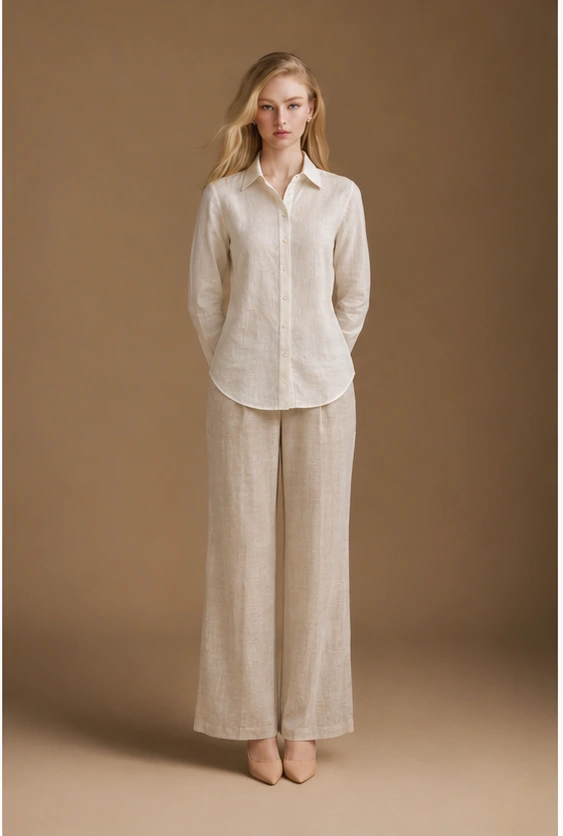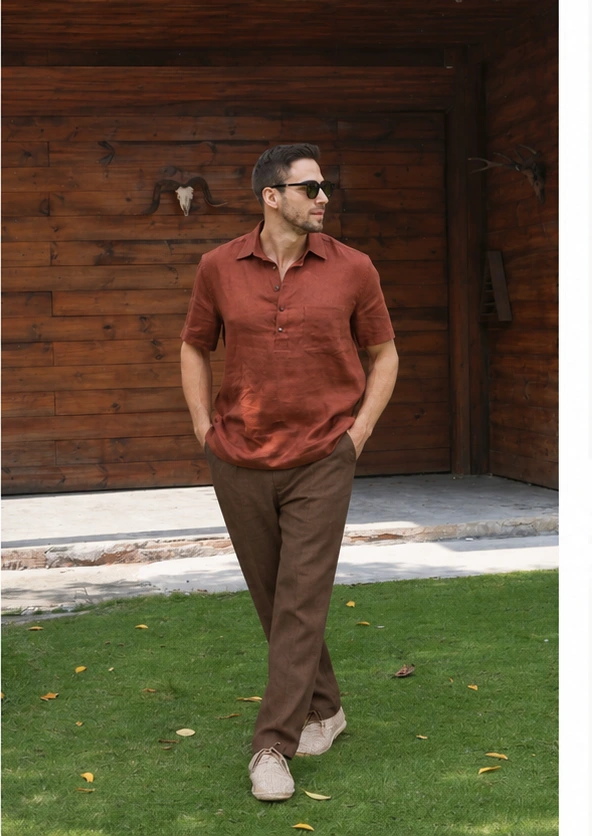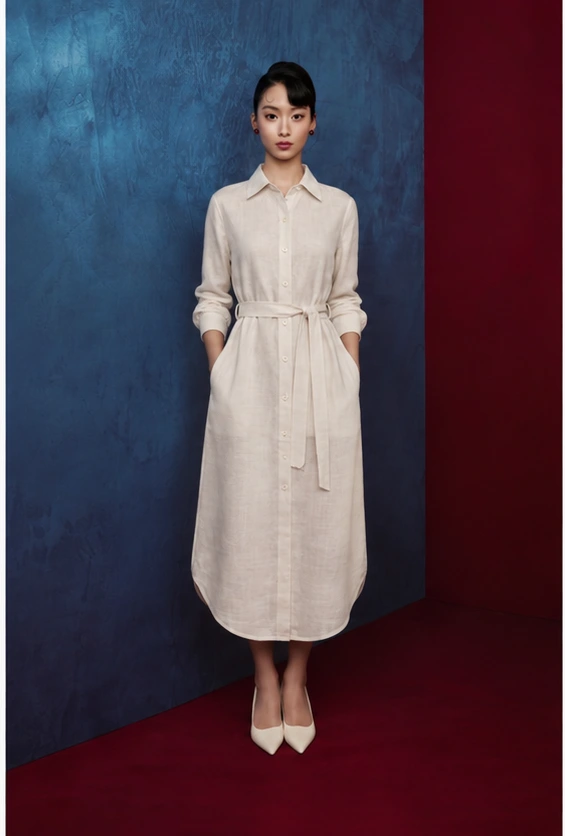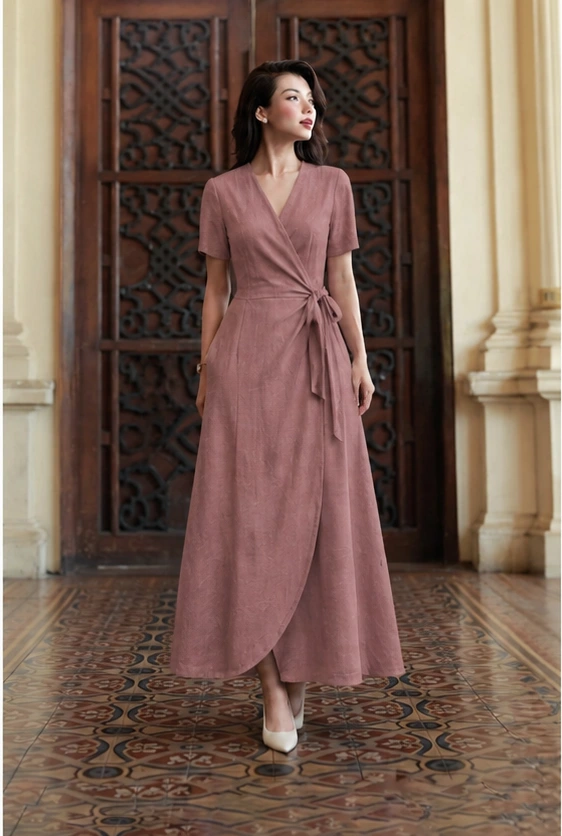
Choosing holiday clothes together can be enjoyable without turning into a matching-outfit project. A linen shirt and trousers for each person might connect through a palette, a relaxed mood or simply suitability for the trip. Each wearer still needs an individual fit, preferred coverage and a way of dressing that feels natural.
For a mature couple, the useful shared decisions are often practical: itinerary, luggage, laundry and the activities planned. Start there. Do not assume both people want the same level of formality, the same sleeve length or the same silhouette just because the clothes will appear together in photographs.
Plan the holiday before planning the palette
List the main activities and settings: travel days, walking, meals, visits and evenings. Check venue and local visitor requirements from the relevant official information when needed. A holiday label does not make every linen outfit suitable for every restaurant, site or climate.
Then decide which existing clothes and shoes are coming. Build around those rather than buying an entire coordinated wardrobe at once. If one person prefers dresses and the other prefers trousers, the outfits can still relate without requiring identical garment types or matching sets.
Give each person an independent fit brief
One person may prioritise upper-arm room, another trouser rise, and another shirt length when worn untucked. Record these separately. A shared order should not collapse two sets of preferences into one general request for loose holiday clothing.
Use comfortable reference garments where useful, clearly labelled as garment measurements. Ask the studio for its method before providing a list of numbers. Body and garment measurements are different, and two people of similar height may still need different finished lengths or waist positions. Fit should be confirmed for each wearer.
Coordinate by relationship rather than duplication
Choose a small group of shades that works with the shoes and layers you already own. One person might wear a familiar neutral while the other introduces a stronger shade. A repeated colour in a bag or shirt can connect the outfits without making them identical.
Use the linen library to compare directions, but do not assume screen images provide exact colour matching. If coordinated fabric is important, explain that to the studio and ask for confirmation of the selected options. The aim can also be a deliberate contrast, which may be easier to enjoy than an uncertain near-match.
Make each garment work in more than one complete outfit
For each proposed shirt, identify at least two bottoms or uses already in the packing plan. For each trouser, identify the tops and shoes it will meet. This is an exercise in practical compatibility, not a demand that every garment suit every occasion.
Try the combinations together before departure. Check seated comfort for meals, hem clearance with walking shoes and sleeve room under the intended layer. If a shirt is planned both open and closed, test both. A packing list is only as useful as the outfits it can actually produce.
Agree how care will work while away
Read the care instructions for the selected garments and check any planned laundry service before relying on it. Do not assume that two linen pieces require the same process or that a hotel service will automatically follow the supplied guidance.
If a pressed finish matters for a particular dinner, plan how to achieve it safely within the accommodation’s rules. If you enjoy a natural creased appearance, that may reduce the importance of pressing, but it does not remove the need for appropriate washing and drying. Keep care preferences individual too; one person may enjoy a finish the other does not.
Keep shared ordering practical rather than pressured
LINENELLAR’s retail shipping policy offers free standard shipping on orders with two or more physical items. That can be useful for a genuine shared order, but it is not a reason for either person to buy a garment they do not want. Check destination details and other applicable delivery terms before paying.
For made to measure, the surcharge is 20% of the selected product price. Notes can be left blank and details are confirmed before making. Allow separately for confirmation, making, delivery and a full try-on before departure; do not treat the holiday date as something an estimate automatically guarantees.
The suggestions below are pieces to discuss individually, then combine with your own holiday wardrobe. A good couple’s plan leaves both people feeling comfortable and recognisable, with enough coordination to make packing easier and enough independence to keep the clothes personal.
Continue reading
Pieces to explore
Three designs to compare with the ideas in this article. Open each product for current pricing, available choices and construction details; confirm any requested fit or design change with our studio.