A shirt can look comfortable while you stand with your arms down, then pull as soon as you reach forward. That is a useful observation to bring to an online fit discussion. It does not automatically mean you need the next size, nor does it establish a single cause from a photograph. Back width, shoulder position, sleeve construction and overall length can interact.
Before ordering a replacement linen shirt, investigate when the restriction occurs. The goal is to describe the experience accurately enough for the studio to ask the right follow-up questions. You do not need to diagnose the pattern yourself, and you should not have to change the way you normally move to suit a shirt.
Identify the movement that produces the pull
Try the existing shirt fastened as you normally wear it. Reach forward as though holding a steering wheel, bring your hands towards a table and bend one elbow. Notice whether the restriction is across the shoulder blades, under the arm, at the upper sleeve or around the cuff. Repeat only within your comfortable range of movement; this is a clothing check, not a physical test.
Describe a real task rather than stretching as far as possible for the camera. A shirt intended for lunches and everyday errands needs to work for those activities. If the problem appears only when wearing a jacket over it, test the shirt alone too. The layer may be affecting how the sleeve and shoulder move.

Compare standing room with movement room
Visible extra fabric at the waist does not prove that the back or upper sleeve has enough room. A shirt may be generous below the armhole and restrictive above it. Equally, adding width everywhere may create a much larger garment without addressing the point that feels wrong.
Check whether the front also changes when you reach. Do buttons gape, does the hem rise sharply, or does the collar pull backwards? Record what you see without deciding that one seam must be moved. These observations help distinguish an overall size question from a more specific proportion question that needs professional assessment.
Use a comfortable reference shirt
Choose a shirt that allows the same everyday task and has a reasonably similar purpose. An elastic sports top is not a direct fit equivalent for a woven linen shirt. Compare woven shirts if possible, and explain differences such as a dropped shoulder, a pleat or a much looser sleeve.
Ask the studio which measurements to take before sending a long list. A flat garment width is not the same as body circumference, and different measuring points can produce misleading comparisons. Label each figure clearly, keep the shirt flat without stretching it, and include a photograph showing the measuring position if requested. A number without its method is easy to misinterpret.
Do not hide the problem with guessed additions
It is tempting to add a few centimetres to every body measurement to be safe. That can make the resulting brief confusing because the studio may also allow design-specific ease. Send actual body measurements when requested and explain the desired room separately. If your figures come from a garment, say so.
A helpful note might read: “My current woven shirt feels comfortable standing but pulls across the upper back when I reach towards a dining table. I would like a similar outline with easier forward movement. Please confirm the measurements you need.” This communicates both the limitation and the appearance you want to retain.
Discuss the chosen design, not an imaginary ideal shirt
Different listed shirts can have different shoulder and sleeve directions. A relaxed shirt and a more structured shirt should not be expected to feel identical simply because the chest measurement is similar. Show the studio the design you prefer and ask whether it is an appropriate starting point for your movement requirements.
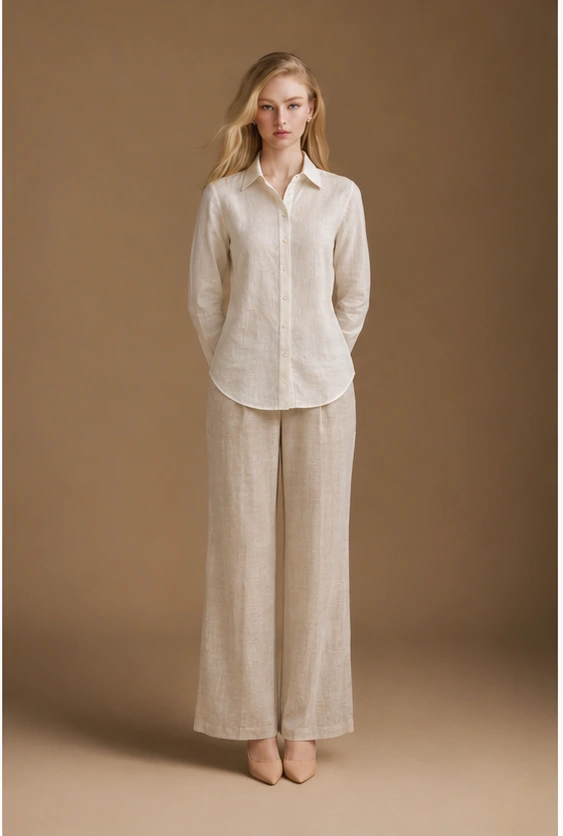
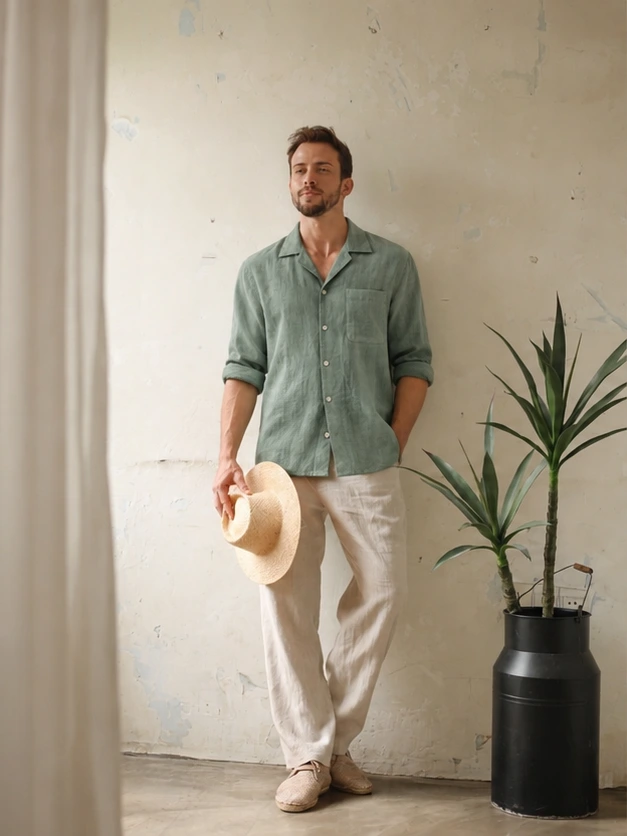
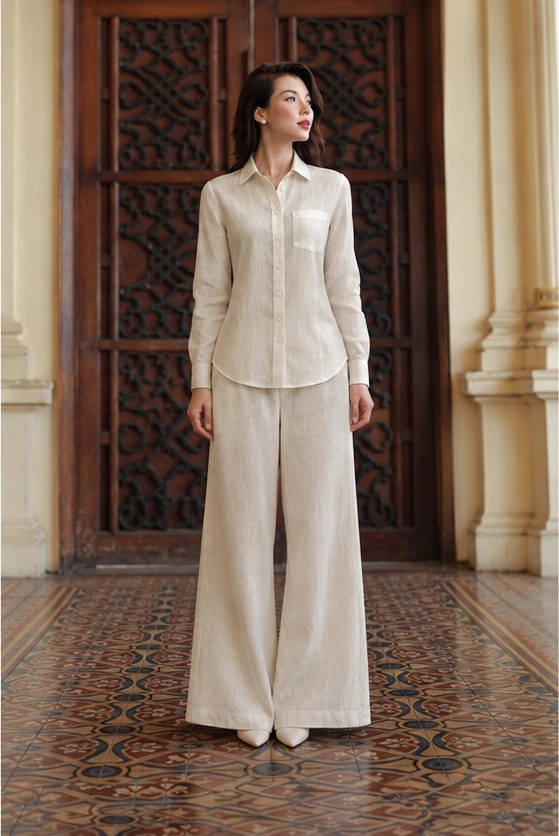
Design changes require review. Do not assume that a back pleat, different armhole or new sleeve can automatically be added under a custom-fit option. Sometimes another existing design is the clearer route. The Everyday Women’s Linen Shirt and the men’s shirt suggestions below can be compared by their product details rather than treated as interchangeable solutions.
Check layering and care expectations
Tell the studio if the shirt will usually go over a sleeveless top or under knitwear. Room needed for an underlayer is different from room needed for the body alone. Also review the garment’s care guidance; do not plan to shrink or stretch a finished shirt into the right fit after delivery.
Linen’s surface can crease during wear, but a fold is not the same as persistent tension. When describing the issue, focus on pressure, restricted movement and changes in position rather than treating every wrinkle as a defect. That keeps the conversation directed towards useful fit decisions.
Before making is confirmed
Agree on the design, the measurement method, the fit preference and any adjustment the studio has accepted. LINENELLAR’s made-to-measure route adds 20% to the selected product price. The note box is optional, and details are confirmed before making. If you do have a recurring back-fit concern, mentioning it early gives that confirmation a clearer purpose.
Keep the final agreed brief so you can compare the delivered garment with what was discussed. A careful description will not replace a fitting assessment, but it is a much stronger starting point than ordering a larger size and hoping that every proportion improves together.
Continue reading
Pieces to explore
Three designs to compare with the ideas in this article. Open each product for current pricing, available choices and construction details; confirm any requested fit or design change with our studio.