


Custom home textiles work with something that already exists: a window and its fittings, a cushion insert, a chair or another part of your room. The useful starting point is that object, not a size name that appears close. Record its dimensions, the way you want the textile to behave and the details that affect how it will be fitted or used.
Keep the object and finished textile in different boxes
An illustrative window record might contain an 80 cm usable hanging span. A separate proposed panel width might be 120 cm; those numbers describe different things, and the second is not a universal fullness recommendation. Similarly, a 45 cm insert span is an object measurement, not automatically a 45 cm finished cover specification.
Use the dedicated curtain guide for hanging span, drop and panel count, and the cushion guide for perpendicular spans and profile. This page is the project overview: what object exists, what the textile needs to do, and which confirmed material/design will achieve that. Keep construction allowances out of the object readings.
Decide what the custom piece needs to improve
For a curtain, the aim might be coverage at a particular level while leaving light above. For a cushion cover, it may be a better relationship to an existing round insert. A chair cover may need to accommodate a seat shape and the way the chair is used.
Describe the problem in ordinary language before collecting numbers. A statement such as the panel should clear the moving handle, or the cover should fit this insert without changing its shape, helps identify the measurements that actually matter.
Measure the object and label it as the object
An opening width is not automatically a finished curtain width. An insert diameter is not automatically a finished cover diameter. Keep the original object measurements separate from any proposed finished textile dimensions.
Take the readings at identifiable points and use one unit throughout. If you measure across several windows or objects, assign a simple reference to each one. A photograph or sketch should use the same reference so a measurement for Window A is not accidentally attached to Window B.
| Item | Physical information to collect | Additional decision |
|---|---|---|
| Café curtain | Usable hanging span, intended hem position, relevant obstructions | Number of panels, heading and fullness |
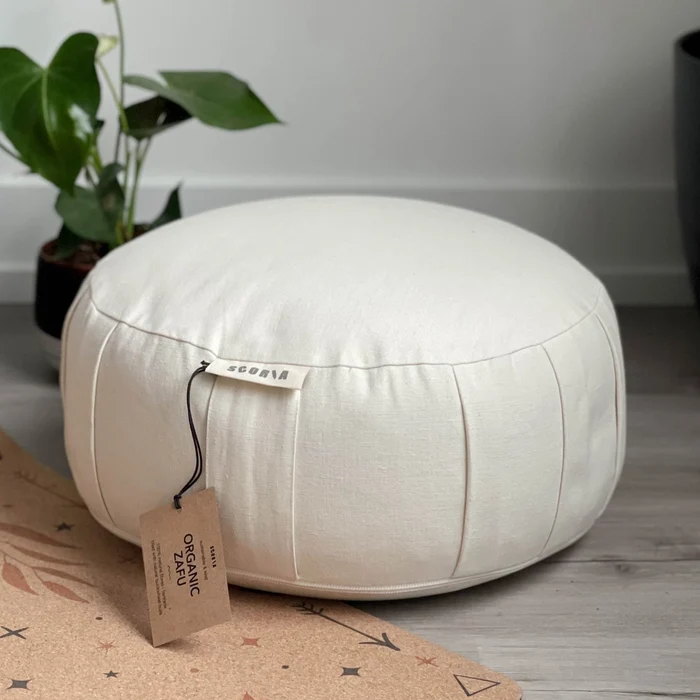
| Round cushion cover | Insert diameter, side height/profile and shape | Desired fitted appearance and closing method |
| Chair cover | Seat/back/other relevant parts for the selected design | How it is attached, removed and used |
| Several coordinated pieces | Separate measurements and quantities for each | Which colours/materials need coordination |
Test the position before approving dimensions
Paper or a temporary marker can help visualise a curtain’s proposed hem or a cover’s relationship to the object. This does not replace the maker’s construction decisions, but it can reveal that a length which looked right on a screen blocks a handle or ends in the wrong place.
Use the actual room and viewing angles. A textile has to work from the position where you use it, not only in a close product photograph. For light-filtering curtains, distinguish a decorative coverage preference from a requirement for privacy under particular lighting conditions.
Choose the actual material and design
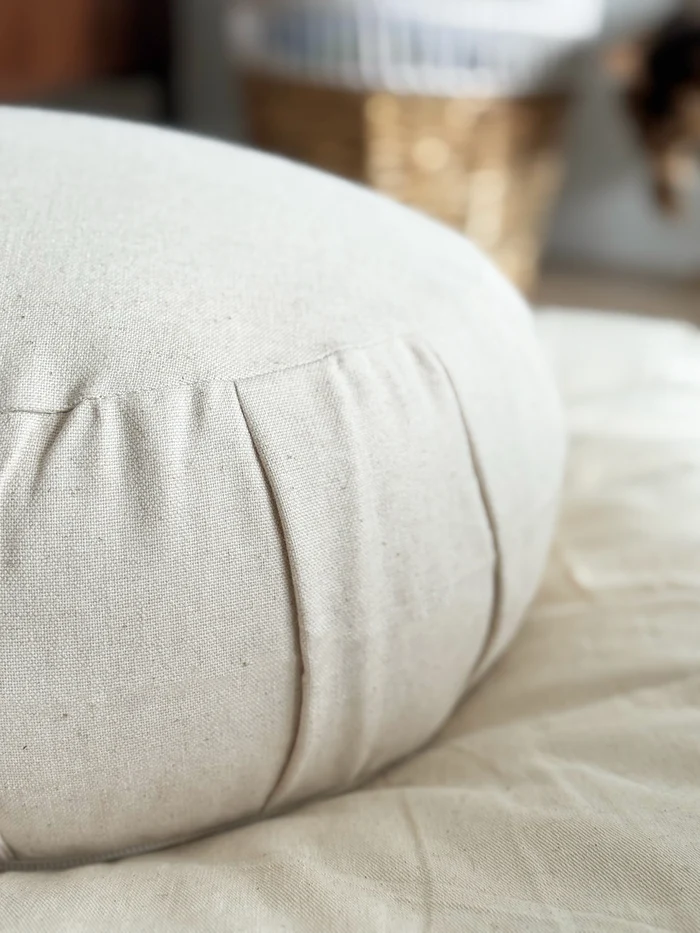
Read the composition of each product. A home collection can contain linen, cotton and fabrics with different surfaces; a velvet description needs its own fibre information. Do not treat every piece in a linen brand’s collection as the same material.
Colour, care and construction belong in the decision too. If you need an exact match to another item, discuss a feasible comparison rather than relying on a similarly named digital shade. Ask about the selected product’s care instructions before assuming all coordinated pieces can be treated identically.
Pieces to explore


Comments (2)